Full Article
about Cabanelles
Large rural municipality with scattered farmhouses; gateway between the plain and the mountains
Hide article Read full article
A Village That Makes No Effort to Impress
Cabanelles is the kind of place you might drive through and assume very little happens there. In truth, that is part of its character. There are no oversized signs, no streets arranged for photographs, just a small municipality in Alt Empordà with fewer than 300 residents, surrounded by cereal fields and olive groves. Daily life matters more here than any attempt to look attractive for visitors.
Unlike other destinations that seem arranged like a postcard, Cabanelles presents itself plainly. Stone houses sit beneath reddish roofs. Dirt tracks run between buildings. A tractor may be parked in the shade after a morning’s work. The pace is noticeably different. Silence carries across the streets, a dog might bark from behind a courtyard wall, and in winter the smell of firewood drifts from chimneys.
The village lies between the flat Empordà plain and the first gentle rises that lead inland. That slight shift in terrain is enough to change the view as you walk. The landscape never feels dramatic, but it does feel varied enough to keep your attention.
Around Sant Esteve
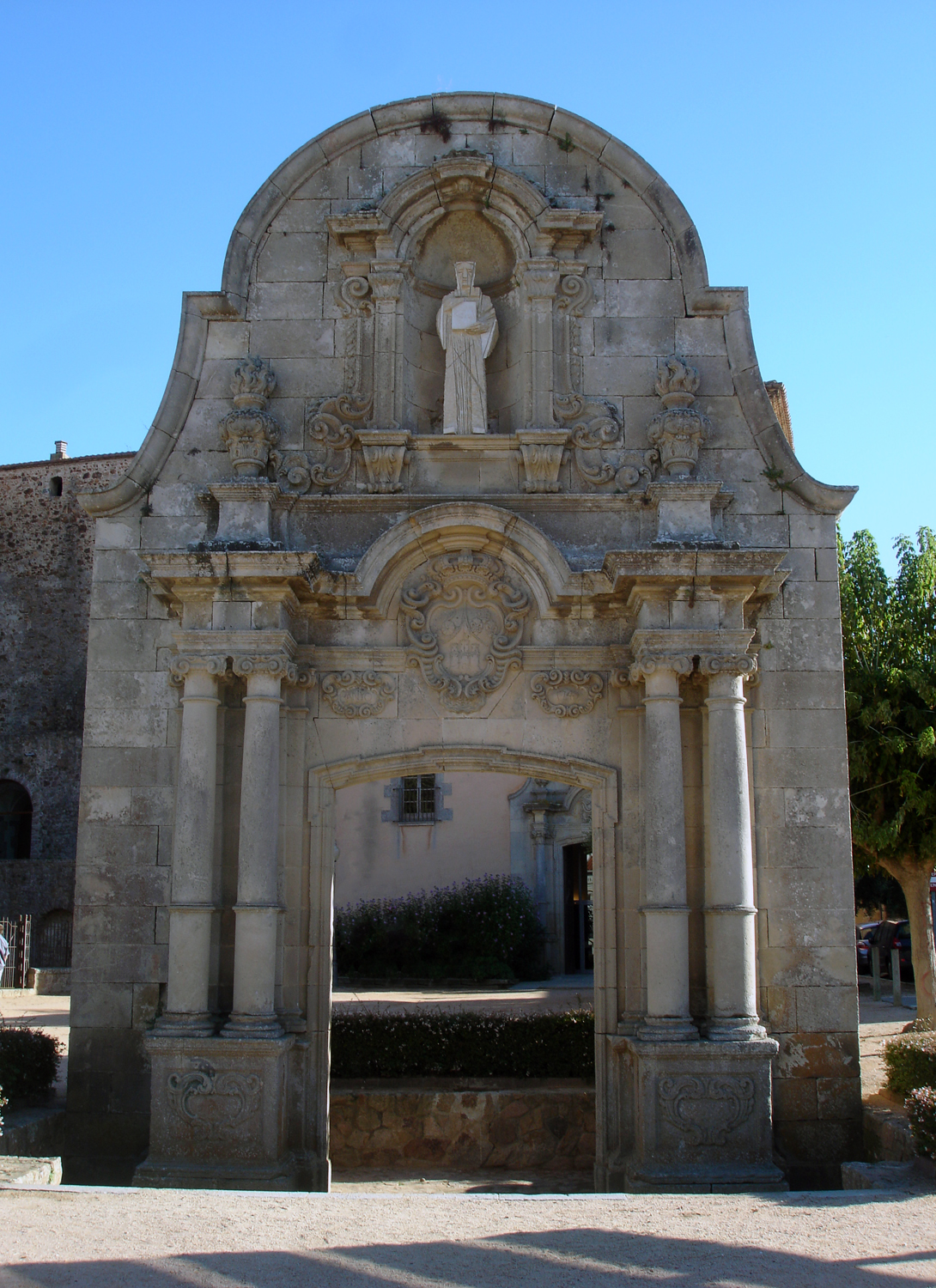
The centre of Cabanelles is simple and organised around the church of Sant Esteve. The building has ancient origins, though it has been altered over the centuries, as so often happens in villages where repairs are made when needed rather than according to a historical masterplan.
Spending time near the church gives a clear sense of how the village works. There is the parish church, a handful of streets, and then open countryside almost immediately beyond. Scattered around the surrounding land stand traditional masías, rural farmhouses that have often remained in the same families for generations. Some have thick stone walls and vaulted interiors that recall medieval stories. They are not monuments but private homes, and it is important to stick to public paths rather than crossing fences out of curiosity.
The scale of everything feels modest. You do not need a map to understand the layout. Within minutes, you are at the edge of the settlement with fields stretching ahead.
Walking the Interior of Empordà
One of the most natural things to do in Cabanelles is simply to walk. Numerous tracks lead out of the village towards small vegetable plots, holm oaks and shallow hollows in the land. The scenery does not aim to overwhelm. Instead, it offers space and quiet, along with the sense that nobody is in a hurry.
If you climb to a slightly higher point nearby, the view can open up considerably. On clear days the Pyrenees sometimes appear on the horizon, very faint, almost like a thin blue line in the distance. They do not dominate the scene, but they add depth to it.
This is inland Empordà at its most understated. Fields change with the seasons. Light shifts across the plain. The appeal lies in observing small details rather than chasing dramatic viewpoints.
Rural Routes and Quiet Roads
Several walking routes in the area link Cabanelles with neighbouring villages such as Bàscara or Sant Miquel de Fluvià. These routes follow fairly clear rural tracks. There are no major climbs and no technical sections to worry about. They suit unhurried walks, the kind where conversation flows easily as you go.
The surrounding roads and agricultural tracks also lend themselves to cycling. Secondary roads usually carry little traffic, and farm tracks allow for long circuits across open countryside. Services are few and far between in this part of Empordà, so it is wise to carry water and something to eat before setting out.
Nothing here feels curated for outdoor sport. The appeal comes from the freedom to move through a working landscape where agriculture continues as it has for generations.
Eating in the Area
Cabanelles does not have a street lined with restaurants. It is a small village, and local life does not revolve around visitors. Many people who spend the day walking or cycling nearby choose to eat in other towns where there is more activity.
The wider area, however, is known for good produce. Olive oil is part of daily cooking, and wines from Empordà are made in the region. Embutidos, the cured sausages typical of Catalonia, are common, as are vegetables grown in small-scale market gardens across the comarca. Even if you do not sit down to eat in Cabanelles itself, the surrounding countryside reflects an agricultural tradition that shapes what ends up on the table.
A Quiet Base in Alt Empordà
Cabanelles also works well as a peaceful base for exploring this part of Alt Empordà. By car, you can reach more visited places relatively quickly.
Figueres lies not far away and brings together much of the area’s cultural and commercial activity. To the west stands Besalú, known for its stone bridge over the Fluvià, which tends to attract far larger numbers of visitors. Both places offer a clear contrast with the stillness of Cabanelles.
Returning after time spent in busier towns has a noticeable effect. Noise drops away, traffic thins out, and the village settles back into its usual rhythm. The shift underlines what defines Cabanelles: continuity rather than spectacle.
A Village-Scale Festa Major
In August, Cabanelles usually celebrates its festa major, the annual summer festival common across Catalonia. It is not a large-scale event, nor does it attempt to be. There is typically music, some dancing and activities that follow the traditional calendar familiar in many Catalan villages.
Residents gather in the square, and family members who live elsewhere often return for a few days. The atmosphere becomes livelier for a short time before everyday routines resume. Anyone who has spent summers in small towns will recognise the pattern. The celebration may be modest, but it feels genuine.
Cabanelles does not promise headline attractions or tightly packed itineraries. What it offers is a glimpse of ordinary life in the interior of Empordà: fields under open skies, a church at the centre, and a pace that rarely changes. For travellers who value quiet surroundings and simple walks through working countryside, that can be reason enough to stop.