Full Article
about Cadaqués
Iconic white village cut off by mountains; artists' haven and Salvador Dalí's home.
Hide article Read full article
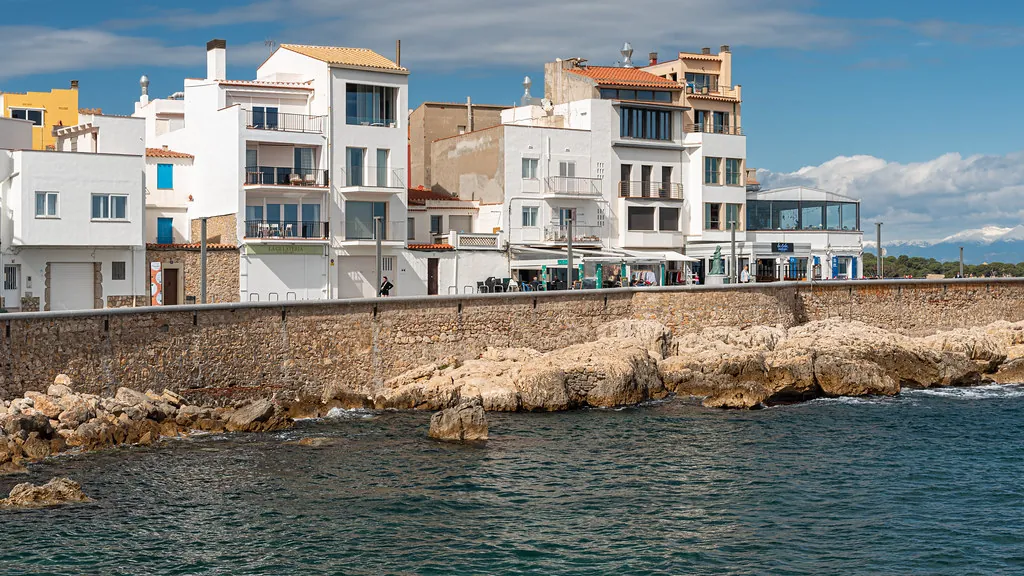
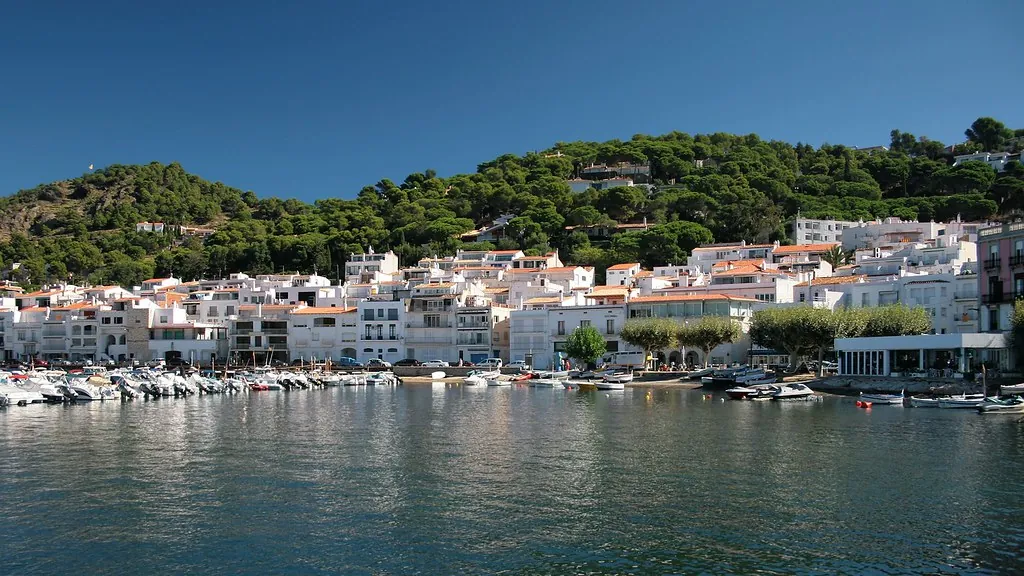
At five in the afternoon, the light turns silver in the port of Cadaqués. Fishing boats rock gently and the salt-worn wood has that dark honey tone only time can give. From the quay comes the rattle of metal buckets where nets are stored. The air carries the smell of the sea mixed with dry rosemary from the nearby slopes. Around that hour, the village lowers its volume: fewer engines, fewer footsteps, just the occasional gull and water brushing softly against the stones.
A Village That Moves at Its Own Pace
The streets of Cadaqués rise and fall without much order. They are narrow, with stone steps polished by centuries of passing feet. Now and then, sections of old wall appear built into houses in the area known as Es Baluard. If you look closely, ancient stone blocks can still be seen embedded in façades.
The village’s history is marked by attacks from the sea. Residents still speak of corsair incursions that forced parts of the settlement to be rebuilt more than once. That sense of exposure to the Mediterranean remains part of its character.
At the very top stands the church of Santa María. From the square, there is a broad view over the harbour and the white houses clustered tightly around the bay. The interior is restrained except for the large Baroque altarpiece, tall and gilded, which makes visitors lift their gaze. In summer, organ or classical music concerts are often held here. They are not grand productions, but quiet recitals where the wooden floor creaks as people shift on the pews.
The climb up towards evening is worth the effort. Light slips sideways through the alleys and the whitewashed walls reflect a pinkish hue that lasts only a few minutes before fading.
Where the Rocks Take Shape
The landscape of Cap de Creus begins almost as soon as you leave the village. Vegetation becomes low and sparse. The wind gathers strength. The rocks twist into strange shapes, as if they had been moulded by hand.
Salvador Dalí spent long periods in Portlligat, a short walk from the centre. His house, now a museum, grew gradually from old fishermen’s huts. Inside, the studio still faces the bay, with light entering from above and the sea always in front. It is wise to check in advance how visits are organised, as access is usually arranged in timed slots.
The road towards the cape passes near the former site of Tudela. Some of the rock formations there served as references in Dalí’s paintings. Many of them vaguely resemble human figures or animals. When the tramontana blows, the landscape turns harsher. The wind is dry, salt clings to the skin and the sea crashes hard against the rocks.
Cap de Creus feels elemental under those conditions. The terrain looks stripped back, exposed to the full force of weather. On calmer days, the same contours appear softer, though still marked by their unusual forms.
What the Sea Provides
There is still movement in the port at dawn. Catches vary according to the season and the state of the sea. Anchovies have long formed part of the local identity. They are cured in salt, then cleaned by hand before being served with bread and olive oil.
Suquet de peix often appears on menus. This fisherman’s stew combines potatoes, tomato and whatever fish has come in that day. Arroz negro is also common, darkened by cuttlefish ink and known for leaving lips stained for a while after eating.
Many bakeries prepare coca de recapte, a flatbread topped with roasted vegetables and sometimes sardines. Ask for the recipe and the answer is likely to be a shrug. Each household has its own version.
Food here follows the rhythm of the water. When the sea allows it, the plates reflect what has arrived at the harbour. When conditions are rough, variety narrows. That unpredictability is accepted as part of daily life.
Choosing the Moment
April and May are usually good months to see Cadaqués at a calmer pace. Bougainvillea begins to climb the walls and the village is not yet full. It is also a good time to walk the coastal path that leads towards the Cala Nans lighthouse. The route is narrow, with rocky stretches and the scent of sage and rosemary when the sun grows strong.
August feels very different. There is only one road into the village and traffic builds up at the entrance. Finding parking can take time. If a summer visit is the only option, arriving early before the heat intensifies tends to make things easier.
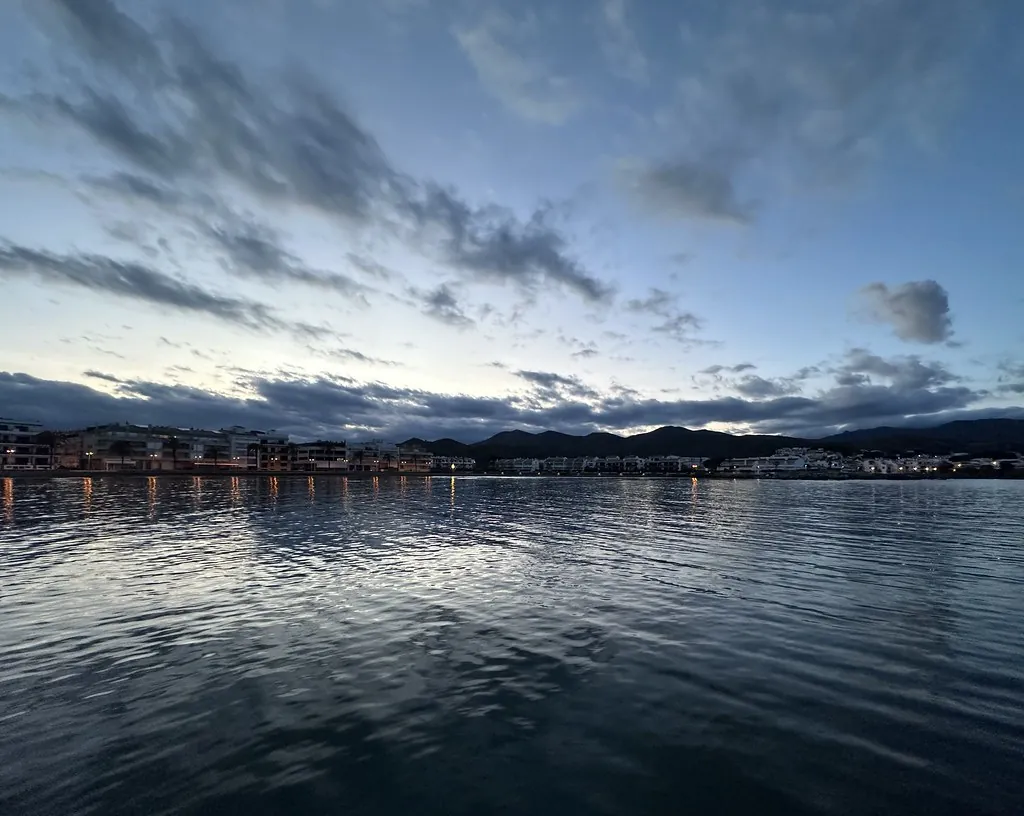
In the early morning, the port still holds onto a sense of local routine. Fishermen check their nets. Shutters lift slowly. The water inside the bay lies completely flat. For a while, Cadaqués seems to move to its own rhythm, apart from the busier hours that will follow.
Light and wind shape much of what happens here. Silver afternoons in the harbour, pink reflections on white walls, dry gusts sweeping across Cap de Creus: these are small shifts that define the day. Cadaqués does not present itself with spectacle. It reveals itself gradually, in the turn of a lane, in the echo of footsteps on stone, in the steady presence of the sea.