Full Article
about Cistella
Small rural settlement in a transition zone; known for the Cistella "fear" legend.
Hide article Read full article
A Small Village Between Plain and Pre-Pyrenees
Cistella lies in the interior of Alt Empordà, around 130 metres above sea level, in a transition zone between the agricultural plain of the Empordà and the first rising ground that signals the Pre-Pyrenees. With just over two hundred residents, it retains the scale of villages that grew around cultivated land: houses clustered together, fields stretching out around them and tracks linking scattered masías, the traditional Catalan farmhouses.
Unlike the better-known towns along the Costa Brava, there is very little movement here. Cistella forms part of the inland Empordà that remained outside the wave of coastal tourism development. The result is a small settlement with limited services and a rhythm closely tied to the daily routines of those who live here throughout the year. A visit tends to be simple and unhurried, a walk through the centre followed by time spent looking out over the surrounding landscape.
This is not a place of grand attractions or carefully curated sights. Its interest lies in its scale and setting, and in the way it reflects a form of rural life that still shapes much of the interior of the comarca.
Sant Martí and the Village Fabric
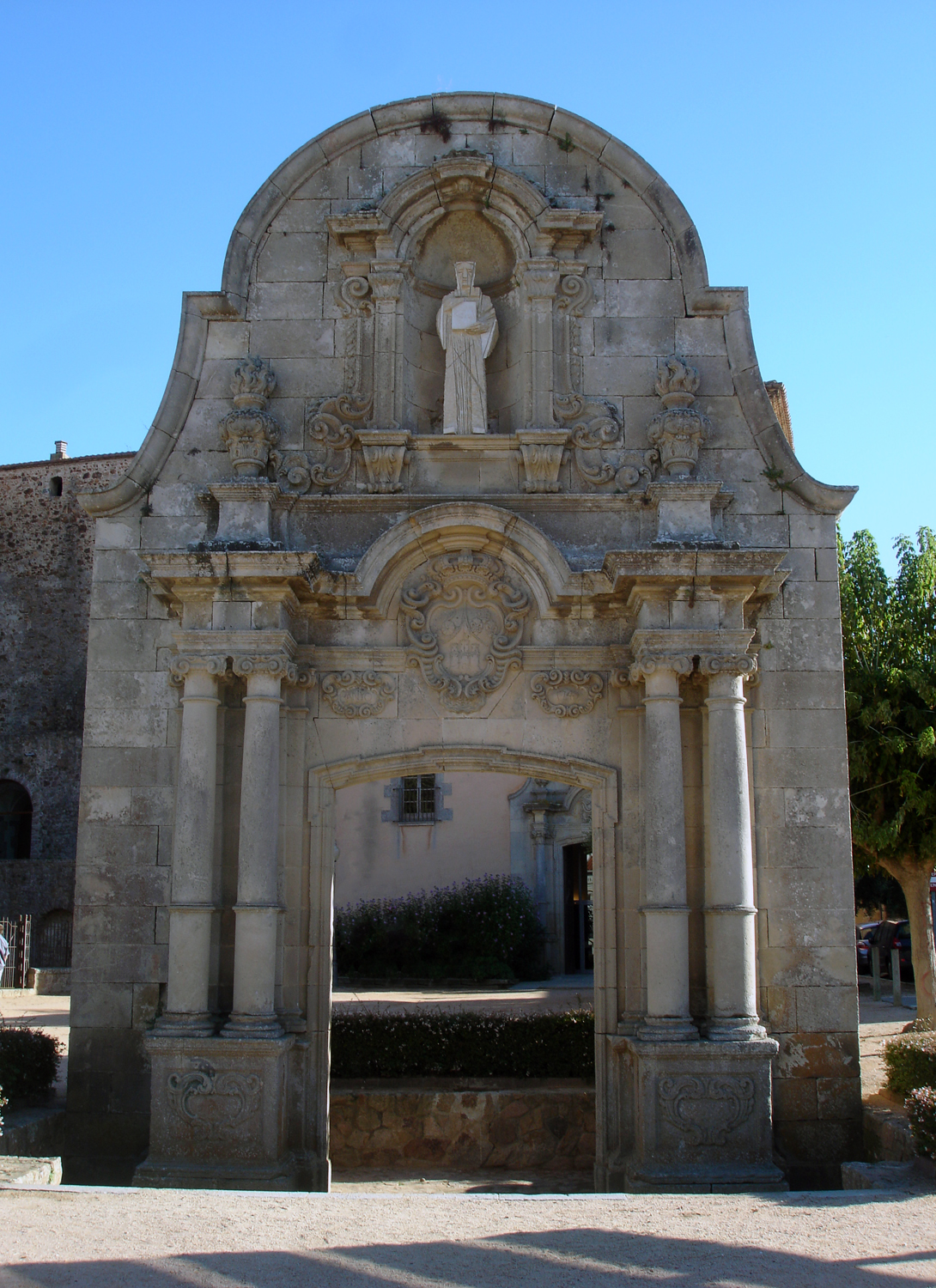
The heart of Cistella is organised around the parish church of Sant Martí. The current building stands on a structure usually dated to the medieval period, although later alterations have changed parts of its appearance. Its bell tower rises above the surrounding rooftops and is visible from the fields that encircle the village, serving as a reference point in a settlement where few buildings reach any height.
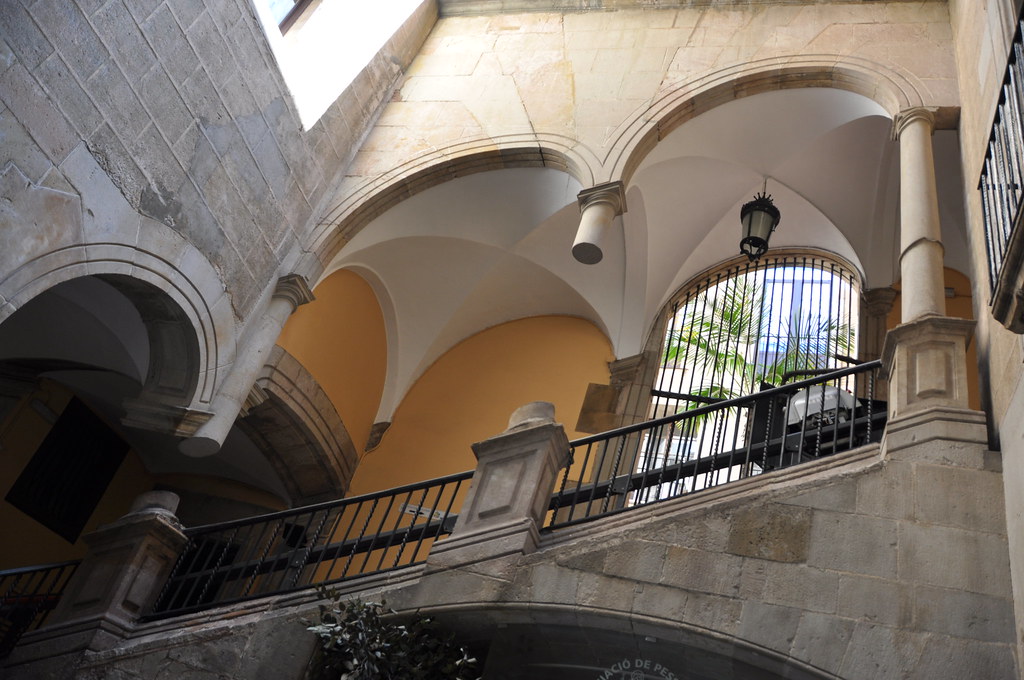
The nearby streets follow the practical logic of agricultural villages in the Empordà. Stone houses line narrow routes, many with wide doorways that once allowed carts to pass through. Interior courtyards formed the centre of domestic life, spaces where work and household tasks were carried out.
There is no monumental old quarter in the conventional sense, yet there are details that speak clearly of a rural past. Carved lintels sit above doorways, thick stone walls provide insulation from heat and cold, and some façades still display inscriptions or dates. These small elements give texture to a place whose history is written in its buildings rather than in grand landmarks.
Step beyond the last houses and the countryside appears almost immediately. The landscape is typical of the interior of Alt Empordà: cereal fields stretching across open ground, scattered olive groves and small patches of holm oak woodland. On clear days, from the tracks that run around the village, the mountains of the Pyrenees are visible to the north. The view reinforces Cistella’s position between plain and upland, between cultivated land and the higher terrain beyond.
Walking the Agricultural Landscape
The surroundings of Cistella lend themselves more to gentle walks than to demanding hikes. A network of agricultural paths links the village with nearby municipalities such as Lladó and Navata. These routes involve modest changes in elevation and pass through cultivated fields and areas of low woodland.
Moving through this landscape helps make sense of how the interior of the Empordà functions. Small population centres lie only a few kilometres apart, separated by open farmland and dotted with masías. The pattern is consistent across the area: compact villages surrounded by working land, with individual farmhouses set back from the main roads.
In several nearby villages, producers of olive oil, wine and traditional embutidos, cured meats typical of the comarca, are still active. Many operate on a small scale, so it is worth checking in advance if visits are possible. Their presence underlines the agricultural character that continues to define this part of Catalonia.
A short distance away stands Figueres, which concentrates much of the cultural activity of the area. The contrast is immediate. From a very small rural nucleus in Cistella, the journey to Figueres brings you to a town with museums, shops and constant movement. The proximity makes it easy to combine the calm of the countryside with the broader cultural offer of a larger urban centre.
Local Festivities
Like many villages in the Empordà, Cistella celebrates its festa major in August. For a few days the pace changes. Popular events are organised, communal meals take place and celebrations linked to the parish bring residents and visitors together.
In winter, around January, the festival of the Tres Tombs is usually held. This tradition is associated with working animals and the agricultural world, though today it has a more symbolic character than a practical one. The name refers to the ritual of circling a route three times, a custom found in various parts of Catalonia and connected to blessings of animals and rural life.
These celebrations are straightforward and primarily intended for the people of the village and neighbouring municipalities. They reflect a social calendar that remains rooted in local ties rather than large-scale tourism.
Visiting Cistella
Cistella is located around 10 kilometres from Figueres and approximately 40 kilometres from Girona. The easiest access is by road, and it is advisable to travel by car, as public transport in this part of Alt Empordà is limited.
The visit itself is brief. The village centre can be covered in a short time, with most of the interest found in walking its streets and observing its architectural details. It makes more sense as a quiet stop within a broader route through the interior of the Empordà than as a main destination in its own right.
For those interested in rural architecture or in the agricultural landscapes of the comarca, a short walk along the paths leading out of the village is enough to grasp how life has unfolded here over generations. The clustered houses, the surrounding fields and the distant outline of the Pyrenees combine to form a setting that remains closely tied to the land.
Cistella does not compete with the coastal towns for attention. Instead, it offers a snapshot of inland Catalonia, where everyday life continues at a steady pace and the relationship between village and countryside is still clearly visible.