Full Article
about Fortià
A farming village on the alluvial plain; noted for the Casa de la Reina Sibila.
Ocultar artículo Leer artículo completo
The tractor stops at 11:03. The driver swings down, greets the baker by name, and heads inside for a cortado. Nobody checks their watch. This is Fortià, eight metres above sea-level in the flat, wind-scoured Ampurdan plain, and time is still negotiable.
Most British visitors flash straight past on the C-66, bound for the medieval set-pieces of Peratallada or the beach bars of Roses. That is exactly why the handful who do veer right at the roundabout find a village that has not reorganised itself around gift shops or tasting menus. The parish church of Sant Julià i Santa Basilissa keeps its faded render; the bakery still sells loaves to people who can remember when they cost pesetas; and the evening paseo involves six teenagers, two dogs, and a grandfather who fought in Ifni.
A landscape that answers back
Fortià sits on a chessboard of wheat, sunflowers and apple orchards that runs unbroken to the Pyrenean skyline. When the tramuntana blows – and it does, sometimes for days – the whole place hums. Washing stays on the line because everyone knows it will be dry in twenty minutes; cyclists learn to tuck in behind the roadside poplars or be pushed sideways into the irrigation ditches. The compensation is air so rinsed that the distant Cap de Creus cliffs look close enough to touch.
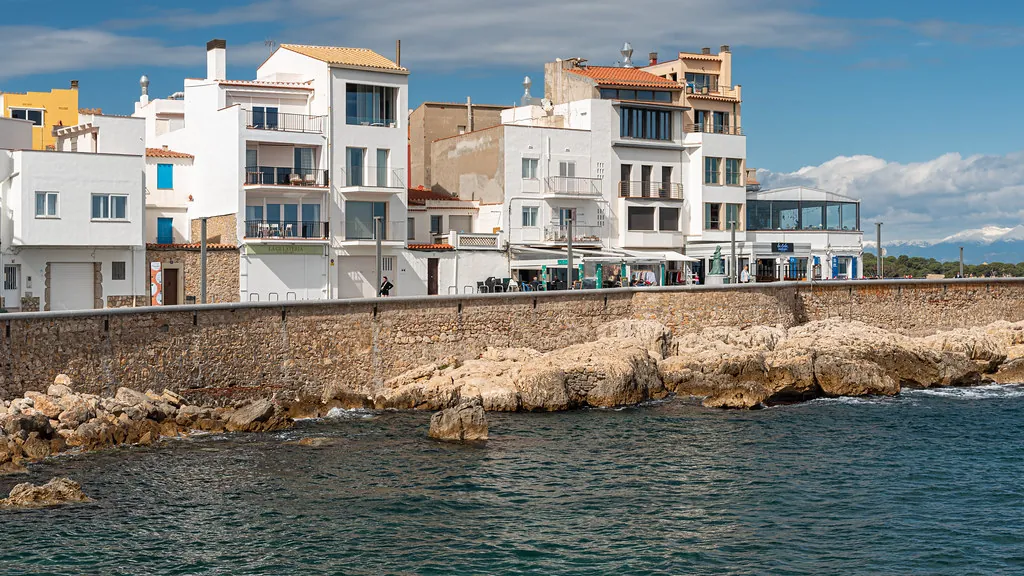
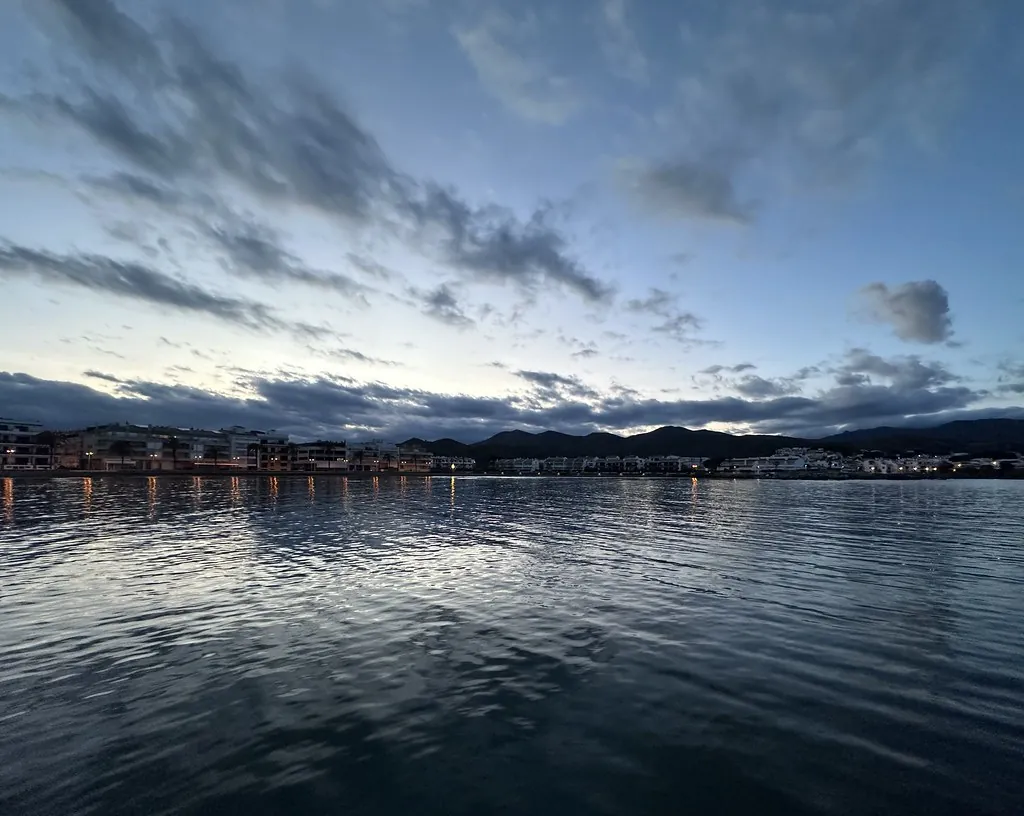
There is no coast here, whatever the satellite map suggests. The sea lies twelve kilometres east across rice fields and a shallow lagoon; you smell salt only when the wind swings south-east. What Fortià offers instead is the audible quiet of farmland: a lark, the creak of a metal gate, the soft pop of a drip-irrigation valve. Evening walks along the farm tracks deliver huge skies and, in October, the smell of new olive oil drifting from the cooperative press.
What you will (and won’t) find
The village inventory is short. One grocery that doubles as the post office, shelves stacked with tinned mussels and Cola Cao. Two bars: Cal Titus for coffee and racing chatter, Bar Fortià for tapas and the occasional ITV satellite feed of Leeds v. Burnley. A pharmacy open three mornings a week. A bakery that runs out of croissants by 09:30 and doesn’t apologise.
That is more or less it. There is no cash machine; the nearest is in Viladamat, four kilometres away, so bring euros at the airport. There is no Sunday newspaper, no chiringuito playlist, no artisan gelato. The single boutique hotel, Dos Corazones, occupies a former olive mill and has eight rooms; book early if you want dinner because half of Figueres turns up at weekends for the rice with artichokes and cuttlefish. The other option, Can Bayre, is a stone farmhouse on the edge of the village with a pool big enough for serious lengths and owners who remember how you like your eggs after one morning.
Pedal, stroll, then sit
The flat lanes make Fortià an obvious base for cyclists tired of Yorkshire headwinds. The old Carrilet railway bed has been resurfaced as a green-way: pedal north to L’Escala for a harbour paella (28 km, dead straight, tramuntana-assisted on the return) or south to Girona if you fancy a century. Mountain bikers can thread the farm tracks to disused rice barns and the odd bunker left over from the Civil War, though the signage is Catalan-only and the recommended tactic is to follow the guy in the Kelme jersey who seems to know every track.
Walkers are better served by the sky. The terrain is pancake-level, so distance rather than gradient delivers the workout. A dawn circuit of the irrigation perimeter takes ninety minutes and ends at the bakery just as the first ensaïmadas emerge from the oven. Serious hikers should drive half an hour to the Albera range where way-marked paths climb through oak and strawberry tree to ruined border castles; bring water, the Spanish idea of a mountain café is a metal spring tap and good wishes.
Eating like you mean it
Food here is governed by the agricultural calendar, not TripAdvisor rankings. Winter means calçot onions charred over vine stumps, their blackened skins peeled back to reveal sweet white flesh you dunk in romesco. Spring brings tiny broad beans stewed with botifarra sausage, the meat so mild even British children eat it without asking for ketchup. Summer is tomato-rubbed pa amb tomàquet, the bread toasted on an open grill until the edges scorch, then anointed with local arbequina oil so fresh it makes the back of your throat itch.
The village restaurant (it has no name on the door; everyone calls it “El Trull” after the old olive press in the corner) opens Thursday to Sunday and serves a fixed four-course menu for €19 including wine. Expect grilled sardines if the boats were out, rabbit with raisins if they weren’t. Pudding is usually crema catalana, its sugar crust cracked tableside with the back of a spoon. Vegetarians get escalivada – smoky aubergine and peppers – and no apology; this is still cattle country.
When to come, when to stay away
April and late-September are the sweet spots. The wheat is either luminous green or harvested gold, the temperature hovers around 22 °C, and you can breakfast outside without the sun-lotion sheen of July. In August the plain turns into a pizza oven (38 °C is routine) and half the village decamps to family apartments on the coast. What remains is peaceful but shuttered; the bakery closes at 13:00 and the bars run abbreviated hours.
Winter is surprisingly sharp. The tramuntana drags polar air down the Rhône valley and night-time temperatures drop to 2 °C. Central heating is not universal; some guesthouses still rely on log burners that go out at 03:00. On the other hand, you get pink sunrise over snow-dusted Pyrenees and the church atrium full of starlings rather than tour buses.
Getting here, getting out
Girona airport is 40 minutes away on the new A-7 spur; Ryanair’s morning flight from Stansted lands at 11:40 and you can be sipping cortado in Fortià before the hire-car queue at Barcelona has moved. Public transport is theoretical: a twice-day bus to Figueres that misses the lunchtime connection, plus a regional train from Girona that stops four kilometres short in Verges. Bring wheels or prepare to wave at passing farmers and negotiate a lift.
When the plain’s silence begins to feel claustrophobic, the coast is fifteen minutes by car. L’Escala’s anchovy factories smell stronger than the sea, but the Greek ruins at Empúries reward a quick stop and the first cove north of town, Cala Montgó, has sand wide enough for a windbreak and water that does not require a wetsuit in June. Inland, the medieval core of Pals is twenty minutes west; go early before the coach parties from Barcelona swamp the ramparts.
The honest verdict
Fortià will never make a “Top Ten Catalan Hideaways” list because it is not hiding. It is simply a working village that happens to have a couple of decent beds and a restaurant that knows what to do with a cuttlefish. Come if you want to cycle empty lanes, eat lunch when the church bell says so, and practise Spanish with people who have not rehearsed the menu in four languages. Leave if you need nightlife, souvenir fridge magnets, or a beach within walking distance. The tractor will still be there tomorrow, and nobody will ask whether you stayed to watch.