

Full Article
about L'Escala
Famous fishing village known for its anchovies; home to the Greek and Roman ruins of Empúries.
Hide article Read full article
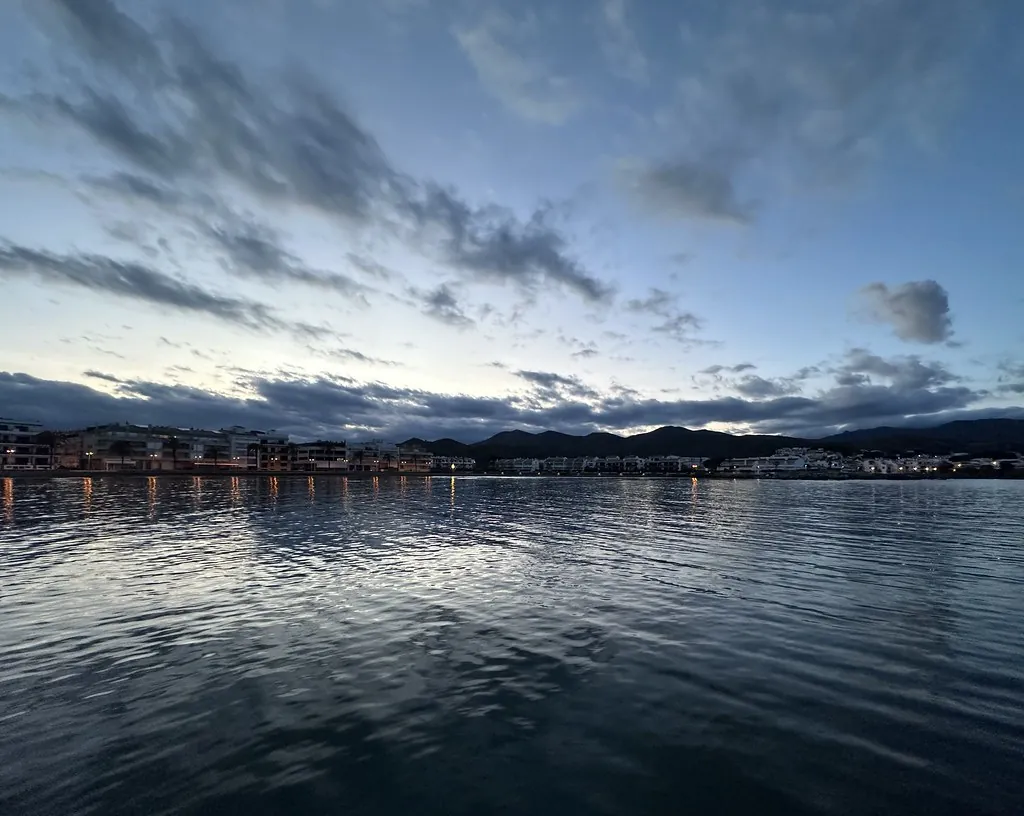
At six in the morning, the air in L’Escala smells of freshly poured brine and damp wood from the boats. On the quay, fishermen shake out their nets with a gesture repeated here for generations. Anchovies still flicker in blue plastic crates while someone hoses down a deck. At that hour, when tourism in L’Escala is still asleep, the town feels less like a beach resort and more like a working port.
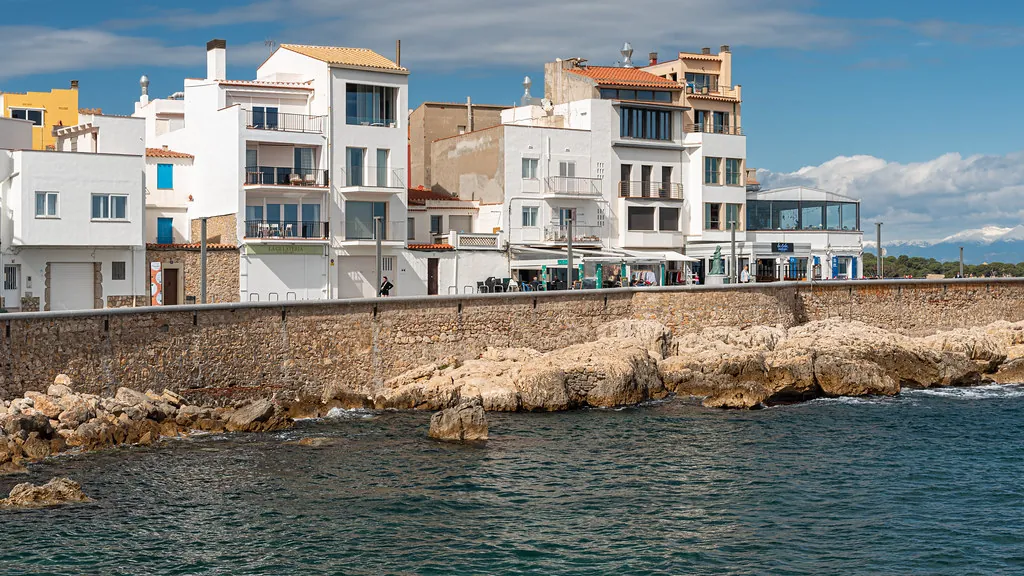
This dual character defines the place. By midday in summer, towels spread across the sand and the seafront fills with voices. Yet at dawn, or outside the busiest weeks, daily life returns to a slower tempo shaped by the sea and the catch.
The taste that lingers on your fingers
The first bite of a L’Escala anchovy straight from the curing process explains why elaborate recipes are not the focus here. Bread, olive oil and that firm flesh are enough. The flavour is salty without harshness, with a faint note that recalls almond.
At the Museu de l’Anxova i de la Sal, housed in a former building near the port, the process behind this staple is laid out clearly. In the past everything was done by hand: layers of fish, layers of salt, then patience. Curing times vary according to the producer, but the principle remains constant. Spend even half an hour inside and the persistent scent of salt and fish clings to your clothes. Later, walking through town, the same smell seems to drift from doorways and workshops.
Anchovies appear in many dishes across the Empordà region, and one of the most characteristic is xató. It rarely arrives looking styled for a photograph. The plate tends to be generous and slightly chaotic: escarole, flaked salt cod, anchovies and hazelnuts bound together with a thick sauce that leaves its mark. Traditionally it is eaten in winter, between January and March, when the tramontana wind clears the sky and a robust salad makes more sense than it would in the heat of August. The tramontana, a strong northerly wind common in this corner of Catalonia, shapes both the weather and local conversation.
Food in L’Escala does not feel separate from the sea. It carries the same directness as the harbour at dawn.
Sand with a long memory
Platja de les Barques is not large, yet it holds a significant weight of memory. Along the promenade stands a stone bench with a discreet plaque marking an episode from January 1939. Thousands of Republican civilians gathered here during the final stages of the Spanish Civil War, waiting for ships that never arrived. Many people walk past without stopping.
The beach shifts with the weather. After strong tramontana winds, the sand moves and sometimes small reddish fragments of pottery appear. They are often ancient remains returned briefly by the sea before being swallowed again. Pick one up and it is common for a local to suggest, half joking, that it should be thrown back into the water.
A few kilometres away lies Cala Montgó. The walk there along the camí de ronda, the coastal path that threads along much of Catalonia’s shoreline, is rewarding if the day is not too hot. The trail winds between pine trees and pale rock. Dark patches of posidonia, a Mediterranean seagrass, are visible in the water before you even dip a toe in. Arrive early in summer and there is still a hush over the cove. By midday, the mood shifts and the quiet gives way to a busier rhythm.
Stones facing the sea at Empúries
Empúries sits roughly three kilometres from L’Escala, and many people reach it on foot by following the coastline. Some stretches of the path are earth, others open more directly to the sea. On clear days the entire Gulf of Roses comes into view, its blue taking on a slightly metallic sheen that changes with the light.
The site brings together two cities built side by side. The Greek settlement was founded around the 6th century BC. Centuries later, a Roman city expanded nearby. Walking through the ruins is straightforward because the remains stand close to one another, separated more by time than by distance.
In summer the stone absorbs heat throughout the day. As evening approaches and the sun lowers, the enclosure gradually empties. The air carries the scent of dry rosemary and warm dust. Sit for a moment facing the sea and there is little to hear beyond cicadas in the nearby fields.
Empúries places L’Escala within a much longer timeline, yet the connection to the present remains visible. The same coastline that attracted Greek sailors still defines the horizon.
When the town rolls up its sleeves
At the end of October, L’Escala usually celebrates the Festa de l’Anxova, the Anchovy Festival. It is one of the few times in the year when the centre of town revolves clearly around fishing rather than summer holidays. Long tables are set up, anchovies are cleaned in full view, and conversations circle around salt, good seasons and lean ones.
August tells a different story. Avoid 15 August if possible. At that point apartments are full and Platja de Riells becomes a patchwork of towels laid side by side.
The pace changes during the week in June or September. The promenade fills with quieter conversations. Morning bread is still warm when shops open. It becomes easy to sit on the quay and watch boats return without anyone in a hurry to move on.
If you decide to take anchovies home, seal them carefully in your suitcase. The smell will probably escape anyway. For a few days afterwards, each trace of salt in the air will bring back this port. On returning home, that reminder tends to feel welcome.