Full Article
about Palau-saverdera
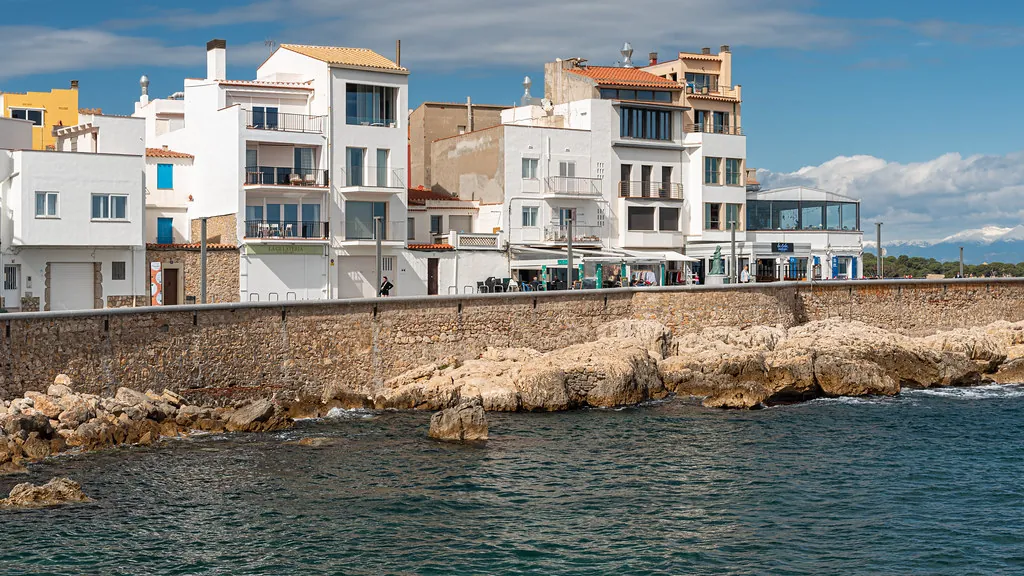
Empordà balcony overlooking Roses bay; set on the slopes of the Rodes range
Ocultar artículo Leer artículo completo
The church bell strikes seven and the smell of wood smoke drifts across Carrer Major. Nothing else moves. Palau-saverdera is awake, but only just. At this altitude—seventy-eight metres above the nearby Mediterranean—the morning air is still cool even in July, and the only sound beyond the bell is a tractor coughing into life somewhere among the vineyards that circle the village.
Two Hamlets that Never Quite Merged
Palau and Saverdera began as separate medieval settlements a kilometre apart. They were shoved together for administrative convenience in the nineteenth century, yet the join remains visible. Walk south along the lane that dips past the stone water trough and you pass from the tight grid around the Romanesque church of Sant Julià into the looser scatter of houses that answers to Saverdera. The hermitage of Sant Onofre sits on a low rise here, more a shelter than a church, its doorway framing a view straight down to the Gulf of Roses. Locals still say they are “going to Palau” or “up to Saverdera”, depending on which end of the combined parish they live in.
The architecture is practical rather than pretty: thick stone walls to blunt the tramontana wind, arched doorways wide enough for a loaded mule, and sliding wooden grilles instead of iron gates so they don’t rust in the salt-laden air. Houses are interspersed with empty plots where vines or vegetables grow right up to the neighbour’s wall. Planning rules forbid the rustic-modern glass cubes that have sprouted closer to the coast; rooflines must be tiled, shutters wood, colours earth or ochre. The result is continuity rather than museum-piece perfection—an ordinary working village that happens to be old.
Between Plain and Coast
Seven kilometres of winding country road separate Palau-saverdera from the nearest sandy beach at Roses. The gradient is gentle on the way down; coming back after lunch it feels steeper. Most visitors use the car, though a few hire bikes in Roses and puff uphill in lowest gear, cheeks pink from sun and effort. Either way, the sea stays in sight: a silver stripe beyond the olive groves that grows wider as the land drops away.
The beach itself is a standard Costa Brava arc of sand with pedalos and beach bars, but it fills fast. By ten o’clock in August the pay-and-display car park behind the promenade is full and traffic wardens patrol with ticket pads. Palau-saverdera regulars set the alarm for eight, claim a parking spot, then retreat to the village before midday heat and coach parties arrive. Evenings work the other way round: when the beach bars close and the traffic thins, the village lights up its grills and terraces. You eat better here, and you pay less.
Where the Vine Still Sets the Calendar
Empordà wine carries a Catalan DO label but little name recognition abroad. Around Palau-saverdera the vineyards roll in every direction, many no larger than five or six hectares, family-run since the phylloxera plague was beaten back with American rootstock. Harvest starts in mid-September; whole streets smell of crushed grapes as trailers rattle towards the cooperative on the edge of the village. Visitors are welcome to watch, and if you turn up with your own container the staff will fill it straight from the press for two euros a litre—rough, young wine that needs drinking within months but tastes of the place.
Olive oil follows the same communal model. The cooperative mill opens for three months after Christmas; locals queue with sacks of fruit picked during the quieter weeks when tourism dips. A 500 ml bottle of extra-virgin sells for six euros at the door, cloudy, peppery, nothing like the bland supermarket blends shipped north. Buy early in the week; by Friday stocks run low and the office shuts at lunchtime.
Walking Without Signposts
There are no branded hiking loops here, just agricultural tracks that join hamlet to hamlet. A favourite route heads west towards Vilajuïga: thirty-five minutes across flat fields of alfalfa, then a sharp climb through pine and rosemary to the ridge that looks back over the Gulf. The path is clear but unsigned; download the GPX before you set out or follow the occasional yellow dash painted by local walking groups. Take water—shade is scarce and in summer the stone reflects heat like a mirror.
Northwards the terrain rises more seriously into the Serra de Rodes. The monastery of Sant Pere de Rodes appears first as a reddish notch on the skyline, then resolves into tenth-century stone perched 520 m above sea level. From Palau-saverdera the drive is fifteen minutes on a switch-back road that narrows to single track; park at the monastery gate and you can walk the last kilometre to the summit of Verdera castle for a view that stretches from the Pyrenees to Cap de Creus on a clear day.
Eating What the Wind Brings
Restaurant Solovida occupies a converted farmhouse on the road into Saverdera. The menu changes daily depending what the owner finds at Roses fish market or in his own vegetable patch. Expect grilled sardines if the wind has been from the north-east, or slow-cooked pork shoulder when it swings inland. Starters are safe for cautious palates: tomato-rubbed bread, local sheep’s cheese, maybe a bowl of chickpeas with spinach. Mains venture further—cuttlefish stew tinted black with its own ink, or fideuà, the short-pasta cousin of paella that arrives in a cast-iron pan. House white from the cooperative costs fourteen euros a bottle and arrives chilled in an ice bucket fashioned from an old olive-oil tin.
Bookings are wise at weekends; the dining room seats thirty-five and the kitchen shuts at ten-thirty sharp. If you prefer to self-cater, the village shop opens limited hours: 09:00–13:00 and 17:00–20:00, closed Sunday afternoon and all Monday. Bread is baked on the premises; ham and cheese are sliced to order while you wait. For anything more exotic—oat milk, fresh herbs, a decent bottle of gin—drive to the Eroski hypermarket on the outskirts of Roses before you check in.
When to Come, When to Stay Away
April and late-September give you warm days without furnace heat and prices twenty per cent below peak. Spring adds the bonus of wild asparagus along the lanes; autumn brings the grape harvest and new oil. May can be wet—sudden storms sweep in off the Pyrenees and tracks turn to mud. Mid-winter is surprisingly bright; daytime temperatures nudge fourteen degrees and the village empties except for retired farmers and the odd British couple renting a stone cottage for six months. Snow is rare but the tramontana wind can gust above 90 km/h; loose roof tiles clatter into the street and outdoor terraces stay shut.
August fiestas transform the place. The Festa Major packs in concerts, foam parties for children, and a communal paella that feeds eight hundred. Cars line both verges of the GI-610 and music thumps until three in the morning. It’s fun if you like crowds, less so if you came for silence. Accommodation prices jump by a third and every farmhouse pool is suddenly “shared” with the owner’s extended family. Book elsewhere if you want hush; come mid-week if you want to watch Catalan folklore without the tour-bus commentary.
Last Orders
Palau-saverdera will never feature on a postcard of whitewashed cottages spilling to the sea. It offers something narrower but deeper: a place where agriculture still pays the bills, where the evening paseo is a social necessity not a cultural display, and where the horizon includes both water and mountain without surrendering to either. Bring a car, download offline maps, and expect to explain your gluten intolerance in phrase-book Spanish. Do that, and the village repays with wine straight from the tank, oil you watched pressed, and a seat on a stone bench that has outlasted every empire marketing team the coast can invent.