

Full Article
about Portbou
Last town before France; marked by the international station and the Walter Benjamin memorial.
Hide article Read full article
A village shaped by geography
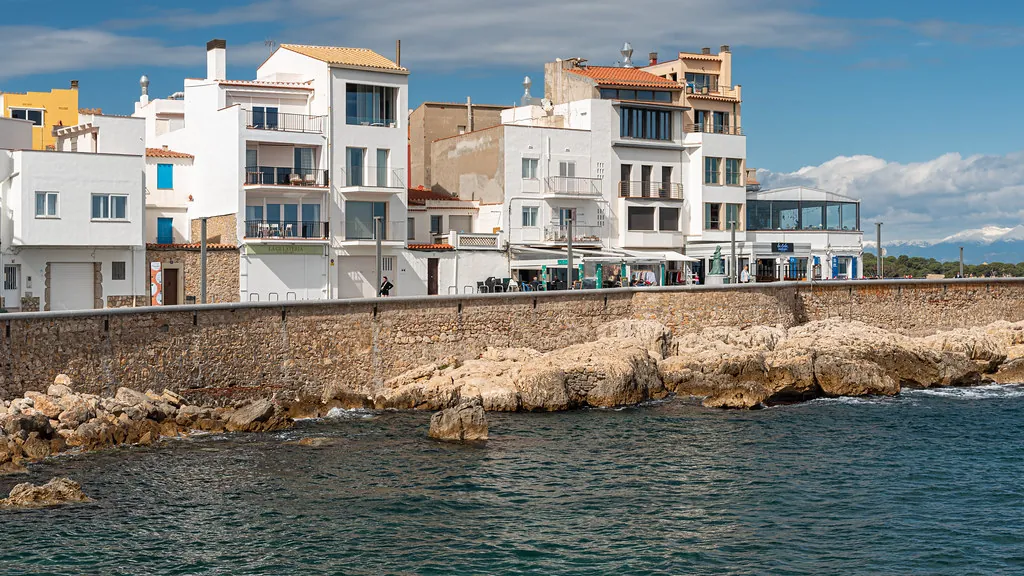
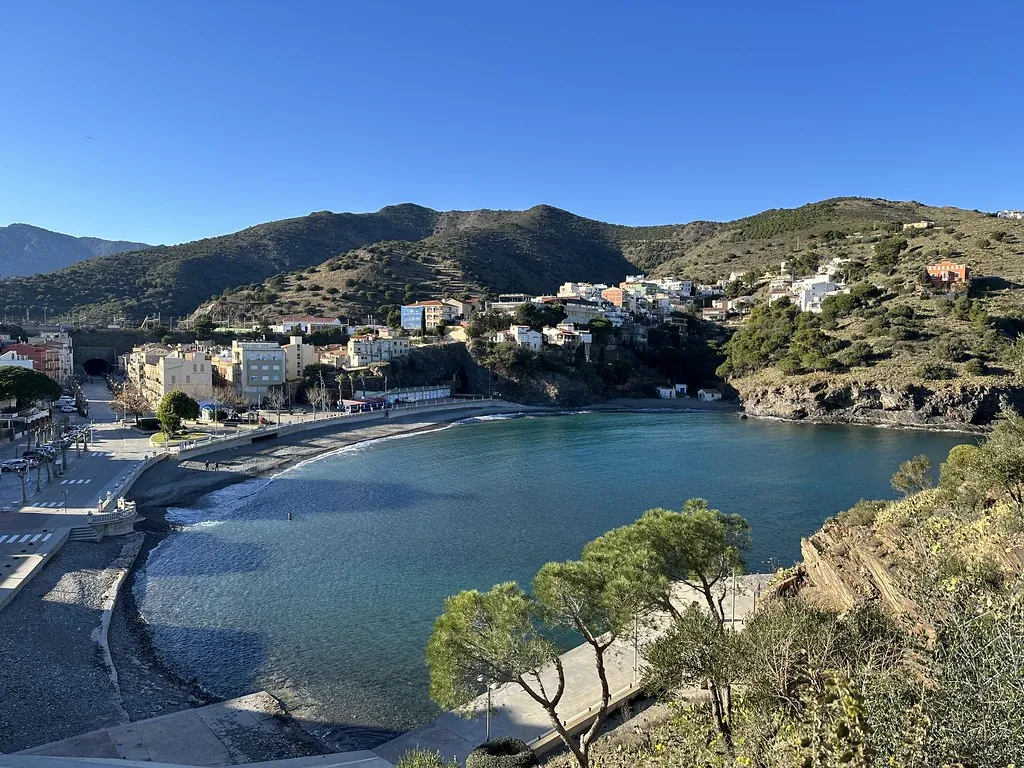
Portbou feels as if it has been placed in the only space available, squeezed between mountain and sea. It sits right on the border with France, and that border has defined its character for decades. This small town in the Alt Empordà, with just over a thousand residents, was once a major gateway between two countries. Trains arrived and departed constantly. Goods were transferred. People crossed in both directions, some fleeing, others returning. It is a considerable amount of history for such a modest place.
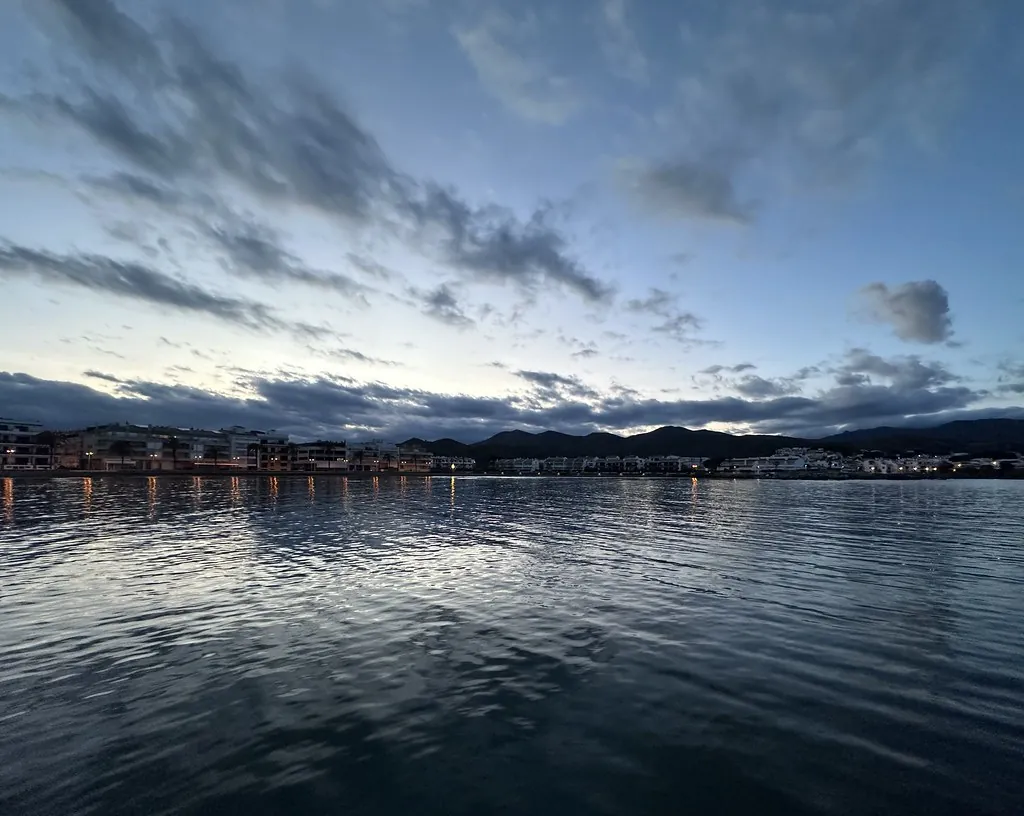
The setting explains everything. The Pyrenees descend almost directly into the Mediterranean, forming a kind of natural amphitheatre of dry slopes that drop towards the bay. This is not the long, sandy postcard version of the Empordà coast. The landscape here is rougher. Rock dominates, small coves appear between headlands, and pine trees lean under the force of the tramontana wind. The wind is not a marketing line. When it blows, it does so with intent.
Some of the railway structures still seem outsized for a town of this scale. Their dimensions make sense once the past is taken into account. For years, Portbou was one of the principal rail crossing points between Spain and France. The difference in track gauge between the two countries meant that trains and goods had to be changed here. That former intensity shaped the layout of the town and remains present in the memories of older residents who recall trains coming and going at all hours.
Places that define Portbou
The Memorial Walter Benjamin stands at Punta del Farriol and is one of the quietest spots in town. The intervention is deliberately restrained. A steel staircase descends towards the sea, enclosed by concrete walls, leading the eye and the body downwards until the water fills the view. It commemorates the German philosopher Walter Benjamin, who died in Portbou in 1940 while fleeing Nazism. There are no grand displays or lengthy explanations. The space invites a pause, a moment to look at the water at the end of the corridor and reflect.
The 19th century church of Santa María appears almost unexpectedly among the central streets. It is neither monumental nor especially old compared with other churches in the region, yet it forms part of the town’s everyday landscape. Its practical design, without excessive ornament, mirrors Portbou’s own character.
At the far end of the headland stands the Búnker del Farriol, a small fortification dating from the Spanish Civil War. The path leading to it climbs steadily and includes loose stones, so decent footwear is advisable. From the top, the shape of the bay becomes clear, along with the sense of being at the limit of the Catalan coastline, where land narrows and the border is close.
Around Portbou, the coves are small and somewhat rugged, places where rock outweighs sand. Cala Rovellada and Cala del Pi are among the most frequently mentioned. There are no beach bars or facilities. Visitors typically walk down carrying water and something to eat, ready to swim in clear water. The rocky seabed makes snorkelling worthwhile when the sea is calm, with enough marine life among the crevices to hold attention.
The fishing harbour remains active, despite its modest size. Towards late afternoon, boats return or crews tend to their nets. It is not a staged scene. It is simply the routine of a working port that has not entirely turned its back on its original purpose.
The railway station deserves unhurried attention. Large in proportion to the town, it tells its own story about Portbou’s former importance as a frontier rail hub. For years, this was where passengers changed trains and goods were transferred because of the differing track gauges in Spain and France. The pace is different today, yet the structures endure as reminders of that period when the border was an intense point of exchange.
Walking the edge of Catalonia
One of the most rewarding ways to experience Portbou is on foot. The Camí de Ronda follows the coastline, linking Portbou with other coves and nearby towns while keeping close to the sea. Some stretches are narrow and uneven, with noticeable changes in elevation. It is not a casual stroll in beach sandals. The views, however, justify the effort. At times the path feels suspended between rock and water, with the Mediterranean stretching out to one side and the dry slopes rising on the other.
Snorkelling is another activity that suits this coastline. There is no need to venture far from shore to find rocky seabeds with a reasonable amount of life when conditions are calm. It is not spectacular in the sense of dramatic reefs, but it offers enough detail to spend time watching fish move between cracks and over stone.
Then there is the simple act of walking through the town itself. Climb one of the steeper streets and look back over the bay. The arrangement of houses, the sweep of the hills and the curve of the shoreline reveal a place that has long functioned as a point of passage. Portbou carries the air of a former transit hub that never fully transformed into a conventional tourist destination. In earlier decades, half a continent seemed to pass through its station. Now the rhythm is slower. That change, rather than diminishing the town, gives it a certain coherence.
A border town that remains itself
Portbou’s identity rests on geography and history rather than spectacle. The border with France is not an abstract line on a map but a lived reality that shaped daily life for generations. The railway, the memorial at Punta del Farriol, the modest church of Santa María and the Civil War bunker are all pieces of a larger story about movement, conflict and adaptation.
The natural setting reinforces that sense of being on an edge. The Pyrenees do not fade gently into the sea here. They drop towards it, creating a bay that feels enclosed yet exposed to the wind. The tramontana can alter the mood of the place in a matter of hours, pushing against the pines and stirring the water.
For travellers used to the broader beaches of the Empordà, Portbou may seem austere at first glance. Its coves require a short walk. Its streets climb. Its past is more about trains and borders than leisure. Yet these elements form a coherent whole. Portbou remains what geography and history have made it, a small town at the meeting point of mountain, sea and frontier, still marked by the memory of movement across that narrow strip of land.