Full Article
about Roses
Major tourist hub with a spectacular bay; historic citadel and fishing port
Hide article Read full article
In some boats in the harbour, sardines are already on the grill early in the morning. White smoke drifts into the lingering haze before the tramontana wind has cleared it, and the smell of freshly caught fish climbs the slipway like a slow tide. Around the fish market, conversations are brief and practical while the first buyers arrive. Grandmothers with wheeled trolleys and cooks yet to begin service look over boxes of red prawns that were in the Bay of Roses only hours earlier.
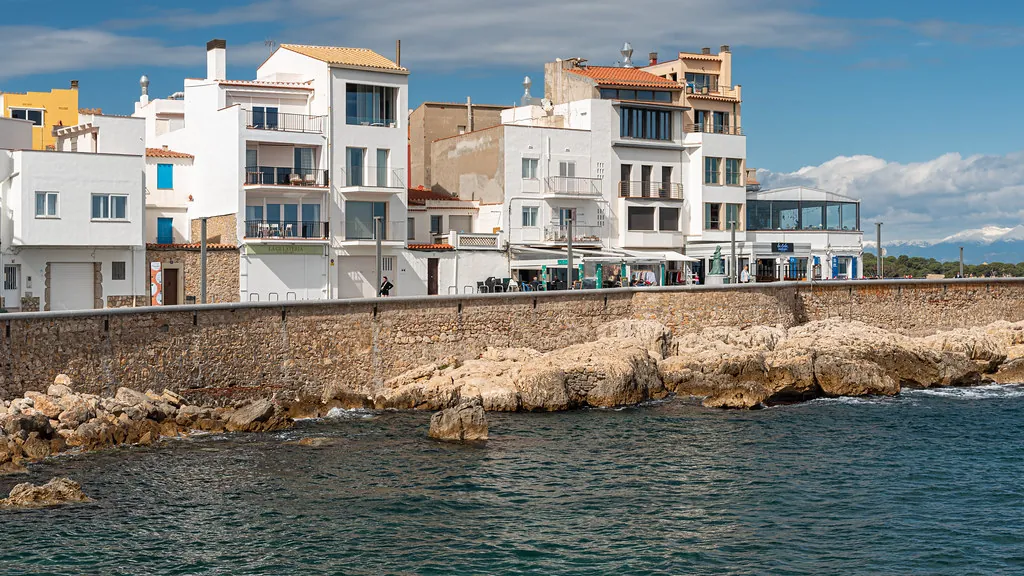
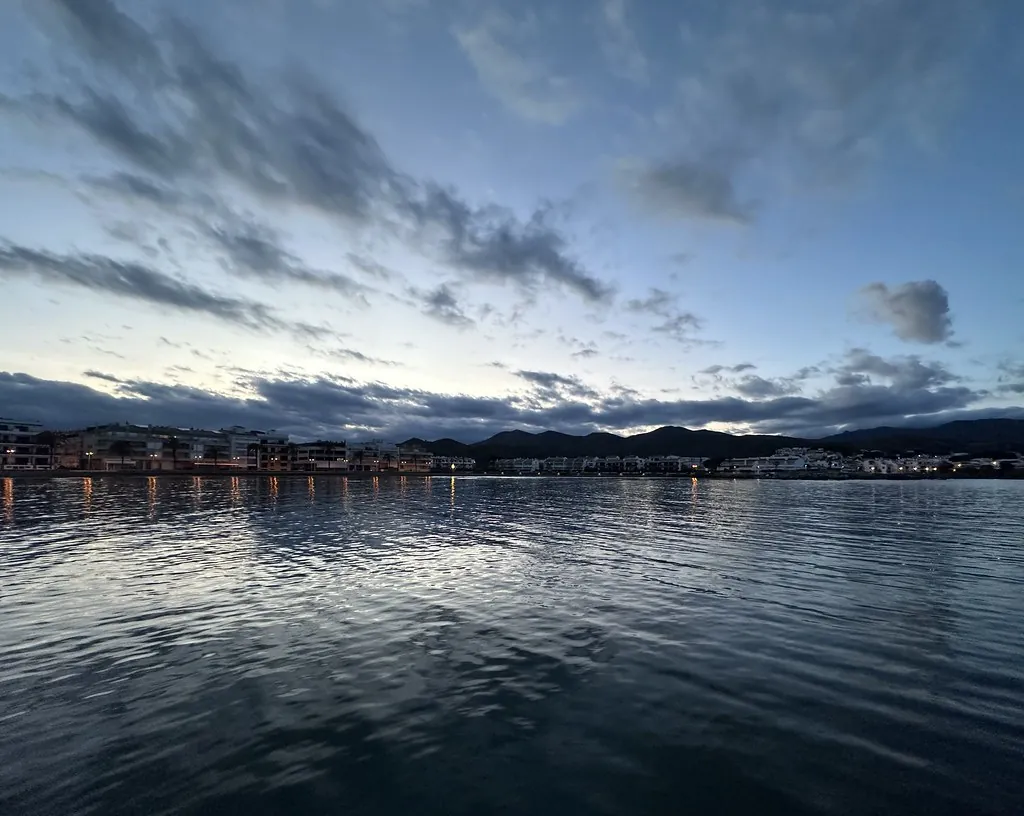
From the quay, the curve of the seafront promenade looks like an arm around the water. Palm trees drag their dry leaves along the ground with a rough, papery sound. In the distance, rows of flats with glass-fronted terraces are still half asleep, shutters partly down, a plastic chair stacked against a wall. Roses takes its time in the morning.
Eating from the bay
Suquet de peix usually comes in a dark clay pot. The broth, somewhere between yellow and orange, carries the scent of the sea and properly softened tomato. A piece of white monkfish sits beside a red langoustine that still holds its original shape. Whoever serves it tends to offer the same warning: it is a soupy dish and more filling than it looks. The rice stays hidden under the broth, waiting for the spoon to find it.
Anchovies from l’Escala appear on many menus in different forms. They might be laid over toasted bread, paired with thick slices of tomato, or served on their own, lined up on the plate. They are salty, of course, but with the slight sweetness that comes from being well cured in olive oil. Along a coast where fish moves from sea to kitchen within hours, flavours tend to be direct and uncomplicated.
La Ciutadella: layers by the sea
By mid-morning, the sun falls directly on the stone walls of the Ciutadella. From outside, it looks like another Mediterranean fortification, but the sense of the place changes once inside. Different periods sit side by side within the enclosure.
There was once a Greek settlement here called Rhode. Later came Roman activity linked to trade and salted fish production, followed by medieval structures and, finally, the large Renaissance fortification that defines the perimeter today. Walking through the site means moving between these layers: fragments of older walls, the remains of a Romanesque church, bastions facing out towards the bay.
The space is broader than it first appears from outside, and at certain times of day the wind runs freely between the walls. From some higher points, the shape of the Bay of Roses becomes clear, open and calm on most days, with the outline of Cap de Creus closing the horizon to the north.
A dolmen among pines
A few kilometres from the centre, on a slope covered with pines and cork oaks, stands the Creu d’en Cobertella. The approach involves leaving the car in a small dirt car park and walking for a while along a path that smells of resin and dry earth, especially in summer.
The dolmen appears suddenly between the trees: a large granite slab resting on several upright stones. It is thousands of years old and one of the best-known megalithic monuments in this part of the Empordà. After a full day in the sun, the stone holds the heat, and it feels warm to the touch.
There is little else around it. An information panel, the surrounding woodland, and the sound of wind moving through the treetops. At times, very faintly, there is also the noise of traffic climbing towards the housing developments further up the slope.
Timing your visit
Spring is often a good moment to walk around Roses at an unhurried pace. In May, the town celebrates its festa major, a local festival with giants, traditional sardana dances and lively squares, though without the full pressure of summer crowds. The beach remains calm, and the promenade can be walked without weaving through bicycles and scooters.
In autumn, the harbour comes back into focus. There are sometimes food events centred on the red prawn of Roses, highly regarded across the region. The town fills up again, though in a different way to summer.
If you have a choice, it is best to avoid the second half of August. The seafront becomes dense with people, flats are full, queues form in supermarkets, and traffic slows when trying to park near the centre. During weekdays outside the high season, Roses settles into a slower rhythm. Early in the morning, the harbour smells once again of salt, diesel and freshly unloaded fish, which is perhaps the most straightforward way to understand the place.