Full Article
about Castellet i la Gornal
Municipality with an iconic castle beside the Foix reservoir
Hide article Read full article
The bells of Sant Pere ring as the sun rises behind the vineyards. From the castle walls, the Foix reservoir looks like a sheet of still metal set between low hills. At that hour the village carries the smell of warm bread drifting up from the lower part of the municipality, where a bakery opens before there is much movement in the streets.
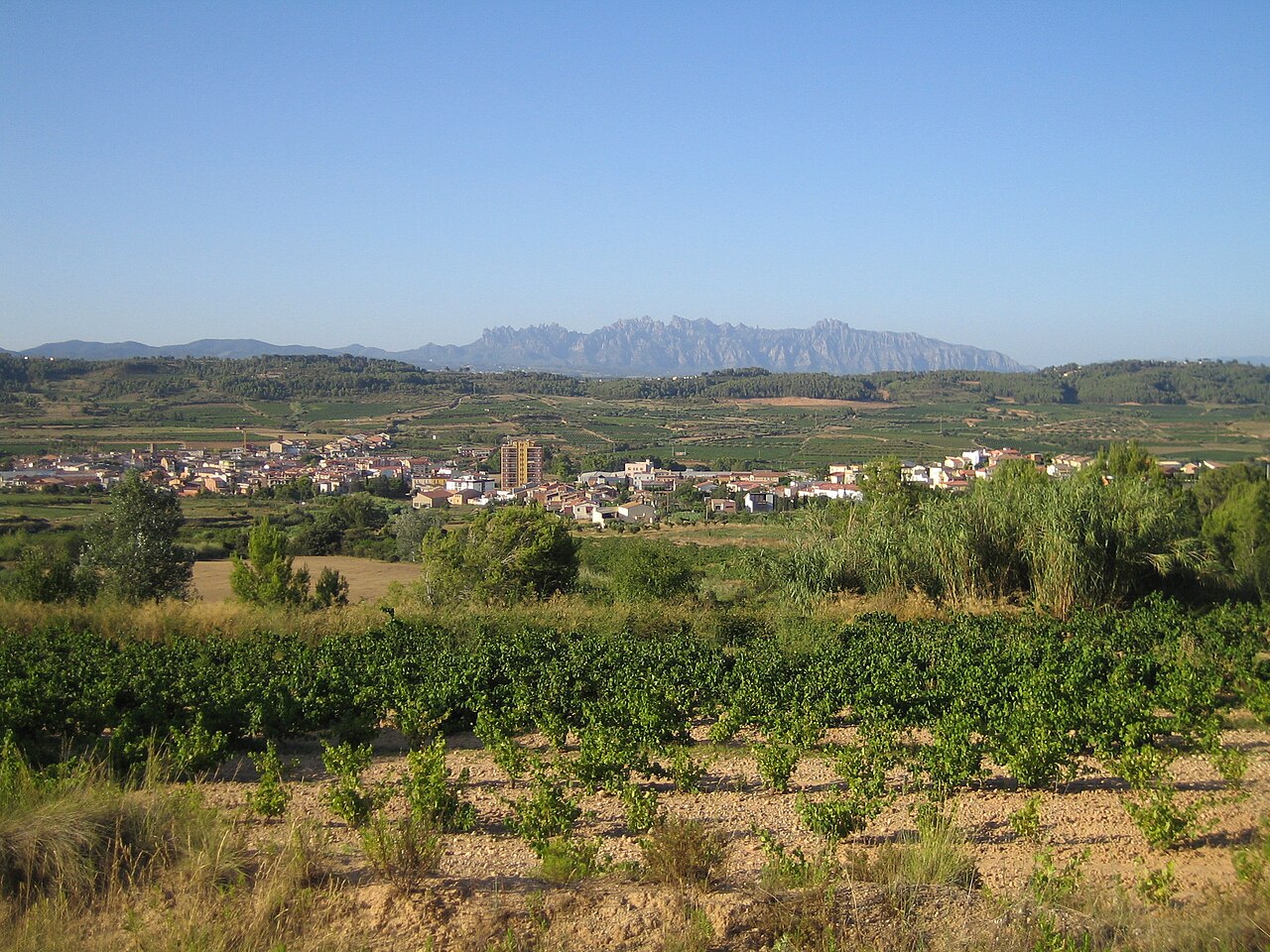
Tourism in Castellet i la Gornal follows a different rhythm from the more exposed stretches of nearby coast. There are cracks in the walls, streets that climb without warning and end at a blank façade, and a small square where dogs stretch out in the shade of an olive tree. Walk along the path that skirts the hill and look towards the Garraf massif, with vineyards spreading across the Penedès plain, and it becomes clear why this spot was watched over from an early date.
The castle that guarded the road to the sea
Castellet is documented as early as the 10th century. Medieval texts mention the sale of the fortress between nobles linked to the County of Barcelona, which suggests its strategic value. It was not conceived as an elegant residence. It was a control point on the natural route connecting the interior of the Penedès with the coast.
The castle stands on a rocky spur dominating the whole Foix valley. Today it houses the UNESCO Centre for Mediterranean Biosphere Reserves, dedicated to research and environmental projects. It is not always possible to explore the interior freely, although the courtyard and some rooms open for occasional visits.
Inside there is a medieval cistern, its stone still bearing the marks of tools. Lean closer and a cold dampness rises from below. The spiral staircase leading to the tower is narrow and worn down at the centre by centuries of footsteps. At the top, the wind pushes in hard enough to make you steady yourself against the stone. Below, the reservoir appears as a dark green patch among pine woods and cultivated fields.
Iron figures in the old streets
Descending from the castle, iron sculptures begin to appear throughout the historic centre. They are the work of the sculptor Luis Zafrilla and depict traditional trades: a stonemason striking rock, a carter bent over the axle of his cart, an altar server holding a bell.
Over time the iron has rusted, and the figures seem to blend into walls and corners. There is little in the way of explanation. They reveal themselves gradually as you walk. A full circuit of the old quarter measures less than a kilometre, though it stretches out if you pause in each narrow lane or lean for a while on the railing that looks towards the reservoir.
By mid-morning, snatches of conversation drift down from balconies and the clatter of plates carries from kitchens. Even when visitors arrive, the village keeps a largely domestic pace.
Foix reservoir, water among the pines
The Foix reservoir was built in the 20th century to secure irrigation for the Penedès. It was not created as a bathing area or a hub for water sports, and the surroundings remain relatively calm.
A footpath leaves from the village itself and descends through Aleppo pines towards the shore. In spring the ground is carpeted with dry needles and the air smells of warm resin. When water levels drop, remains of the old road that once ran through the valley before the dam sometimes reappear: cracked stretches of asphalt, old posts, fragments of wall.
Several paths skirt the reservoir. One leads to a small viewpoint where a female sculpture gazes across the water. Locals know her as Penélope. Anyone planning to walk for a while should carry water and something to eat. There are no fountains in that area, and at midday the sun falls directly overhead.
Three centres, three celebrations
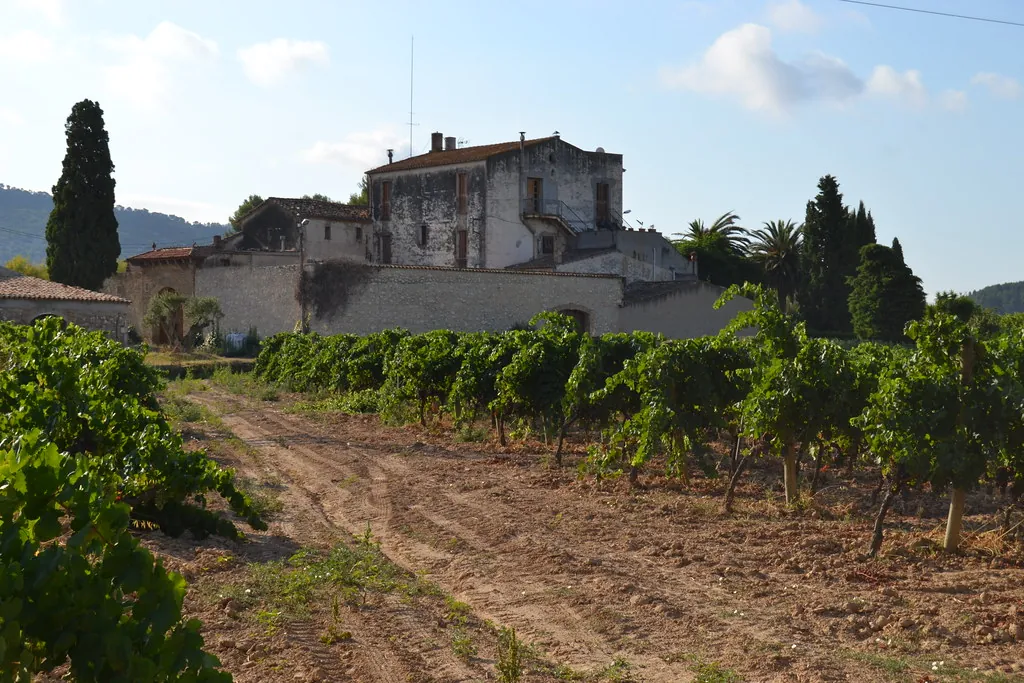
The municipality is divided into several centres. Castellet sits high beside the castle. La Gornal lies further down on the plain. Sant Marçal gathers around its church and a handful of masías, the traditional Catalan country houses.
Each maintains its own local festivals. Traditionally they take place at the beginning and end of summer, depending on the centre, with open-air dances, communal meals and events linked to the parishes. In Castellet, an early summer medieval-themed market usually fills the streets of the old quarter.
During those days the scents shift: hot wax from craft stalls, grilled meat, wine poured from porrones, the traditional glass pitchers used for sharing. The combination fits naturally within the Penedès landscape, where the vines begin to close their cycle before the grape harvest.
When to come at an unhurried pace
April and May are often the most rewarding months. The vines bud, poppies fill the field margins and the air has not yet taken on the weight of inland heat. On weekdays the village becomes very quiet.
Weekends bring more movement, especially people arriving from Barcelona or the nearby coast to stroll through the old quarter or walk around the reservoir.
Even at busier moments, Castellet i la Gornal does not shift dramatically in character. The castle continues to watch over the valley as it has for centuries. The iron figures remain in their corners. The Foix reservoir reflects the sky or retreats to reveal traces of the past. It is a place best understood by walking slowly, noticing the worn steps, the smell of pine resin, the sound of bells at first light.