Full Article
about Gelida
Hillside town with a funicular and a medieval castle visible from afar
Hide article Read full article
The funicular in Gelida is like that friend who always turns up late but ends up saving the day. For almost a century it has been shuttling up and down the same slope, covering around 110 metres of height in just a few minutes. It does not sound dramatic until you try walking up in August and quickly understand why the invention is still going strong.
This small town in Catalonia, in the Penedès wine region, unfolds between railway tracks and vineyards, with a castle watching from above. Gelida does not overwhelm at first glance. It grows on you slowly, between a ride in a wooden carriage, a wander among ruined walls and the smell of grapes at harvest time.
A castle that keeps watch
There is one silhouette that dominates Gelida: the castle. Perched at the very top, it is visible from almost anywhere in town. Not because it looks like a perfect postcard scene, but because it occupies half the hill and is impossible to ignore.
The Castell de Gelida has one of the largest enclosures in Catalonia. That sounds grand, and in practice it means quite a bit of walking between walls, towers and stretches of weathered stone. The scale becomes clear as you move through the remains, tracing the outline of what was once a major stronghold.
The castle appears in documents from the 10th century, when this area marked the frontier between Al‑Ándalus and the Catalan counties. In other words, it stood on a shifting border between medieval powers. Today the mood is far calmer. People stroll along the paths, children run between the ruins and locals head up because there is usually a bit more breeze at the top.
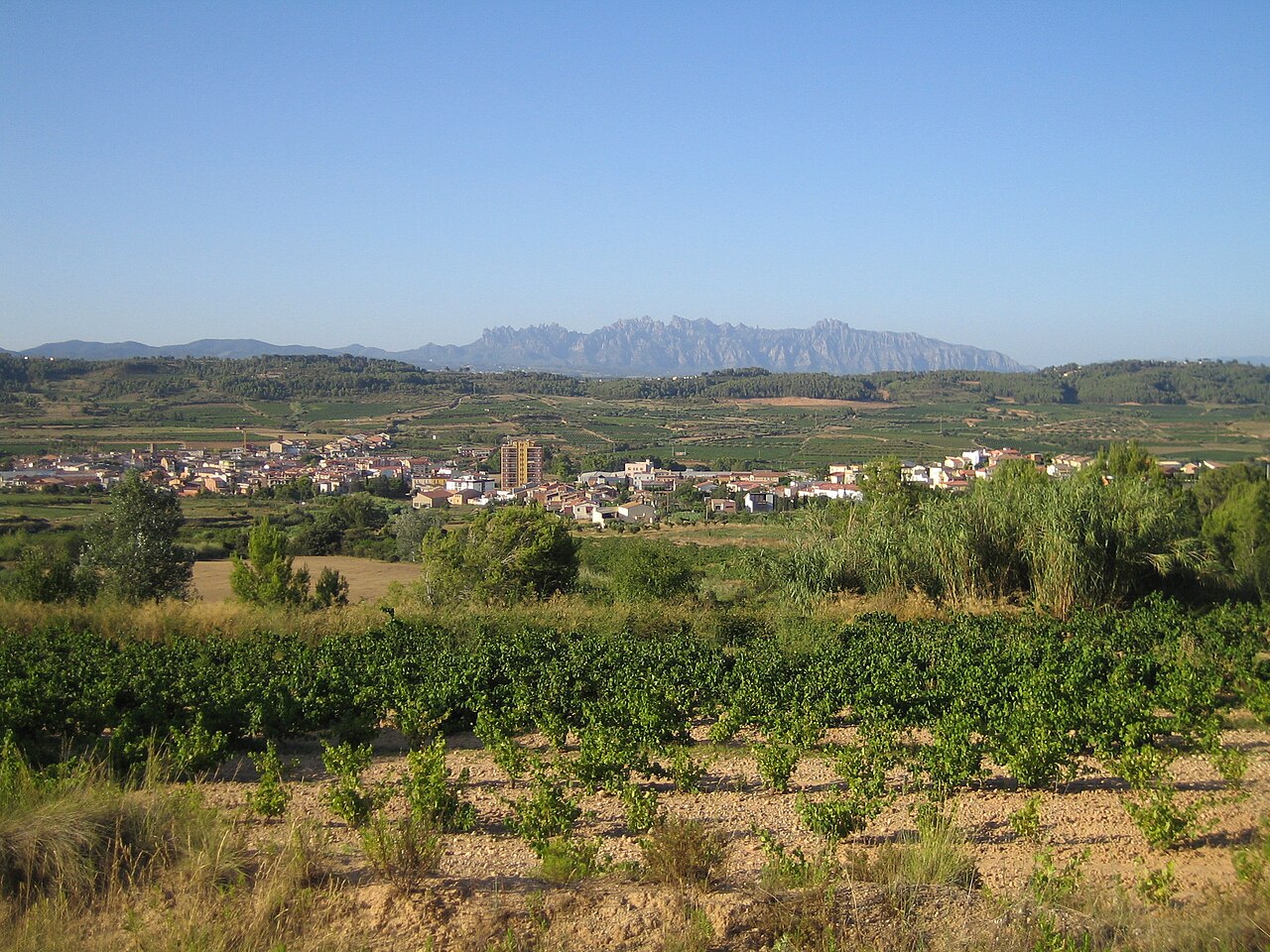
Lean out towards the Penedès and the view opens wide. Vineyards form a patchwork around the town, stretching across gentle hills. Anyone who has sipped cava in Barcelona has likely tasted something that began in a landscape very much like this. Penedès is one of the heartlands of Catalan sparkling wine, and from the castle the connection between town and terroir is obvious.
In winter, Gelida often celebrates a popular day linked to Sant Pau. If a visit happens to coincide, expect long tables set out, steaming pots and plenty of conversation. Cold weather feels more manageable when shared over food and talk.
The funicular that explains the town
If the castle tells the medieval story, the funicular explains the modern one. It links the railway station with the upper part of Gelida, sparing residents and visitors a steep climb that has a bite to it. The journey is short, yet it feels like stepping into another era: wood, cables and a steady rhythm rarely seen in everyday transport now.
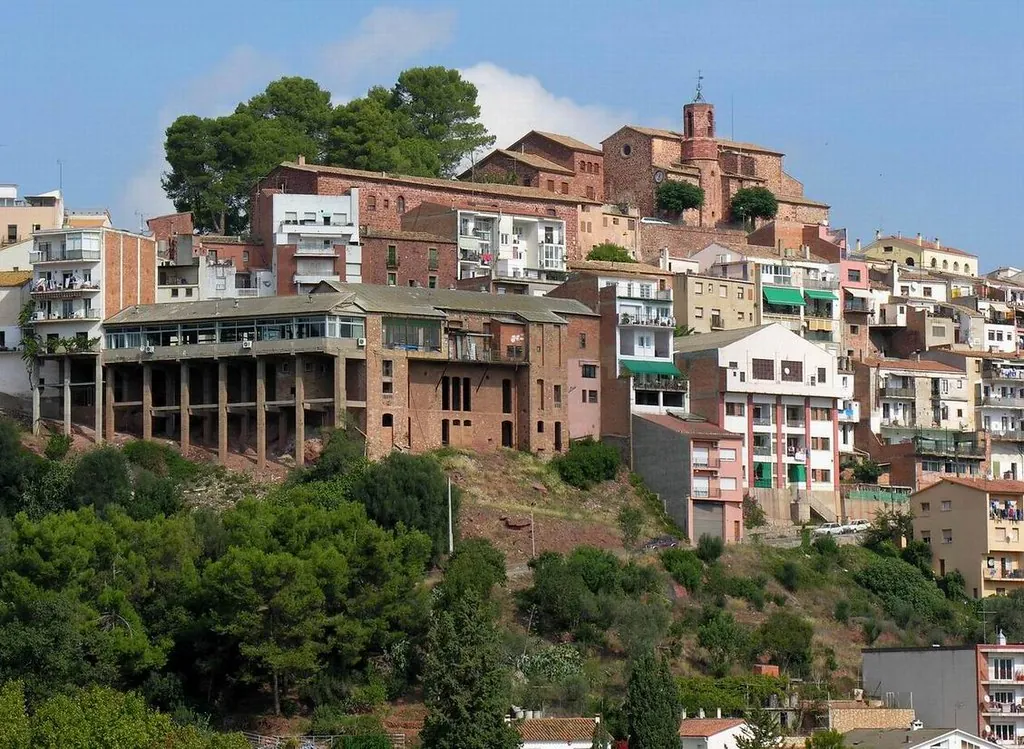
For decades, Gelida was a summer retreat for families from Barcelona. They came in search of cooler air and houses with gardens, an escape from the heat of the city. Many of those tower houses are still standing. Some are carefully maintained, others have been converted into more ordinary homes.
The result is an interesting mix. Modern apartment blocks sit alongside older houses, and now and then a villa hints at a different period. The funicular binds these layers together. Arriving by train and riding up towards the higher streets offers a simple introduction to the town’s layout and its history as a seasonal refuge.
Vineyards all around
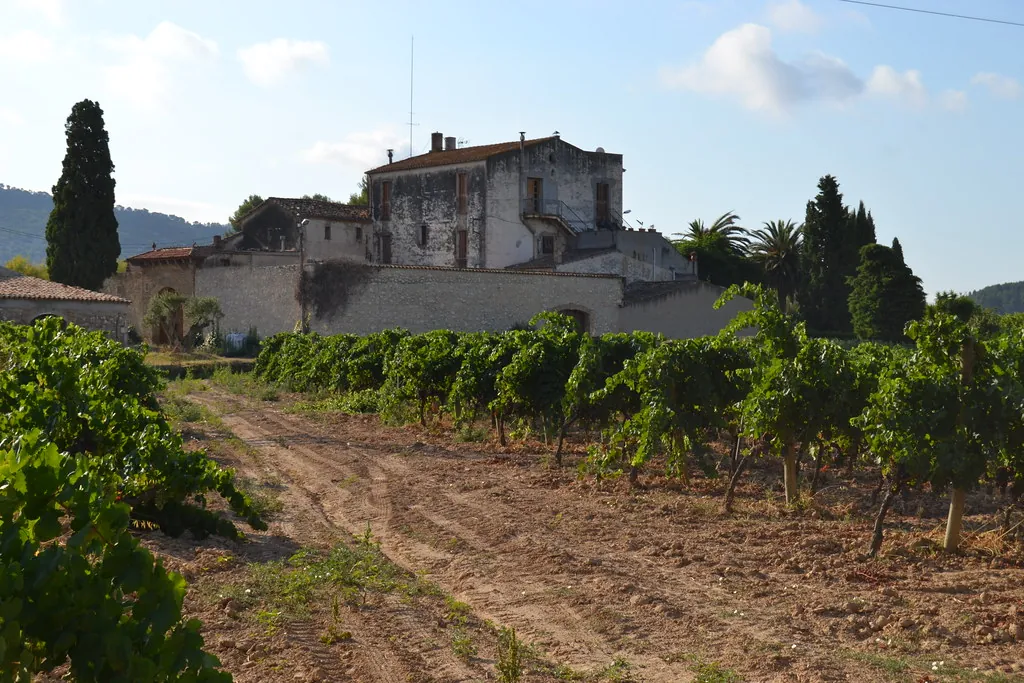
One of the curious things about Gelida is that the landscape often feels more dominant than the urban centre itself. Walk a little beyond the main streets and you are almost immediately among vines.
The Penedès has lived from wine and cava for generations. Here it is not treated with ceremony. Grapes are grown, bottles are filled and wine is drunk. It is part of everyday life rather than a performance. Some wineries in the area organise visits or tastings, especially in the warmer months, yet locals tend to approach it with natural ease.
Towards the end of summer and into autumn, the rhythm of harvest becomes visible. Tractors move along the tracks, trailers pile high with grapes and a sweet scent lingers in the air during the vendimia, the grape harvest. It is a working landscape, and that sense of activity shapes the atmosphere.
From certain points around Gelida, the view is almost entirely green and orderly, lines of vines following the curves of the terrain. The town feels embedded within the Penedès rather than set apart from it.
Walking the hills
Gelida also offers several marked trails. Some lead up towards the castle, others wind through pine woods and fields. These are short routes, more suited to a relaxed wander than a demanding trek.
For those who prefer a longer climb, the area around Puig de les Agulles is worth the effort. It is far from flat. The ascent asks for steady steps and a bit of patience. At the top stands a small hermitage and a natural balcony over the Penedès. It is the kind of place where five planned minutes easily stretch into longer, simply sitting and looking out across the vines.
Distances can be deceptive here, and slopes appear just when least welcome. Carrying water makes sense, particularly in warmer months, when the sun over the vineyards can be relentless.
A simple plan for a day
A straightforward way to experience Gelida begins with the train. From the station, take the funicular up and wander without hurry through the upper part of town. The castle is within easy reach from there, and after exploring its walls and viewpoints, the walk back down to the centre takes little time.
In the lower streets, daily life unfolds without fuss. Shops, neighbours chatting and the ordinary rhythm of a small Catalan town replace the elevated views from above. The shift from medieval ruins to lived-in streets happens quickly.
If the visit coincides with the season of calçots, the experience improves further. Calçots are a type of spring onion typical of Catalonia, traditionally grilled and eaten with sauce in long, sociable meals. Add wine or cava from the area and a leisurely sobremesa, the after-lunch conversation that stretches on without watching the clock, and the day settles into an easy pace.
Gelida does not try to impress. It does not rely on grand statements or polished façades. It offers a castle that once guarded a frontier, a funicular that still climbs its stubborn slope and vineyards that shape both the view and the economy. It is the sort of place that might seem straightforward at first, then resurfaces weeks later in memory with a quiet thought that it was better than expected.