Full Article
about Mediona
Large, wooded municipality with a castle and a craft-beer tradition
Hide article Read full article
The bells of Sant Joan de Mediona tend to ring early, when mist still clings to the vineyards like a grey blanket. From the castle, the comarca of Alt Penedès unfolds in gentle swells of pale green and reddish brown, with the occasional narrow road winding off towards La Llacuna. At that hour the silence feels compact. Sometimes there is the flutter of vultures circling above the gorge, or the sound of wind brushing through the pines.
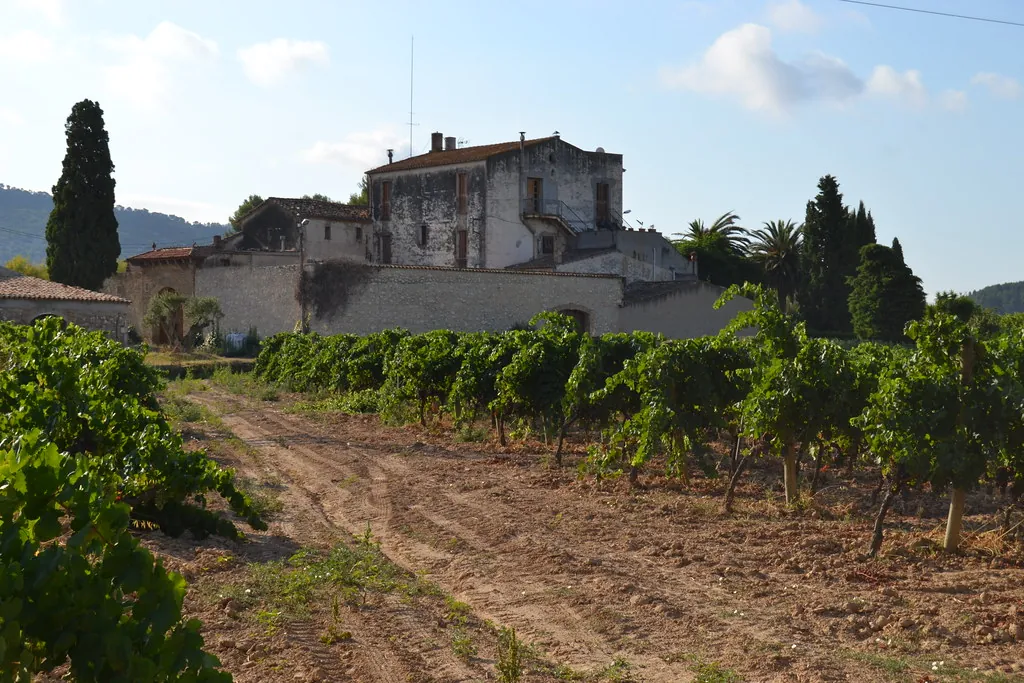
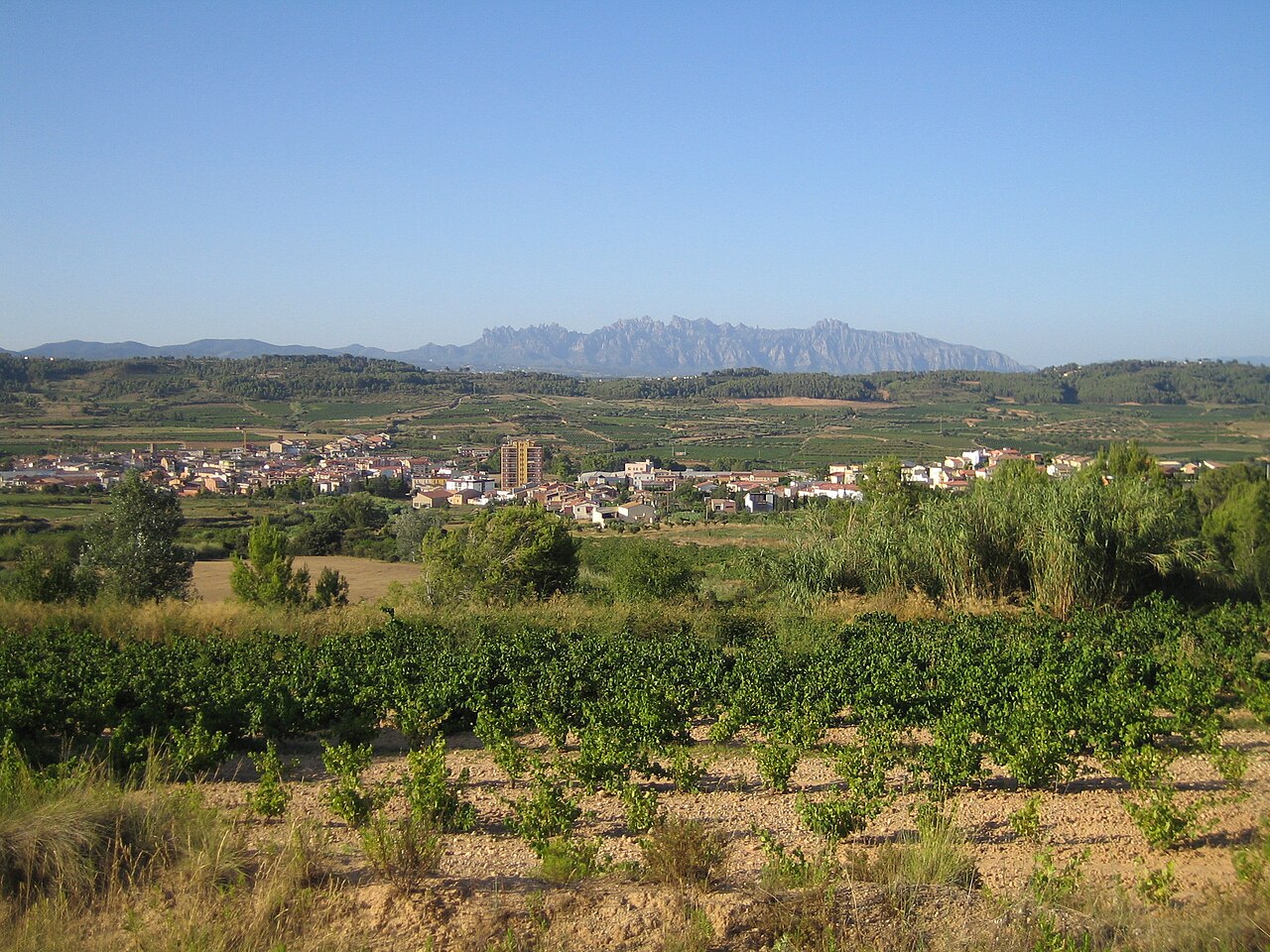
Mediona sits within this landscape of vines and low mountains, its pace set more by the agricultural calendar than by passing visitors. The valley and the surrounding hills shape daily life, and much of what draws people here has less to do with landmarks than with atmosphere.
The Castle Overlooking the Penedès
The path up to the castle begins near one of the masías, traditional Catalan farmhouses, that stand on the edge of the main settlement. Here the asphalt gives way to a reddish dirt track. The climb is steady but manageable, weaving between pines and cork oaks that release a dry resin scent in summer when warmed by the sun.
The circular tower appears suddenly among the trees. The complex is old, its medieval base still visible in the irregular stonework, and it occupies a strategic point where the Mediona valley opens out. From the top, the geography of the area becomes clear. Vineyards follow the contours of the land, a few isolated masías dot the slopes, and on clear days the bluish outline of Montserrat can be seen on the horizon.
Within the enclosure stands a small church. Very little light enters inside. The air carries the smell of damp stone and wax, and the wooden ceiling creaks when strong winds sweep across the range. The person who looks after the site often recounts the story of the Santo Cristo de Mediona, a devotion closely associated with the municipality and neighbouring villages. According to local tradition, the image remained hidden for a long period before reappearing. That story has become part of the collective memory of the place and continues to shape its religious life.
When the River Powered the Mills
Following the path that runs alongside the Mediona river transforms the scenery completely. The track enters a narrower stretch where poplars and alders meet overhead, filtering the light into thin bands. Water flows over dark stones, and in places there is the scent of moss and wet leaves.
For centuries this river powered paper mills. Remains can still be found along the valley: stone walls covered in ivy, dry channels, and the occasional rusted wheel half hidden by vegetation. Some of the old mill buildings have been converted into homes. Others remain empty, their windows without frames and brambles creeping in through the doorways.
Continuing eastwards, the valley gradually widens as it approaches Sant Quintí. At that point the Mediona changes its name to Riudebitlles. Locals mention this quite naturally, as if the river simply adopts a new identity when it crosses into a different landscape.
The river’s industrial past contrasts with the calm it suggests today. Its course links Mediona to neighbouring towns and recalls a time when water shaped both the economy and the rhythm of work in the valley.
Flavours from the Vineyards
In the masías scattered across the municipality, cooking still follows an unhurried rhythm tied to the agricultural year. In autumn, once the grape harvest has finished, the air in the courtyards blends the smell of firewood with that of fresh must. On the tables appear straightforward dishes: embutidos from the Penedès, toasted bread, vegetables roasted slowly in the oven.
Coca de recapte remains common in many households, especially when families gather at weekends. This savoury flatbread is usually topped with ingredients such as vegetables or cured meats. Escalivada is another staple, made from dark aubergines, roasted peppers and sweet onions, peeled while still warm. These are flavours associated more with everyday life than with formal celebrations.
The devotion to the Santo Cristo also has its place in the local calendar. Around this celebration, which traditionally brings together residents from the surrounding area, the village fills with movement from early in the day. Wicker baskets filled with food and wine pass from hand to hand in the square, and the atmosphere becomes noticeably livelier than usual.
Seasons in the Valley
Spring is often the most rewarding time to explore Mediona. The tracks between the vineyards turn green, freshly worked soil releases a sweet scent, and temperatures make it easy to walk without haste. Several forest tracks lead from the main settlement up towards the Serra d’Ancosa. Some of these routes reach old constructions linked to snow storage, reminders of how the mountain was once used before the arrival of industrial refrigeration.
In August the atmosphere changes considerably. Many houses fill with second-home residents, and the paths near the river see more motorbikes and bicycles. Those in search of quiet may find weekdays in May or June a better choice.
Late in the afternoon it is worth looking out over the valley once more from above. The lowering light turns the vineyards into a golden mosaic. When the wind drops, the only sounds are a machine working in the fields and dogs barking in the distance. In Mediona, evenings settle slowly, following a rural rhythm that speaks for itself.