Full Article
about Olèrdola
Known for the Olèrdola monumental site with Iberian and medieval remains.
Ocultar artículo Leer artículo completo
The fortress gates close at three. Not five, not sunset—three o'clock sharp, even in high summer when the light over the Penedès vineyards is still milky white. Turn up at half past with your hire car full of beach towels and children expecting a quick scramble round "some ruins" and you'll find the guardian leaning on the barrier, keys in hand, apologetic but unmoved. That's Olèrdola: it keeps medieval hours, not Costa del Sol ones.
Rising 189 metres above sea level, the basalt ridge is more cliff than hill, which explains why every wave of occupant—Iberian tribes, Roman surveyors, medieval border guards—chose the same spot. From the car park at Pla d'Olèrdola the summit looks gentle enough, but the last 300 metres are a calf-stretching haul up rock-cut steps polished glass-smooth by twenty centuries of sandals, hooves and trainers. Flip-flops are a one-way ticket to A&E.
What waits up top is not a tidy English Heritage layout with colour panels and gift shop. The site is essentially a layered cake of rubble, and your job is to tell the layers apart. Outer wall: Iberian, third century BC, chunky unmortared blocks. Inner wall: Roman rebuilding, thinner stone, proper corners. The little church of Sant Miquel: tenth-century Romanesque, locked except on concert nights but photogenic through its keyhole. Around the apse, forty-odd graves are hacked straight into bedrock—anthropomorphic outlines, toes and all—like a stone orchard of gingerbread men. Nobody knows whether the occupants were Christian, Muslim or simply practical; the necropolis was reused every time the frontier swapped hands.
When the Mistral Blows
Olèrdola never had a seaside, yet the Mediterranean makes itself felt. On days when the tramuntana wind scours the coast, the ridge catches the first gusts thirty kilometres inland. Vines bow in perfect synchrony, exposing the pale underside of their leaves like schoolchildren showing their socks. Temperature drops five degrees in as many minutes; bring a layer even in August. The reward is visibility: on a clear tramuntana afternoon you can pick out the sparkle off Sitges from the battlements and still have time to descend before the guardian locks up.
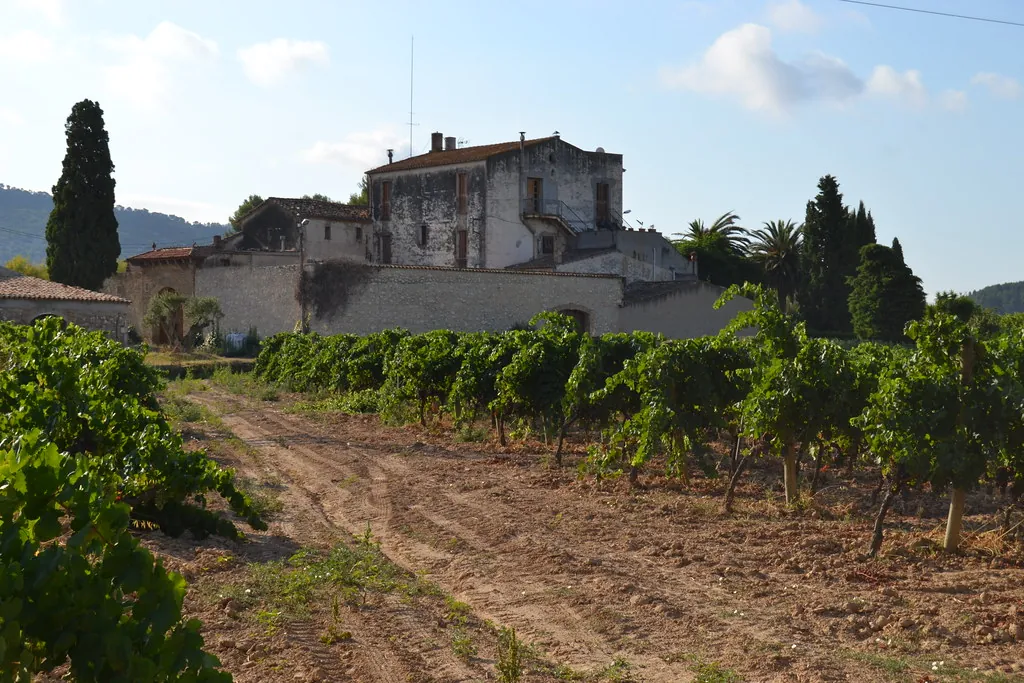
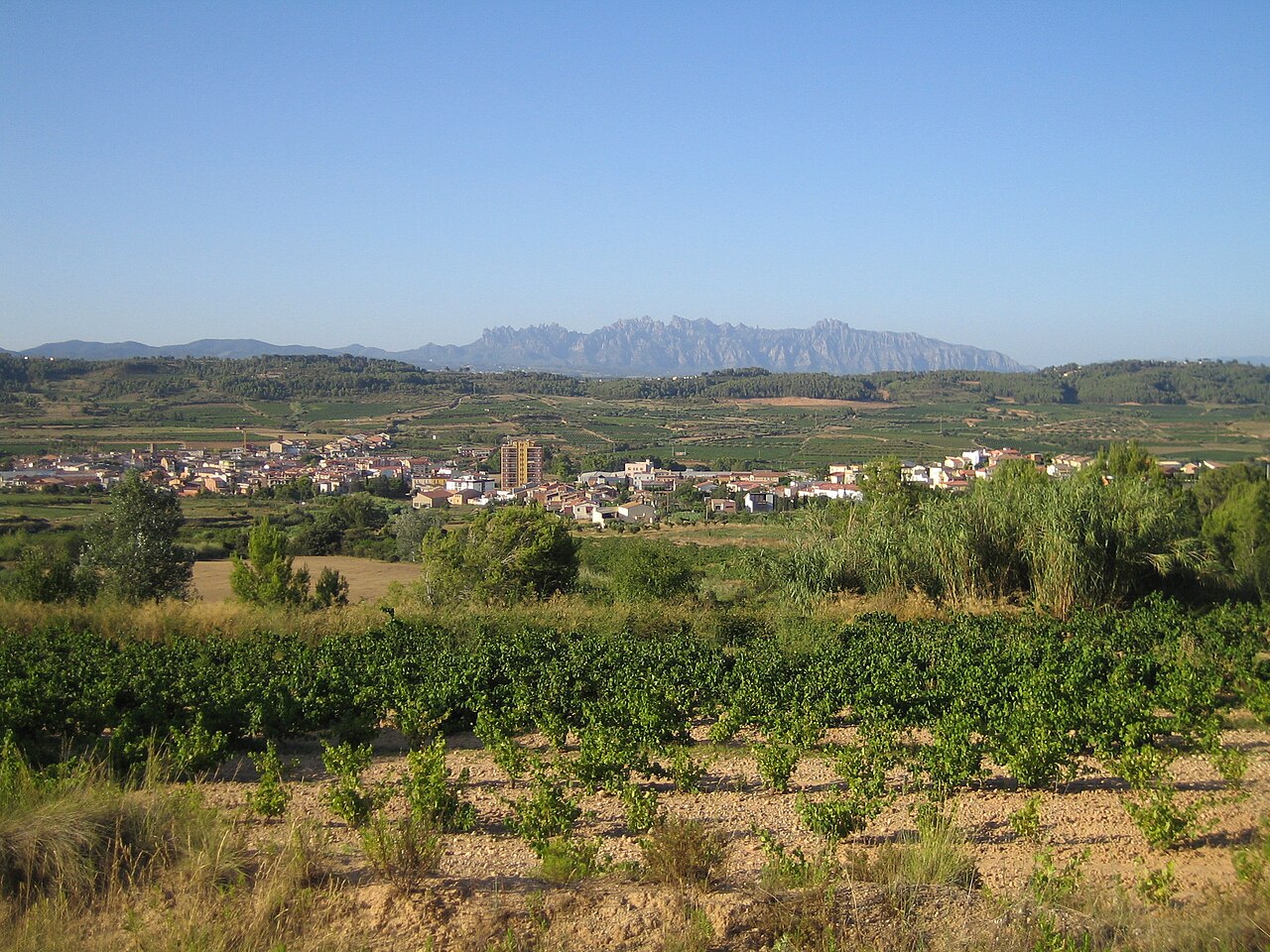
Grapes have replaced spears as the main defence. The municipality spreads across 33 square kilometres of almond groves and ordered vineyards that supply half of the Cava houses in Sant Sadurní. Driving in, you pass stone calits—tiny lime-washed huts—now rebranded as "wine temples" by the local marketing board. Most are still used to store tools and shelter dogs, but three have been restored for tastings. The simplest is Celler Mas Bertran, where Josep will pour a young Blanc de Blancs that tastes of green apple and the chalk soil itself. No bookings, no minimum spend, just rock up before noon and remember to bring cash because the card machine lives in his kitchen drawer.
Picnic Rules and Other Practicalities
There is no café on the hill, no vending machine, no pop-up van. Bring water, sun-cream and, ideally, lunch. The Coop in Moja (five minutes by car) sells proper baguettes and pre-sliced Manchego—no need to queue at Vilafranca market unless you enjoy shouting your order in Spanish. Picnic tables hide under pines just outside the fortress gate; wasps are territorial from late July, so keep ham slices covered. Pack out everything you pack in—bins are removed in summer to discourage boar.
Entry to the site is free with the Barcelona Provincial Museum pass (€7.50 for seven days, buy online before leaving the UK). Without it, adults pay €3.50, cash only. Guided tours run on Sundays at 11 a.m. in Catalan, but the guardian will switch to Castilian if you ask nicely; English is hit-and-miss. An audioguide app exists, though you need to download it beside the Interpretation Centre where 4G flickers like a guilty conscience.
Beyond the Walls
Olèrdola's modern houses scatter so widely that "village" feels generous. The parish church of Santa Maria sits two kilometres north of the fortress, surrounded by a handful of streets, a chemist, and a bar that opens for breakfast then shuts until evening. If you crave more pavement life, Vilafranca del Penedès is eight minutes by car. Its medieval core delivers the usual mix of shoe shops and vermouth terraces, while the Vinseum museum offers crash courses in Cava production and will let you blend your own bottle (book ahead, €25).
Walkers can stitch together a half-day circuit that drops from the fortress into the almond-lined barrancs, linking stone cisterns built by share-croppers to catch winter run-off. Markers are small metal squares nailed to trunks; if you lose them, follow the dry-stone walls downhill until you hit a track. The full loop back to the car park is 6 km, manageable in trainers, lethal in sandals after rain when the clay turns to ice-rink.
When to Come, When to Skip
Spring and early autumn are kindest. In April the ridge glows yellow with broom and the vineyards smell of wet earth; by late May thermometers already brush 30 °C, but mornings stay cool enough for a climb. October brings harvest trailers that block the lane and the sweet, heady scent of crushed grapes. Mid-July to mid-August is simply hot—35 °C by eleven—and the site opens only 10-15 h. British families fresh from the Sitges beach regularly arrive at 15:30 to a locked gate; photographs of their disappointed children litter Spanish TripAdvisor.
Winter access is weather-dependent. The guardians close the fortress during heavy rain because the rock staircases become waterfalls; check the Ajuntament Twitter feed the night before. When open, January delivers sharp blue skies and the chance to have the ramparts to yourself, though the wind can be brutal. Snow is rare but not impossible; in 2018 a five-centimetre dusting stranded three cars whose owners had ignored the chains warning.
An Honest Verdict
Olèrdola will never compete with Montserrat for drama or with the Cava houses for sparkle. It offers instead a quiet half-day where history feels tangible rather than curated, and where the loudest noise is likely to be your own breathing on the final ascent. Come prepared—water, sensible shoes, a picnic—and the ridge rewards you with widescreen views and the mildly smug knowledge that, while half of Britain queues for the Sagrada Família, you have 4,000 years of Mediterranean history almost to yourself. Miss the three o'clock deadline and you'll spend the afternoon in the car park, staring at locked gates and wondering why nobody warned you. Consider yourself warned.