Full Article
about Pacs del Penedès
Wine-growing municipality home to major wineries such as Torres
Ocultar artículo Leer artículo completo
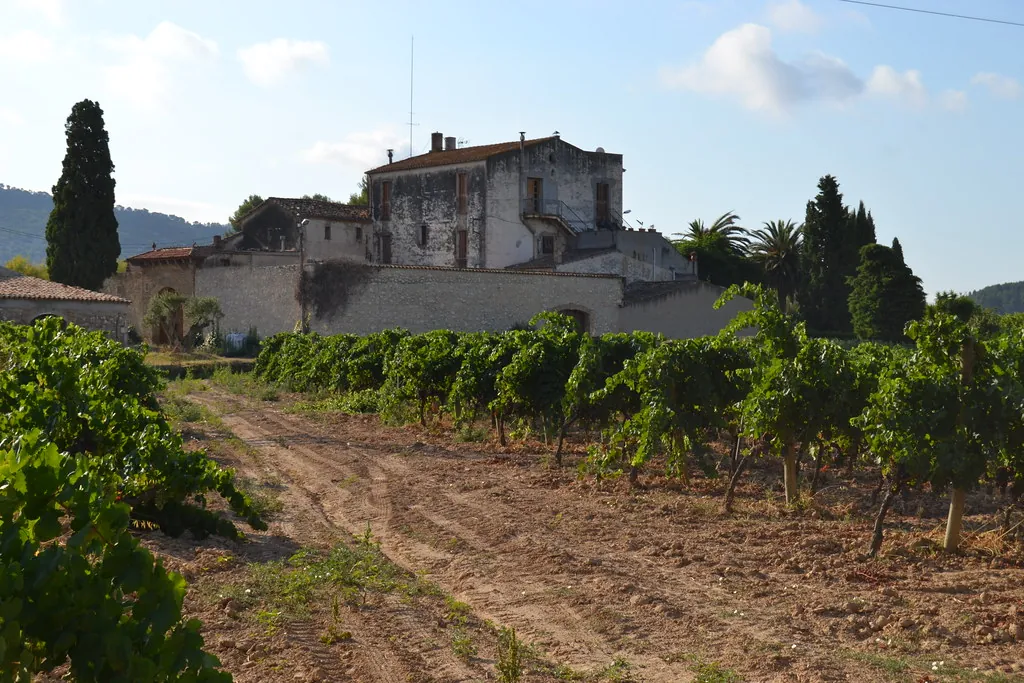
The morning freight train to Tarragona rattles past the Torres winery at 08:14, a long silver snake between the vines. By 08:30 the same vineyard track is filled with something quieter: local cyclists in gilets, pedalling to the bakery before the sun climbs above the coastal range and the day turns hot. That contrast—heavy industry brushing against slow farming life—sums up Pacs del Penedès, a parish-sized scatter of masías five hundred metres above the Mediterranean yet only fifty minutes by car from Barcelona.
Fields first, village second
Pacs has no postcard plaza with geraniums and no obvious centre. The church, the sports ground, the bakery and the wine cooperative sit at four separate crossroads, each surrounded by a handful of stone houses and a great deal of farmland. It feels less like a nucleated pueblo and more like an English downland parish where the fields start at the back door. The official population is around five hundred, but the figure doubles when the almond and cereal farmers are included—people whose postcodes read Vilafranca but whose land and social life belong here.
Altitude makes the difference. At two hundred metres the nights stay cool even in July, so the grapes keep acidity and the locals keep their windows shut until nine. Frost can arrive in April, which is why you will still see smudge pots beside the oldest rows of Xarel·lo. Come after harvest, when the leaves turn the colour of burnt toast and the soil smells of yeast and bruised apples, and you will understand why most visitors prefer October to August.
One bodega, several languages
Família Torres is the reason outsiders know the name. The headquarters—modern glass, century-old stone and a fleet of silent electric buggies—occupies the south-western edge of the municipality. Tours leave on the hour: ninety minutes in English, two hours if the group is mostly locals who like to linger. You walk through stainless-steel halls big enough to park a double-decker bus, then descend into 19th-century cellars where the temperature stays a steady fifteen degrees; bring a jumper even if the car thermometer says thirty. The tasting that follows is restrained by British standards—four wines, three slivers of cheese—but the pours are generous and the guides will top up anything you genuinely like. Book at least a week ahead at weekends; September sells out faster than Glastonbury.
Drivers aren’t penalised: Torres produces a surprisingly drinkable alcohol-free Muscat called Natureo, and the restaurant will swap glasses for anyone on duty. The food menu is short and pricey—slow-roast shoulder of lamb at €24, tomato bread that could feed two—but the kitchen accepts children and will split plates without fuss. Sunday lunch is the only service that needs reservation; every other day you can walk in after the tour and still get a table on the terrace.
Pedal tracks and paper maps
The flat grid of farm lanes between here and Sant Martí Sarrocca makes ideal cycling country. A lazy circuit south to the hamlet of Fontanet and back is barely twelve kilometres, passes three stone bridges and ends at the bakery before the croissants run out. Bikes can be hired in Vilafranca for €18 a day; the shop opens at ten, so late risers don’t miss out. Road bikes work, but hybrids are happier on the occasional gravel stretch leading to Mas de la Torre, a fortified farmhouse whose tower dates to the fourteenth century and whose present owner keeps geese that hiss at strangers.
If you prefer walking, follow the sign-posted path east towards the almond terraces. Thirty minutes of gentle climb brings you to a concrete water tank and a bench that looks west across the whole Penedès plain; on clear winter evenings you can see the sun drop behind the Montserrat massif while the sea turns silver beyond Sitges. The route is way-marked but not way-lavish—carry water because there are no fountains after the sports ground.
When the tractors stop
By seven the fields empty and the village belongs to dog-walkers and the smell of wood smoke. Evening options are limited: one bar, one bakery that doubles as a grocer, and a pharmacy that closes at eight. Most visitors retreat to Vilafranca, six kilometres down the C-15, where calçots appear on menus from January to March and the wine museum stays open until seven. A taxi back costs €12 if you can persuade the dispatcher in Catalan; otherwise the last bus leaves the capital at 21:05 and drops you beside the Torres gates, handy if you have over-indulged.
Staying overnight in Pacs itself means either a room above someone’s barn or the Torres-owned guesthouse, four doubles overlooking the experimental vineyard where they test drought-resistant rootstock. Prices hover around €130 including breakfast—local pastries, cold meats and coffee strong enough to stain the cup. There is no reception; keys arrive by WhatsApp code and checkout is simply a matter of closing the door. The arrangement suits couples who want silence more than room service.
Honest seasons
Spring brings wild poppies between the rows and the risk of ground frost that keeps farmers awake. Summer is hot but dry; vines suffer, visitors don’t. Autumn is the money season—grape trucks clog the lanes, the air smells of fermentation and the village bakery extends hours to 13:30. Winter is when you remember this is still a working community: pruning shears rattle, bonfires smoulder and the restaurant closes on Mondays because staff are needed in the cellar. Rain is infrequent but spectacular; within minutes the clay paths turn to chocolate mousse and even mountain-bike tyres clog.
Getting here, getting away
Public transport exists but only just. Take the R4 train from Barcelona Sants to Vilafranca (55 min, €4.60 with a T-Casual), then either pre-book a taxi or face a seventy-minute walk along a road with no pavement. Driving is simpler: AP-7 south to Martorell, then C-15 west; exit 27 drops you at the Torres gates and there is plenty of parking. Petrol is cheaper at the village cooperative than on the motorway, though you will need a Spanish card or cash—contactless is still regarded with suspicion.
Leave space in the boot. British visitors routinely exceed their duty-free allowance after the tasting, and the winery shop will vacuum-pack cheese for the flight. Just remember to keep the receipt: customs at Gatwick have heard the “gift from a friend” story more times than they care to count.
Pacs del Penedès will never make the front page of a glossy Catalonia guide. It offers no beach, no cathedral, no nightlife beyond a single television in the bar. What it does provide is a slice of rural Europe where agriculture still sets the clock, where the same family may have pruned the same vine for three centuries, and where a decent bottle costs less than a London pint. Turn up expecting fireworks and you will be disappointed. Arrive with time to spare, a bike and an empty suitcase, and the place starts to make sense—one quiet glass at a time.