Full Article
about Puigdàlber
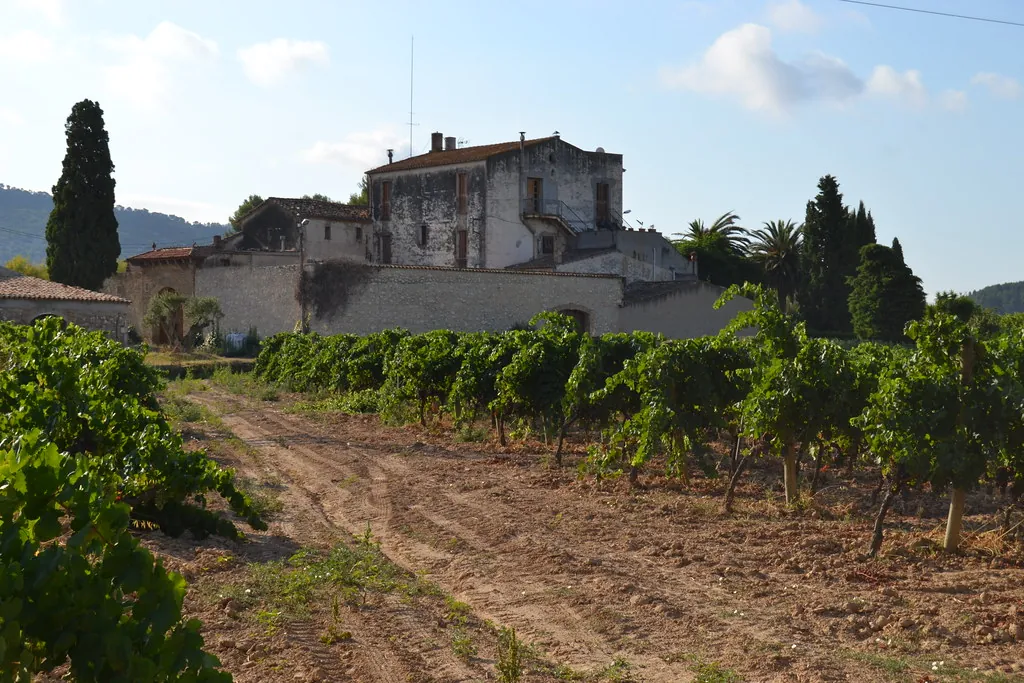
The smallest municipality in the region, surrounded by vineyards.
Hide article Read full article
Tourism in Puigdalber
Any look at tourism in Puigdalber begins with a map of the Alt Penedès. This small municipality sits in the centre of the comarca’s wine-producing plain, surrounded by vineyards that set the rhythm of the agricultural year. Around six hundred people live here. The scale is modest, almost village-like, and the countryside remains part of everyday life.
Puigdalber does not compete with larger destinations. It has no grand monuments or headline attractions. Its appeal lies elsewhere, in the way a very small settlement continues to be shaped by the same agricultural activity that has defined the wider Alt Penedès for centuries.
A Village Set in Vineyards
Puigdalber stands at roughly 239 metres above sea level, in gently undulating terrain without dramatic hills. For generations, the land has been devoted to vine cultivation. This continuity explains much of what visitors see today: scattered masías, the traditional Catalan farmhouses, agricultural tracks criss-crossing the municipality, and the absence of major urban expansion.
The Alt Penedès is one of the best-known wine landscapes in Catalonia. Not every corner of Puigdalber’s municipal area is planted with vines, yet the agricultural mosaic revolves around them. Between parcels of vineyard, small patches of pine and holm oak break up the uniformity of the plain. The result is a landscape that feels open and ordered, shaped more by farming than by modern development.
Beyond the built-up area, the land stretches out in all directions. Vineyards dominate, intersected by dirt tracks and dotted with masías set some distance apart. Some remain tied to agricultural use; others have changed function over time. They are not all accessible, but they form part of the visual identity of the area.
On clear days, from certain slightly elevated points within the municipality, the outline of Montserrat can be seen in the distance. The mountain’s distinctive silhouette is a familiar reference point in this part of the Penedès, even if it lies far beyond the immediate fields.
The Church of Sant Andreu
At the centre of the village stands the parish church of Sant Andreu. The current building dates back to the 16th century, although it underwent later alterations, particularly in the 18th century. Its appearance is sober: stone construction, simple volumes, and a doorway without elaborate decoration.
Inside, there is a modestly sized Baroque altarpiece. It is not monumental, yet it helps to explain the role the parish has played in small communities like Puigdalber. For centuries, the church served as the main meeting point for local residents, extending beyond strictly religious functions. In places of this scale, communal life has long revolved around shared spaces, and the parish was central among them.
The feast day of Sant Andreu, at the end of November, still has a place in the local calendar. It marks one of the moments in the year when the community gathers with a sense of continuity.
Streets and Farmhouses
The urban centre of Puigdalber is compact and can be explored in a short time. Its layout is straightforward, with narrow streets and houses rising two or three storeys high. Many façades retain wide doorways, originally designed to allow carts to pass through when agricultural work occupied much of domestic life.
These architectural details offer clues to earlier patterns of living. In some houses, old inscriptions remain visible, along with reused stone elements embedded in later walls. They are not always easy to date precisely, yet they suggest successive renovations rather than entirely new construction. Layers of adaptation are more evident than moments of radical change.
There is little sense of expansion beyond what was historically necessary. Large-scale growth has not taken place here. The built environment reflects the needs of a small farming population, closely tied to the surrounding fields.
Walking the Agricultural Tracks
The area around Puigdalber can be explored on foot or by bicycle. The terrain presents no major gradients, and distances between neighbouring villages are short. Most of the tracks are dirt or gravel, following the edges of cultivated plots and linking the municipality with others nearby.
These routes are working paths rather than purpose-built leisure trails. Tractors and other agricultural vehicles use them regularly, especially during the grape harvest. Anyone exploring the area should bear in mind that farming activity takes priority, particularly at busy times of year.
Spring and autumn are generally the most pleasant seasons for walking along these tracks. In summer, daytime heat can be intense, and agricultural work begins early. The cycle of the vines shapes both the landscape and the daily timetable.
A Quiet Stop in Alt Penedès
Puigdalber is small, and a visit is usually brief. It works best as a calm stop within a broader route through the Alt Penedès. There are no major monuments to draw crowds. Instead, the interest lies in observing how a very small settlement remains linked to the agricultural base that has defined the entire comarca.
Here, the landscape explains the village. The vineyards account for its scale, its layout, and its economy. In turn, the village reflects the landscape, through its farm-oriented architecture, its scattered masías and its enduring parish church.
For travellers exploring Catalonia’s wine country, Puigdalber offers a clear view of this relationship. The fields are not a backdrop but the reason the village exists at all. In that sense, understanding Puigdalber means looking outward, across the vines of the Alt Penedès, and recognising how closely place and agriculture are intertwined.