Full Article
about Sant Cugat Sesgarrigues
Small Penedès municipality with farming and wine-growing tradition
Hide article Read full article
Where the vines set the pace
At the end of summer, when the sun begins to sink a little lower over the Alt Penedès, the air between the vineyards of Sant Cugat Sesgarrigues carries the scent of ripe grapes and dry, dusty tracks. Rows of vines stretch in steady lines as far as the eye can see. The quiet is broken only by the occasional tractor making its slow return to the village.
In moments like this, the scale of the place becomes clear. Sant Cugat Sesgarrigues is small, agricultural and still closely tied to the rhythm of the land.
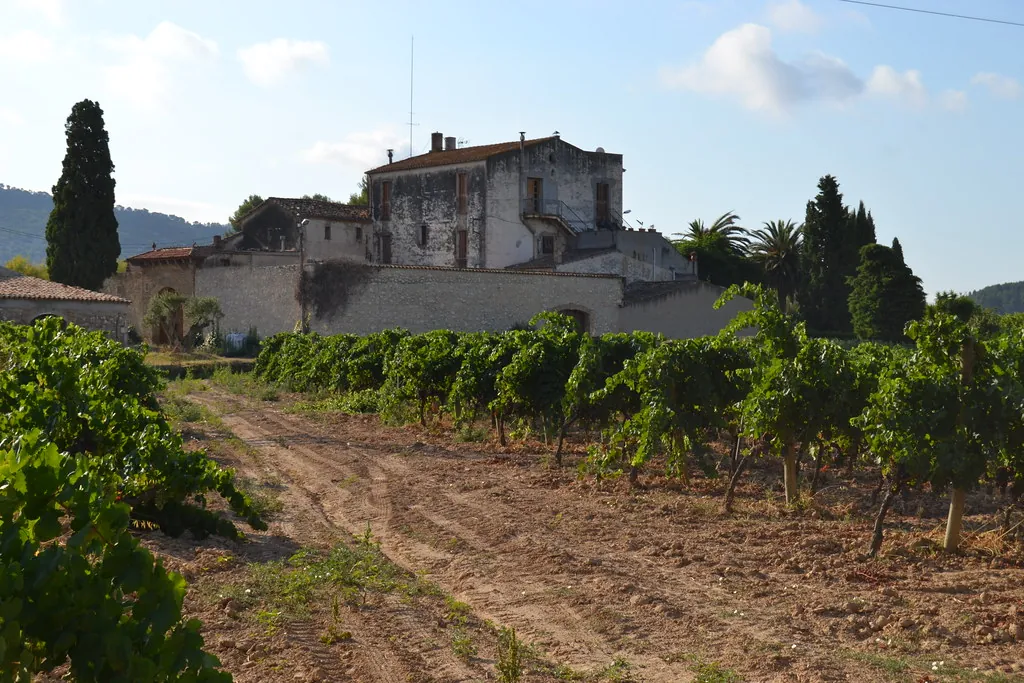
With just over a thousand inhabitants and lying at around 260 metres above sea level, the municipality retains many signs of its farming past and present. Much of its territory is covered by vineyards, which shift in colour with the seasons: deep green in spring, turning yellow and reddish as the grape harvest approaches. Between the plots stand scattered masías, traditional Catalan farmhouses, some with thick stone walls and wide gateways once designed for carts and tools.
This is a landscape shaped by work rather than display. The vines are not decorative. They are part of daily life.
A small centre around the church
The village centre is compact. A handful of streets cluster around the parish church of Sant Cugat, whose bell tower is visible from various points across the municipality. The building dates back to medieval times, usually placed around the 15th century, although later alterations have given it its current appearance.
Walking through the nucleus reveals details from another era: stone lintels carved with dates, ageing iron balconies and wooden doors darkened by years of use. There is no sense that the place has been arranged for occasional visitors. Instead, it functions with the practical logic of an agricultural village.
Shops and services are not the focus here. The visual rhythm is set by homes, small squares and the presence of the church tower above them. Life unfolds at a local pace, without obvious concessions to tourism.
Tracks through the vines
Step beyond the built-up area and rural tracks begin almost immediately. These are dirt paths or narrow strips of asphalt that cut across vineyard plots, linking masías and small agricultural holdings. On foot or by bicycle they are easy to follow, as the terrain is gentle, with soft undulations rather than long climbs.
From certain slightly elevated points within the municipality, small rises that overlook the flat expanse of vineyards, it is possible on clear days to make out the silhouette of Montserrat to the north. The distinctive mountain range appears faint on the horizon, a reminder of the wider Catalan landscape beyond the vines.
Shade is scarce among the rows of grapes, and the sun in the Penedès can be intense from midday onwards in summer. Carrying water is advisable if heading out for a walk during the warmer months. The apparent simplicity of the map does not always reflect the effort required under strong heat.
Several long-distance marked trails also pass through this area, although signposting can be uneven. A downloaded map on a mobile phone often helps to avoid unnecessary detours. The pleasure here lies less in reaching a particular landmark and more in moving steadily through cultivated land that has been worked for generations.
Life shaped by wine
In Sant Cugat Sesgarrigues, the vineyard is not just scenery. It remains part of the local economy. Within the municipality and in neighbouring villages there are family-run operations and wineries connected to the wine-making tradition of the Penedès. Some have worked the same plots for generations.
The grape harvest, usually concentrated between the end of summer and the beginning of autumn depending on the grape variety and the year, brings a visible change in pace. Trailers loaded with grapes travel along the tracks. The smell of freshly pressed must drifts from courtyards. Activity begins early in the morning.
This is the period when the agricultural character of the village is most evident. Work intensifies, and the surrounding landscape feels purposeful. The vineyards that appear still and orderly in spring become sites of constant movement.
Even outside harvest time, the presence of wine shapes the identity of the place. The Penedès is one of Catalonia’s best-known wine regions, and Sant Cugat Sesgarrigues forms part of that broader viticultural setting, even if it does so quietly.
The village calendar
The main annual celebration, the Fiesta Mayor, usually takes place at the end of August, when the heat remains strong and many residents are on holiday. For those days, stages appear in the square, there is music and shared open-air meals.
The festive calendar also follows well-known Catalan traditions. Sant Joan in June is marked with evening celebrations and bonfires, a midsummer event widely observed across Catalonia. In autumn there are activities for the Castañada, a seasonal celebration linked to roasted chestnuts and All Saints’ Day. Christmas brings events organised by local associations.
These are not large-scale festivals designed to attract crowds from afar. They are gatherings where the village meets itself, reinforcing community ties rather than projecting an image outward. Visitors who happen to be present at these times witness local customs in their everyday setting.
When to pass through, when to slow down
Sant Cugat Sesgarrigues can be reached quickly by car from Vilafranca del Penedès via local roads. Access is straightforward, and parking is generally not an issue outside specific festive moments.
For walking among the vineyards, the best times of day are usually early morning or late afternoon. The light softens, shadows lengthen across the rows and the air begins to move again. In high summer, between two and five in the afternoon, the heat can make a short walk feel more demanding than it appears on paper.
There is no grand checklist of sights to tick off here. Sant Cugat Sesgarrigues does not revolve around attracting attention. What it offers is simpler: fields worked over generations, quiet tracks and the sweet scent of grapes as harvest approaches. The landscape is not arranged to impress. It continues to function, season after season, following the cycle of the vine.