Full Article
about Sant Martí Sarroca
Known for its Romanesque hilltop ensemble.
Hide article Read full article
The climb to La Roca
The road up to La Roca smells of burnt oil. Cars struggle on the 18% incline and some simply give up. There is a sign that says as much, and the black stains on the tarmac back it up. If the car is more than ten years old, it is wiser to leave it below and walk.
At the top, what remains of the castle does not try to impress. This is not a fairy-tale structure. There is a two-metre wall, a few narrow windows and little else. Galí de Santmartí built it in the 10th century, and his son Guillermo later expanded it. After that came a familiar fate: it was used as a quarry. Stones from here ended up in the bridge of Can Rabell and in many of the village houses.
What there is and what there isn’t
The monumental site has two parts: the walled enclosure and the church of Santa María. The church is Romanesque, dating from the 12th century, and survives in good condition thanks to a restoration led by Josep Puig i Cadafalch in the early 20th century. That intervention is often cited as one of the first documented restorations of Romanesque architecture in Catalonia.
Inside, they once found a statue of the Virgin, three children’s sarcophagi and ceramics from Manises, a town known for its historic pottery. These pieces are no longer here. They were moved to a museum.
The church has three naves and a bell tower that leans slightly. The tilt is noticeable without being dramatic. Inside, the smell is of damp stone and candle wax. The wall paintings visible today are copies. The originals were transferred years ago to the MNAC, the National Art Museum of Catalonia.
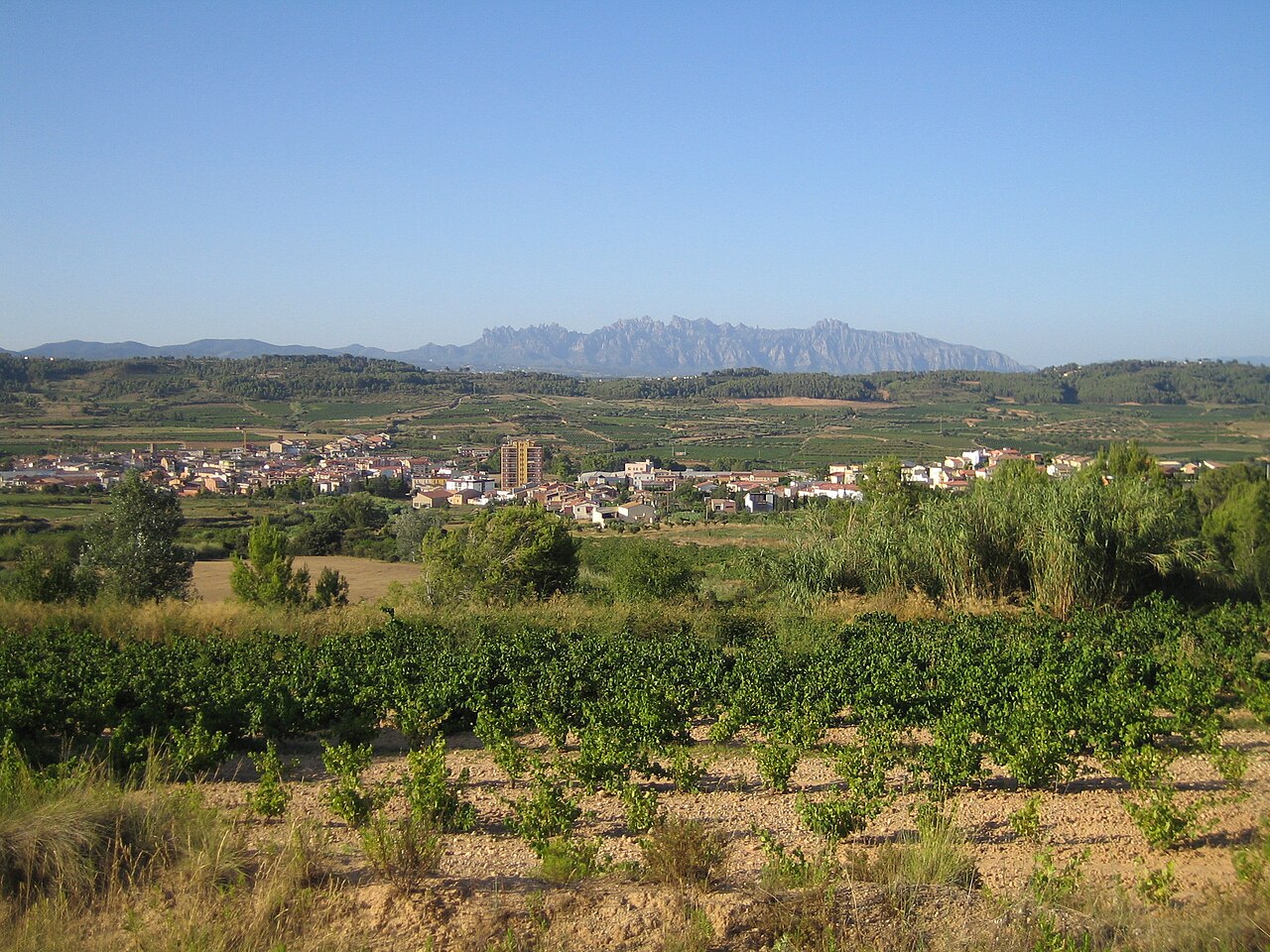
From La Roca, the whole of the Penedès opens out. Vineyards stretch in almost every direction, with a few mountain ranges in the distance and the present-day village spread across the plain. Sant Martí existed twice. The original settlement stood on this hill. After the First Carlist War in the 19th century, it was badly damaged and the population moved down. That is why there are ruins above and more recent streets below.
The village below
Today’s Sant Martí has around 3,500 inhabitants. The streets are wide, designed more with tractors in mind than strolling. In the main square there are terraces and a slow rhythm, especially at weekends. The town hall dates from the mid-20th century, practical rather than decorative. The library occupies what used to be the school, and some details of the old building are still visible.
There are no shops aimed at visitors, and not many places to stay. A few rural apartments operate mainly at weekends. Many people arrive from Barcelona with a bike in the car and head out to ride among the vineyards.
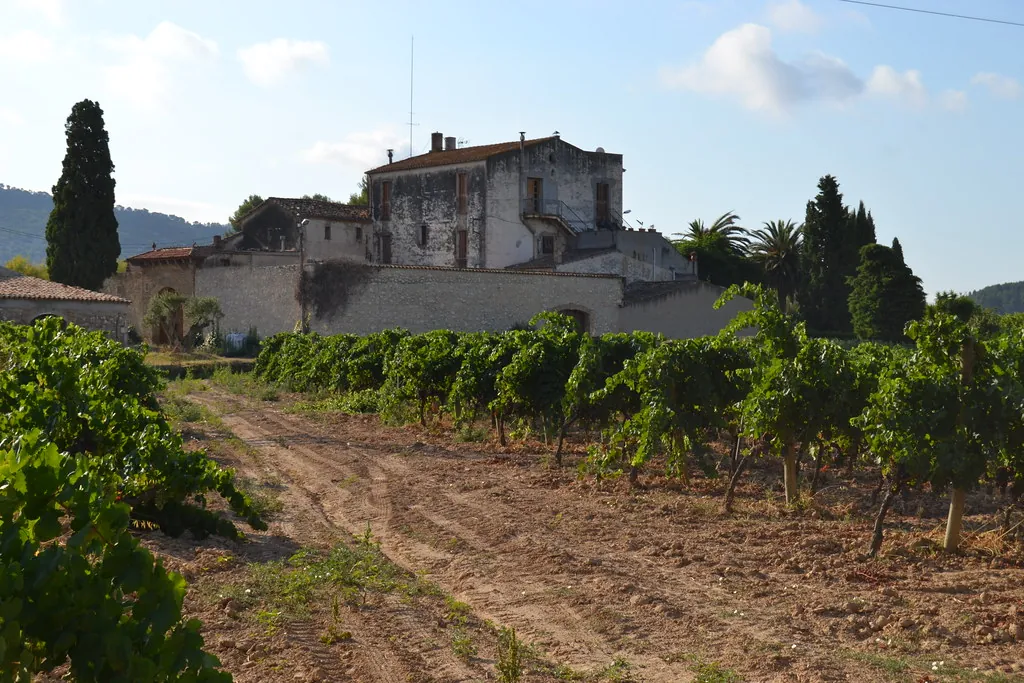
The area belongs to the DO Penedès, a wine-producing region. The vines surround the municipality on almost all sides. Wine here is part of everyday life rather than something staged.
The route of the 4 Castells passes through the municipality. It is a circular walk of around fourteen kilometres linking several castles in the area. Some sections have loose stones underfoot. It is sensible to carry water, as there are not always fountains along the way.
When things pick up
In October, a medieval fair is usually held around the castle area. Stalls appear, along with historical re-enactments, and there is more movement than usual for a couple of days. People come from nearby towns and La Roca fills up.
For the rest of the year, the pace is quiet. In spring, the festival of Santa Cruz is celebrated with events in the square and a distinctly local feel. Around Sant Joan, some residents walk up to the small hermitage of Sant Joan de Lledó. It is a very modest building and is normally closed.
How not to waste your time
Spring is the best bet. Summer heat can be intense in this part of the Penedès, and the hill offers very little shade. In winter, fog often sits over the plain for much of the morning.
An early start helps if the plan is to walk up to La Roca without rushing. By mid-morning the sun is already strong.
Bring water. There is nowhere to buy anything at the top.
At weekends, it makes sense to leave the car in the lower village and walk up. The climb is short but demanding, and it avoids scraping the vehicle on the way up.
Sant Martí Sarroca can be seen in a couple of hours. The route is simple: up to the castle, take in the view, then back down to the village. There is not much more to it. If already in the Penedès and passing nearby, it is worth the stop. Otherwise, it can wait.