Full Article
about Sant Quintí de Mediona
Town with natural surroundings of pools and springs and traditional festivals
Hide article Read full article
The bells of Sant Quintí ring out at eight and the sound rolls down the cobbled slope to the fountain in the square. On a Sunday at the end of winter, with a sharp cold in the air, visitors to the Fira de la Glaça warm their hands by a bonfire where a block of ice slowly melts. The smell of firewood mingles with coca de recapte fresh from the oven, that Catalan flatbread topped with roasted vegetables and other savoury ingredients. It is the kind of detail that makes clear this is a place where working with your hands still matters.
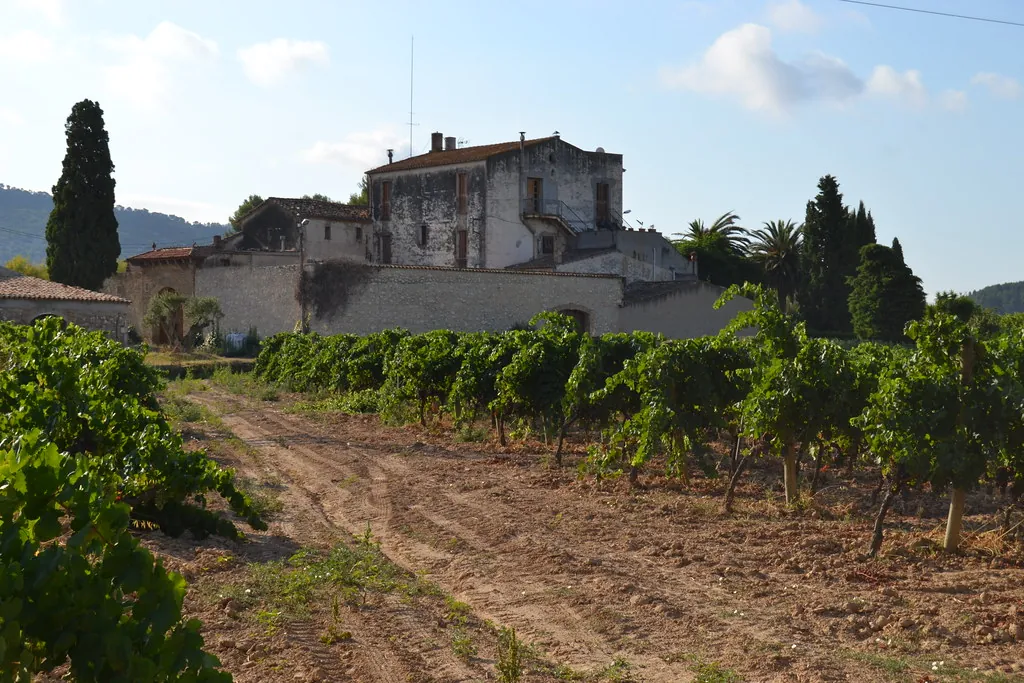
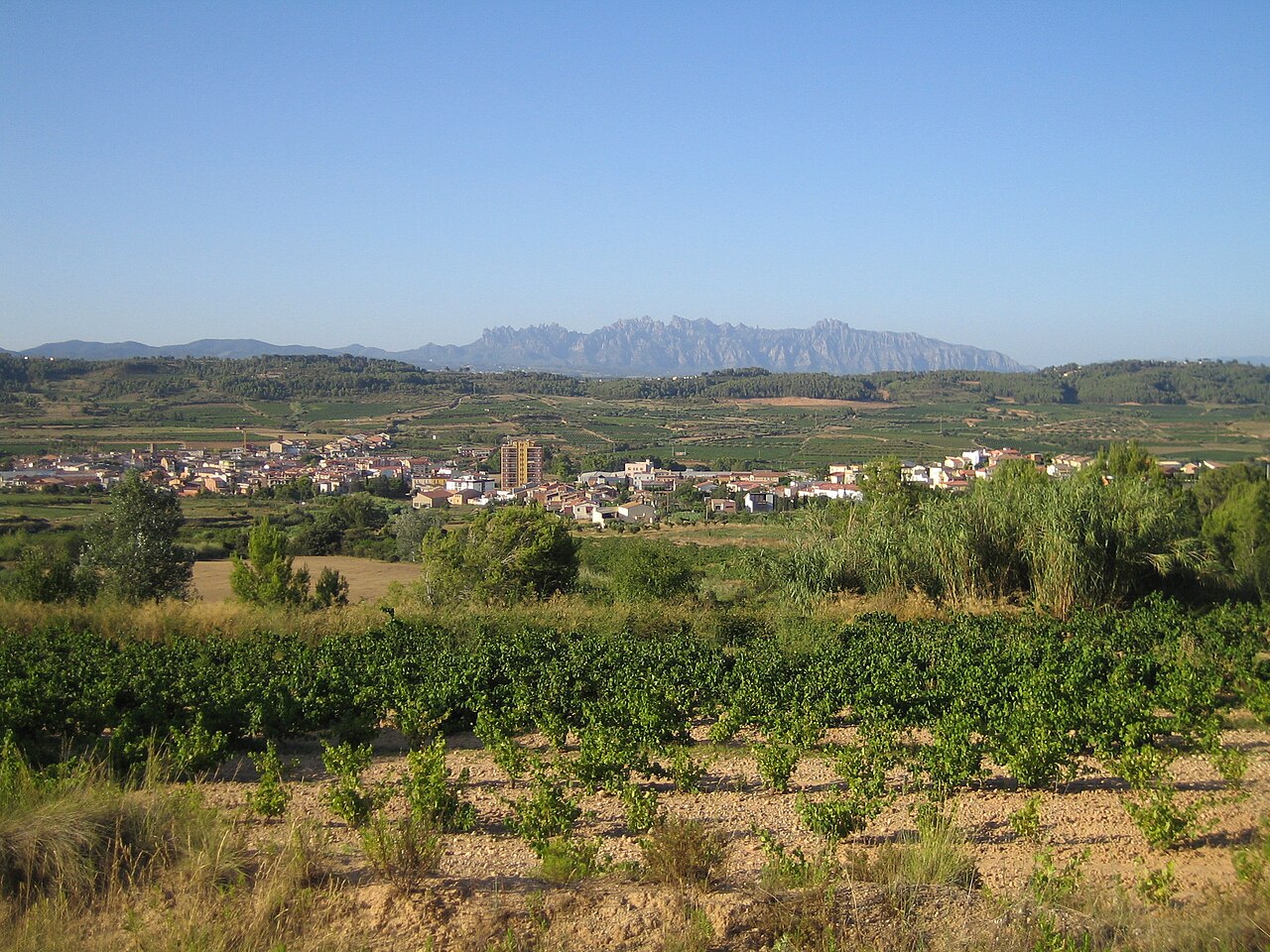
From the viewpoint on the Turó del Castell, the Bitlles valley opens out into vineyards that in April show the pale green of their first leaves. Below, the riera flows just strongly enough for children to divert the water with stones. For centuries this same stream powered mills and small workshops linked to paper production, a past that still comes up in conversation about the valley’s history. Here, water continues to set the pace. There is no sense of hurry.
The Water That Shapes the Valley
A straightforward way to begin exploring is along the Ruta de les Fonts. The full walk is around five kilometres, though many people turn back sooner because each spring invites a pause. The Font del Capelló is one of the most popular stopping points. The stone there forms a natural ledge, almost like a pillow, perfect for resting your head after splashing your face. The water runs cold even in summer.
On weekdays it is common to see local residents filling large bottles. One neighbour sums up the attitude often heard in Sant Quintí: “It’s not that it’s better than tap water, it’s that this one is ours.” She has been coming for years and no one seems inclined to question the logic.
A little higher up are the caves of les Deus. Inside, the temperature barely changes throughout the year and the air carries the damp, earthy smell of a cellar. In December, the caves traditionally host a living nativity scene. The natural cavities become the backdrop for shepherds moving between stalactites, while the Three Wise Men advance carefully through low passageways where visitors sometimes have to duck. It is a local interpretation of a widespread Spanish Christmas tradition, staged here with the landscape itself as scenery.
When the Village Takes to the Streets
On the Sunday closest to 11 November, Sant Quintí stages the Mata‑degolla. No detailed knowledge of the War of the Spanish Succession is required to follow the plot. A Bourbon official sent to collect taxes meets his end amid shouts, jokes and plenty of smoke from the grills. Roles are usually taken by local residents, and that gives the event the feel of improvised theatre spilling into the streets.
August brings the Fiesta Mayor, the annual main festival common to towns across Catalonia. As night falls, the Plaça de la Pallissa turns into an open-air dance floor. Sardanas, the traditional circular dance of Catalonia, draw together many of the village’s older residents. Earlier in the evening there is often a pasodoble that plenty of people know by heart. Standing slightly back from the first circle makes it easier to join in at a gentler pace.
These celebrations are not polished spectacles designed for an outside audience. They feel participatory, shaped by those who live here and by rhythms that repeat year after year.
Along the Mediona and Through the Vines
The Ruta del Riu Mediona follows the water for just under four kilometres out and back. When rainfall has been light, the path is manageable even in light footwear. Near the Salto del Capelló, a small waterfall creates a gorg, a deep pool where the water becomes still and transparent.
In spring the banks fill with poppies and tall grass. It is one of the best times to visit. The heat has not yet settled over the valley and the air carries the scent of damp earth.
Those who prefer to walk among vineyards can choose from several rural tracks linking up with small wineries in the area. Some produce Penedès wines using varieties such as xarel·lo, a white grape closely associated with the region. If you happen to cross paths with someone at work, conversation often starts easily beside the vats or out among the vines. The landscape and the local economy have long revolved around viticulture, something that becomes clear with even a short stroll beyond the village centre.
Practical Notes and Quiet Corners
During certain bank holiday weekends the village fills up and parking near the centre can become complicated. For a quieter experience, arriving early or visiting midweek is a safer bet.
Anyone heading up towards the ruins of the castle should wear closed shoes. In summer the paths can be overgrown with tall grass and nettles, and the ground is uneven in places.
At sunset there is an unusual vantage point over the valley along the path that runs beside the cemetery. When the sun drops behind Montserrat, the vineyards take on a golden tone that lasts only a few minutes. It is a brief shift in colour, easy to miss if you are not looking for it.
Back on Carrer Major, stone coats of arms can be seen above some doorways. Many date from the period when the vine began to define the local economy, a connection still visible in the fields surrounding Sant Quintí de Mediona.
As evening settles, shutters close gradually and the sound of the riera fades into the background. For a while, the village falls quiet, as if the valley itself were breathing more slowly before the next day begins.