Full Article
about Santa Fe del Penedès
Small, flat municipality surrounded by vineyards
Ocultar artículo Leer artículo completo
The tractor blocking the main road isn't breaking down—it's delivering lunch. At half-past twelve, the entire harvest crew piles into Bar Restaurant Santa Fe for three courses, wine, coffee and a brandy, all for €14. Nobody checks their watch. The grapes can wait.
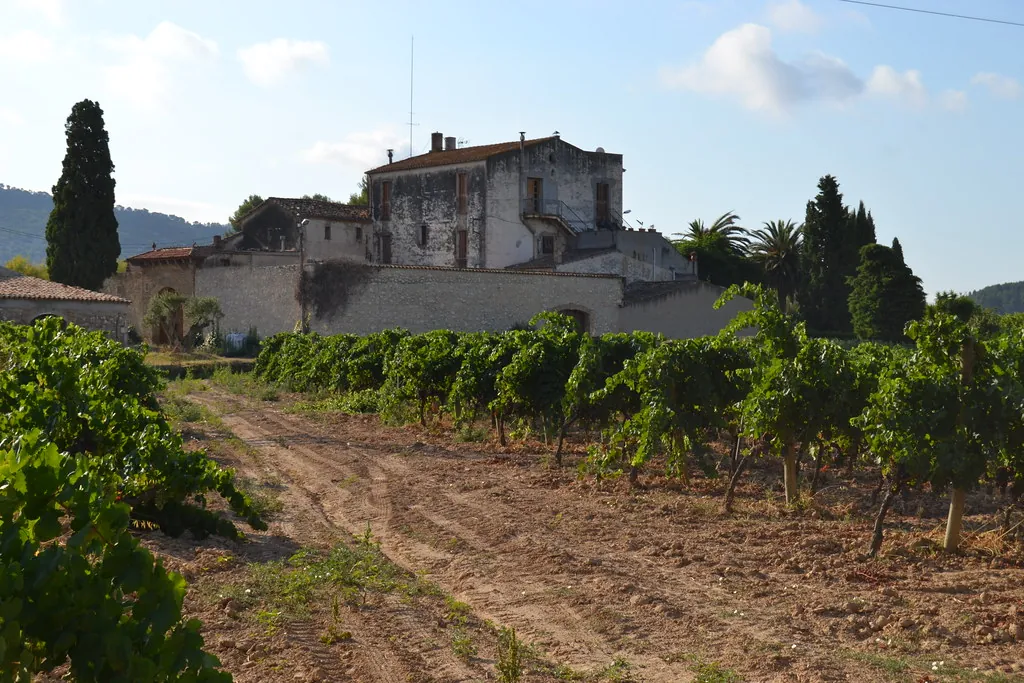
This is Santa Fe del Penedès, a single-street settlement 240 metres above sea-level where the permanent population (370 on the register, rather fewer in the cemetery) is comfortably outnumbered by surrounding vineyards. Forty minutes south-west of Barcelona airport, it sits in the dead-centre of Catalonia's cava country, yet most Brits race past on the A2 heading for the big-name cellars of Sant Sadurní. That suits the locals fine. They'll still sell you a bottle—just don't expect a gift shop.
A village measured in metres, not monuments
There is no medieval core, no castle on the hill, no ornamental plaza. Three roads converge at the church of Santa Fe, a modest 18th-century rectangle with a bell-cote that looks more farmhouse than cathedral. The building opposite used to be the cooperative winery; today it's flats with terracotta shutters and bicycles stacked outside. Walk the full perimeter in fifteen minutes and you'll have seen the pharmacy, the baker, the only cashpoint (CaixaBank, often empty by Saturday afternoon) and the agricultural warehouse still selling twine by the kilo.
What you will notice is the smell: warm pine from the nearby Garraf massif mixing with diesel and the sweet fermentation breath of the nearby bodegas. Depending on wind direction, it could be either breakfast or October. The village timetable is set not by church bells but by the vineyard calendar—pruning in January, bud-break in April, frantic picking in September when the road at dawn resembles a slow-motion rally of trailers and head-lamps.
Tasting without the tour-bus choreography
Serious wine drinkers treat Santa Fe as a staging post on the Penedès wine-route, but it works better as a base camp. Within a five-kilometre radius are a dozen family cellars happy to open bottles if you telephone first. Try Celler Vell (five generations, hand-riddled bottles) or Masia Can Calaf, where the owner switches to careful English only when discussing sulphite levels. Expect to pay €8–12 for three generous pours and a discussion of Xarel·lo acidity that can last forty-five minutes. Nobody rushes you towards the exit through a gift shop because there isn't one.
Cava sceptics should ask for the "brut nature"—zero dosage, mouth-watering, closer to Blanc de Blancs than supermarket fizz. Cyclists get an extra half-glass and a free map of vineyard tracks; walkers receive directions that invariably include "turn left at the almond tree". Take both seriously. The signed "Wine Route" is actually a spider-web of farm tracks; without a GPS trace you'll double back through somebody's irrigation pipes.
Sunday closures are ruthless. Arrive on the Lord's day and the only thing open is the petrol station on the bypass—coffee from a machine, sandwiches sealed in plastic, nowhere to sit. Plan around it or bring a picnic.
Flat pedals, steep learning curve
The landscape looks gentle—rolling waves of trellised vines disappearing into blue hills—but summer heat is sneaky. By 11 a.m. the mercury pushes 34 °C and shade is theoretical. British cycling clubs favour the 25-kilometre loop south to Sant Martí Sarroca: tarmac good, traffic minimal, one café stop at Pacs with a tap that actually says "Agua potable". Mountain bikers head north onto the Garraf fire-roads where limestone chunks will puncture anything under 35 mm. Hire bikes at Vilafranca station (€18 a day, helmets included) and reserve a return taxi when you pick them up; after 6 p.m. switchboard staff pretend not to understand "Santa Fe" unless you pronounce the final "e".
Hikers can manage the same tracks, but the experience is agricultural rather than wilderness. You'll share dust with sprayers, step over black irrigation pipe and smell fertiliser instead of wild thyme. Spring is kinder: the soil smells of rain, skylarks rise from the vines and almond blossom froths along every verge. October delivers the prettiest palette—ochre, rust, scarlet—but also the noisiest soundtrack of diesel harvesters. Either season beats August, when the only movement is the shimmer of heat and the occasional lizard.
Eating: go where the fork-lifts park
The village itself offers two choices: Bar Santa Fe (menu del día, good coffee, terrace facing the tractor depot) or the bakery's bench with a slice of coca—Catalan pizza-bread topped with escalivada. That's it. Locals drive elsewhere for dinner, and so should you. Ten minutes towards the mountains is Can Xarau, a stone farmhouse turning out textbook calcots between January and March. Tie on the bib, accept that romesco will stain everything, and follow the locals who peel the blackened onions with their fingers. Rabbit with rosemary and a half-carafe of house red costs €16; puddings are the usual crème-caramel or supermarket ice-cream, but nobody complains because the view stretches clear to Montserrat.
If you need something quicker, Vilafranca's Plaça de la Vila fills with terrace tables after 8 p.m. Order xató (endive-and-salt-cod salad with nutty sauce) and a chilled bottle of cava sangria—touristy, yes, but also the fastest way to convert teenagers to Spanish wine. British visitors note: service isn't slow; it's simply scheduled for people who haven't booked a return train. Mention the 22:33 departure and the bill appears as if by magic.
When to come, when to stay away
April–May and late September–October give you colour, calm temperatures and open cellars. August is hot, but it's also fiesta week: foam party in the car park, brass band at 3 a.m., free paella for 500. Accommodation within the village limits amounts to one three-room guesthouse above the bakery—clean, cheap (€55 B&B) and vibrating with oven fans at dawn. Most visitors base themselves in Vilafranca and day-trip; the twice-daily bus costs €1.95 and accepts contactless, but times are optimised for schoolchildren, not sybarites.
Winter has its own stripped-back appeal. Vines stand like charcoal sticks, the air smells of wood smoke and you can taste straight from the tank while last year's vintage is still cloudy. Just don't expect cosiness: Catalan farmhouses are built for August heat, not January damp, and the wind that whips across the plain will find every gap in your Barbour.
Last orders
Santa Fe del Penedès will never feature on a "Top Ten Hidden Gems" list because it isn't hidden—it's simply busy being a working village. Come for the wine, stay for the rhythm of agricultural time, but pack patience along with your jacket. If the tractor's in the way, remember: the driver probably bottled the glass you're planning to drink.