Full Article
about Santa Margarida i els Monjos
Municipality with industry and heritage such as Penyafort Castle
Hide article Read full article
Santa Margarida i els Monjos is a bit like that neighbour who keeps a wine cellar in the garage. No big announcements, no fuss. Yet step inside and there is more going on than expected. And it is not just about the wine.
Anyone who treats tourism in Santa Margarida i els Monjos as a quick stop between the vineyards of the Penedès is missing part of the picture. This municipality combines medieval frontier history, the very real memory of the Spanish Civil War and the everyday rhythm of a working Catalan town. It feels lived in rather than staged.
The castle that was almost everything except a castle
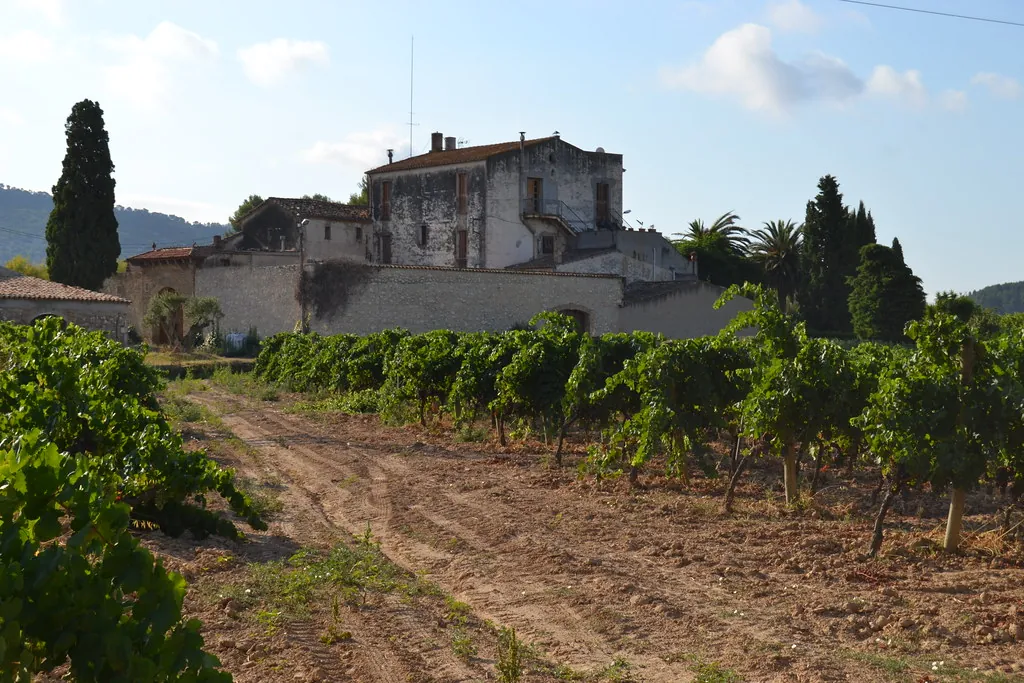
The best known landmark is the Castell de Penyafort, though the word “castle” needs to be taken with a pinch of salt. The oldest part is an 11th‑century tower that looks as if it has been lifted from a medieval strategy game, standing among vineyards and industrial estates. From here, the frontier with Al‑Ándalus was once monitored. At that time, the border between Christian and Muslim territories lay much closer than a glance at today’s map might suggest.
What makes the site particularly interesting is the number of lives it has led. It began as a watchtower, later became a church and then a Dominican convent. In the 19th century it was turned into a summer residence, proof that even then some Barcelona residents were looking for cleaner air outside the city. During the Spanish Civil War it functioned as a Republican prison.
Conversations with older residents often drift towards the Republican aerodrome that operated nearby. Some still recall stories heard at home about aircraft taking off from this area, a reminder that the war was not an abstract chapter but something that shaped the place directly.
Guided visits are organised on certain days, usually at weekends. Opening times vary depending on the season, so it is wise to check in advance. If there is a choice, go early in the day. The complex offers little shade and the midday sun can be intense.
When the Civil War walks through the town
In Santa Margarida i els Monjos, the Spanish Civil War is not confined to a museum panel. Several spots around the municipality help explain what happened here.
The castle, used as a prison, is one of them. Another is the Serral air‑raid shelter. Standing inside one of these shelters makes it easier to imagine what it must have felt like to wait there while sirens sounded overhead.
There is also the CIARGA, a centre dedicated to Republican aviation. It stands in the area where the old aerodrome once operated. From the outside, the buildings may resemble straightforward industrial hangars. Inside, the exhibition explains how that air base worked, from pilots and mechanics to aircraft parts and the logistics required to keep everything running.
It is not a vast or flashy museum. Instead, it is a quiet place where visitors leave with a clearer sense of what took place in this corner of the Penedès. The emphasis is on understanding rather than spectacle.
Xató and other reasons to drink cava
Food matters here, as it does across Catalonia.
Xató is taken seriously in Santa Margarida i els Monjos. The dish combines escarole with salt cod, anchovies and tuna, brought together by a thick sauce made from nuts and dried ñora peppers. Each family has its own version and defends it as if it were a closely guarded secret.
Traditionally, xató appears in winter. Across many towns in the Penedès, seasonal gatherings known as “xatonades” are organised. If a visit coincides with one, expect long tables, toasted bread and more bottles of cava than initially planned.
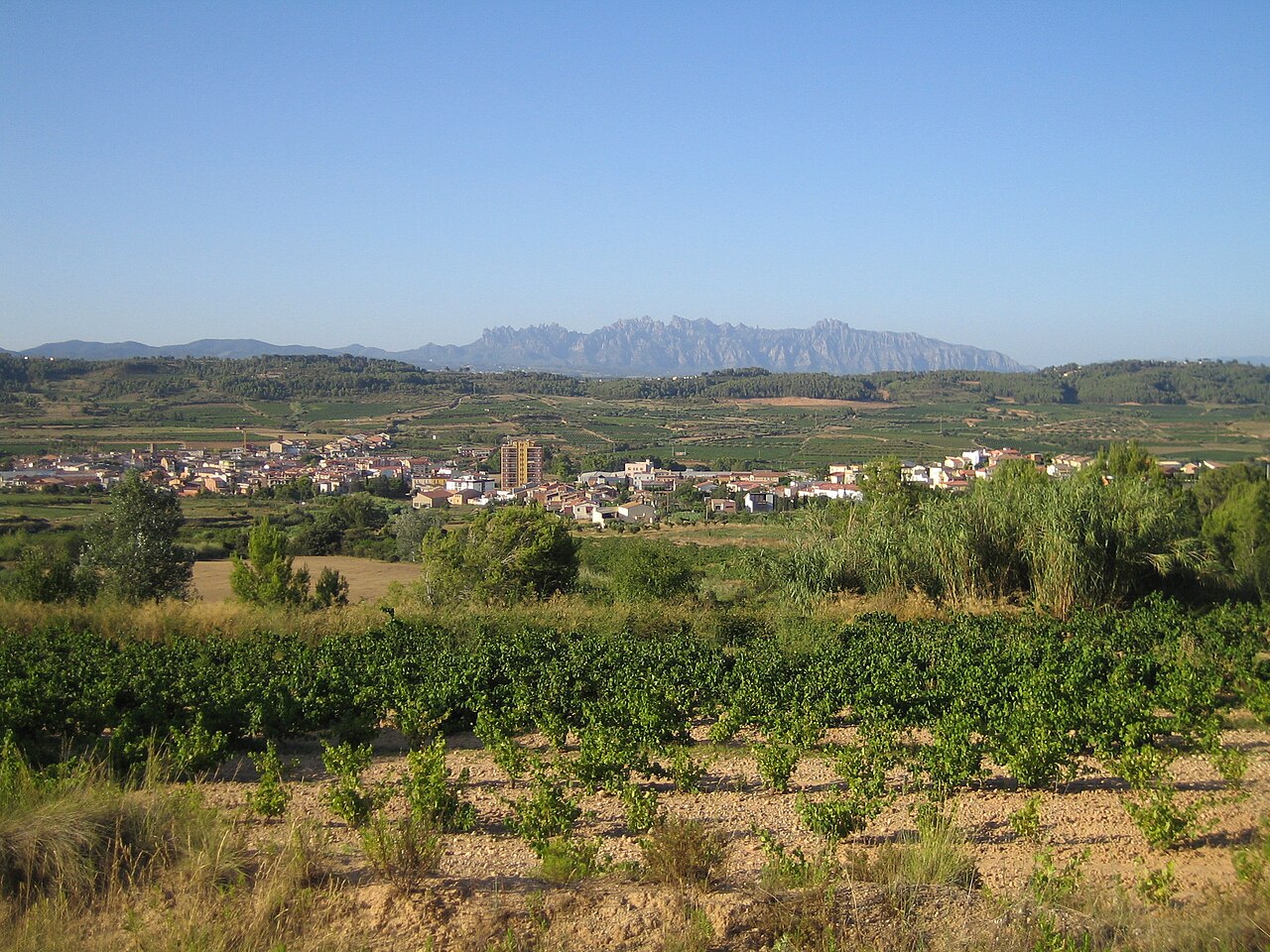
This is the heart of the Penedès wine region, after all. Cava here is not reserved for New Year’s Eve. It is an everyday drink, poured with meals, at vermouth time or during a Sunday family lunch. The presence of vineyards in every direction makes that feel entirely natural.
Simple walks with a change of pace
Not everything revolves around monuments or museums. One of the easiest local walks leads to the Font de Sant Llorenç. The route starts in the urban centre and within minutes enters a pine wood scented with resin when the sun grows strong. It is not an epic hike. It is a straightforward stroll that ends at a spring where the water usually runs cool.
The Torrent de Cal Bruna is another spot well known to locals. This small ravine becomes a meeting place in summer when there is enough water flowing and some teenagers take the opportunity to get in. Older residents often comment that the stream once carried much more water than it does now.
Very close by lies the Foix reservoir, known locally as the pantano de Foix. Do not expect an alpine lake or a designated swimming area. It is a reservoir surrounded by vegetation, a place where people come to walk, fish or watch birds. Anyone who likes carrying binoculars will find there is usually something to observe.
Getting there and getting around
Coming from Barcelona, the train is often the most convenient option. The station is in Els Monjos, which in practice functions as the most active centre of the municipality. The journey takes around an hour, depending on the service.
By car, access is straightforward from Barcelona or Tarragona via the AP‑7 and the roads that cross the Penedès. The scenery shifts quickly: vineyards, industrial warehouses, the occasional masía and the cement factory that has been operating here for more than a century. It may not be the most photogenic sight, yet it forms part of the area’s economic history.
Santa Margarida i els Monjos does not demand a tightly packed itinerary. A walk around the Castell de Penyafort, time by the Foix reservoir, xató in season and a conversation with local residents are enough to understand its character. The appeal lies in how all these elements sit side by side, without trying to impress.