Full Article
about Torrelavit
Municipality formed by the union of two towns with a paper-making and wine-growing tradition.
Hide article Read full article
Morning in a Working Wine Village
By mid-morning, once the sun has dried the dew from the vines, Carrer Major in Torrelavit still carries the faint sound of a wooden door closing somewhere nearby. The air drifting in from surrounding storehouses and farm buildings blends the scent of must, dusty tracks and ripe fruit. Tourism in Torrelavit often begins like this, unhurried and on foot, in a small village in Alt Penedès where vineyards are not a backdrop but part of everyday work.
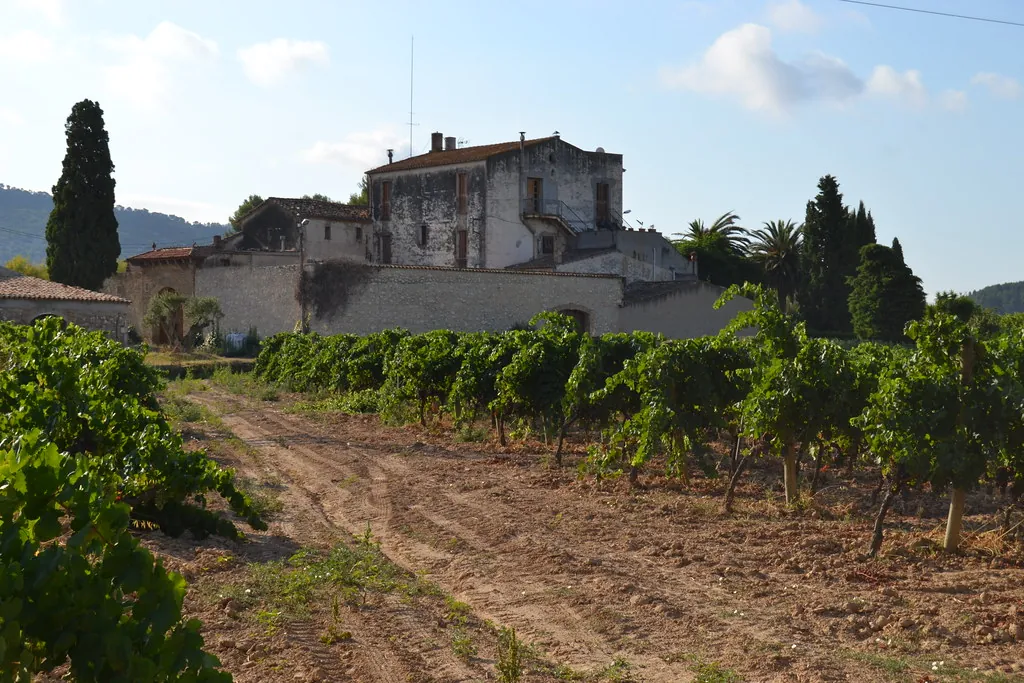
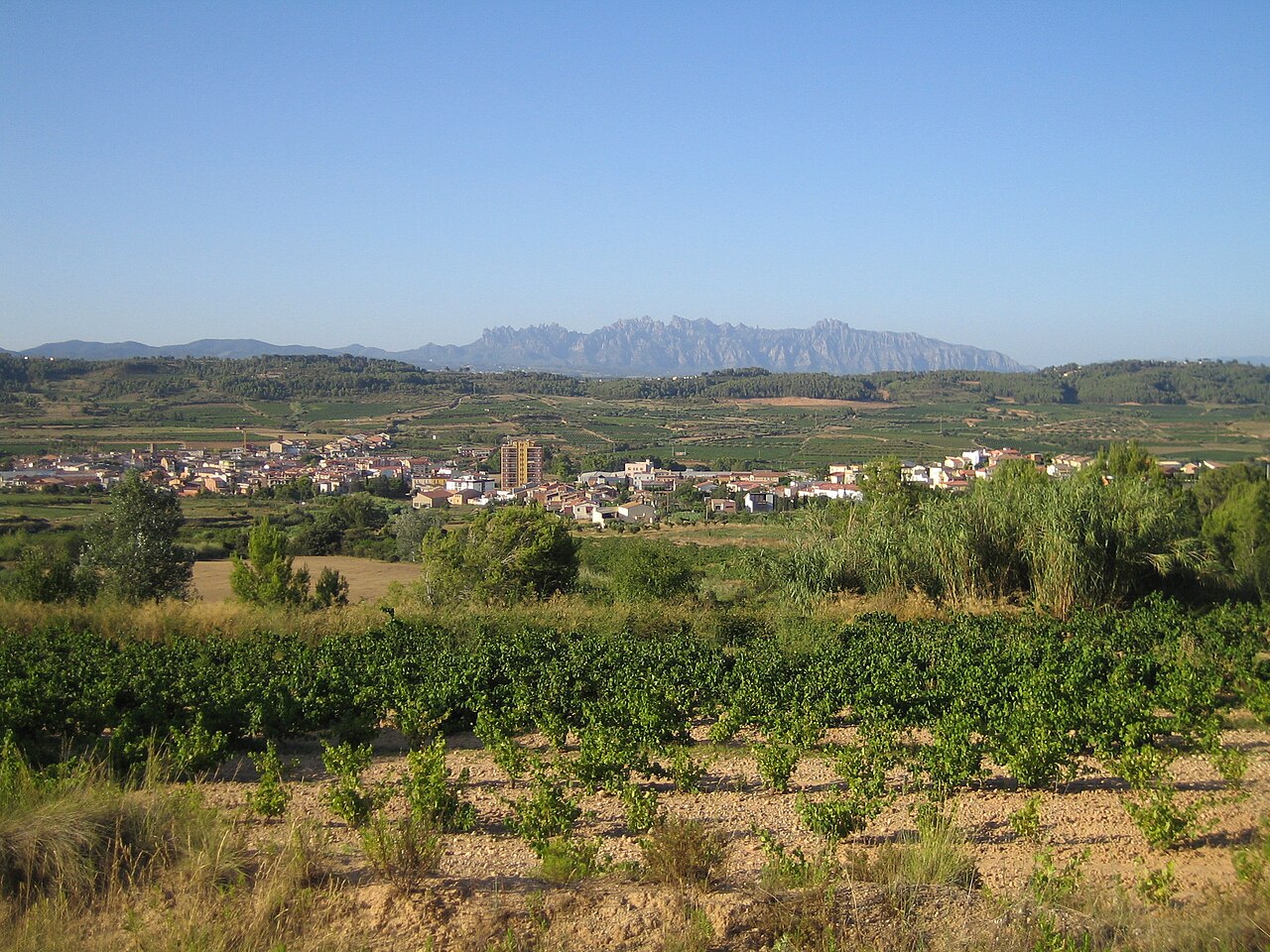
Around 20 kilometres from Vilafranca del Penedès, in the northern part of the comarca, Torrelavit has retained a calm that has gradually thinned out elsewhere in Penedès as wine tourism has become more structured and commercial. Here the vines press right up against the edge of the village, and many of the masías, traditional Catalan farmhouses visible from the road, remain linked to grape growing.
The rhythm of the place follows the agricultural year. It is easy to sense that what happens in the fields matters more than any visitor passing through.
Around the Church of Santa María
The centre of Torrelavit can be covered in a short walk. There is an open square, a handful of stone houses with narrow balconies and the parish church dedicated to Santa María. The current building has undergone several alterations over the centuries. On the façade, older elements still hint at its medieval origins, although what stands today is the result of later enlargements.
Towards the end of the afternoon, when the bells mark the hour and the sun dips behind the vines, half the square falls into shadow. Cars are scarce at that time of day. For a few minutes, the village seems to pause.
There are no grand monuments competing for attention. Instead, the appeal lies in scale and atmosphere. The streets are few, the distances short and the pace steady. It does not take long to feel oriented.
Walking and Cycling Between the Vines
Two or three streets out from the centre, dirt tracks begin to thread between rows of vines. The landscape shifts noticeably with the months. Spring brings an intense green; as summer advances the tones turn yellow; after the harvest, colours fade and the fields look more subdued.
The rural paths around Torrelavit are suitable for walking or cycling without too much difficulty. There are no major climbs, though in summer it is sensible to carry water. The sun falls directly on the fields and shade is limited. Early morning and late afternoon tend to be more comfortable times to set out.
Between cultivated plots, small patches of holm oak and Mediterranean scrub break up the geometry of the vines. Stop for a moment and the most persistent sounds are not traffic but insects and, occasionally, a tractor working in the distance.
The setting does not change dramatically over a single day, yet light alters its character. Soft light in spring or at the end of autumn gives the fields a gentler tone, and these periods often feel especially pleasant for wandering the tracks without meeting many other people.
Wine as Everyday Work
Wine is woven into daily life here. In the surrounding area there are several family-run bodegas producing wines and cavas within the Denominación de Origen Penedès, the official designation that regulates quality and origin. Some open their facilities to visitors, although not all do so on a regular basis, so it is wise to check in advance before turning up.
When harvest time arrives, usually between late summer and early autumn, activity increases along the tracks. Trailers loaded with grapes move between plots and cellars, teams work their way down the rows and the sweet smell of freshly pressed must escapes from industrial sheds.
The vendimia, or grape harvest, is not staged for show. Cutting bunches, filling crates and walking up and down lines of vines for hours form part of the real process. In certain weeks, some estates allow people to take part in tasks connected with the harvest. It is not a quick activity or one designed for visitors in a hurry. It follows the pace of agricultural work.
Seasonal Tables and Winter Calçotadas
Local cooking remains closely tied to what is produced nearby. Embutidos, the region’s cured meats, seasonal vegetables and grilled meats frequently appear on the table. The emphasis is on ingredients from the surrounding countryside rather than elaborate presentation.
When winter arrives, calçotadas bring families and groups together in courtyards and masías. A calçotada centres on calçots, a type of spring onion typical of Catalonia, grilled over burning vine cuttings. They are eaten dipped in romesco sauce, a thick blend commonly made with nuts and peppers. Hands end up stained with sauce, smoke drifts across the yard and conversation stretches on.
At weekends the atmosphere in the village tends to pick up slightly, particularly when family celebrations or gatherings linked to wine are taking place. Even then, the scale remains local rather than expansive.
Festa Major and the Start of the Harvest
At the end of August, two dates shape the village calendar: the Festa Major and the beginning of the vendimia. The Festa Major, the main annual festival common to many Catalan towns and villages, is centred on the square and nearby streets. Activities are cultural and community-based rather than large-scale spectacles.
In those same weeks, the first grapes are cut. The overlap between celebration and work is typical of places where agriculture still sets the tempo. There is movement on the paths and in the cellars, but it does not feel hurried.
Torrelavit changes considerably with the seasons. During the height of the harvest there is more activity around vineyards and bodegas. In winter, the village becomes much quieter. The vines stand bare and silence is close to constant.
For those who prefer to explore the tracks between vineyards without encountering many others, weekdays in spring or late autumn are often the most agreeable. The light is softer and the countryside still retains some colour.
Torrelavit does not depend on major tourist attractions. What it offers is simpler: vineyards that mark the passing of the year, old houses that remain lived in and paths where birds are heard more often than traffic. It is a landscape worked over generations that continues to function as it always has, even if, from time to time, someone passes through to observe it at an unhurried pace.