Full Article
about Vilafranca del Penedès
Wine and castellers capital with a rich Gothic heritage
Hide article Read full article
The bells of Santa María strike twelve as the sun lands squarely on Plaça de la Vila. Light bounces off the marble of the fountain, almost mirror-like, while the smell of xató drifts out from a nearby kitchen. This thick sauce, made with ñora peppers, almonds and hazelnuts, announces itself before you see it. Many mornings here begin like this: people leaning on tall tables, cava glasses clinking, a stray drop hitting the ground and leaving, for a brief moment, a faint scent of grape and chalk before it disappears.
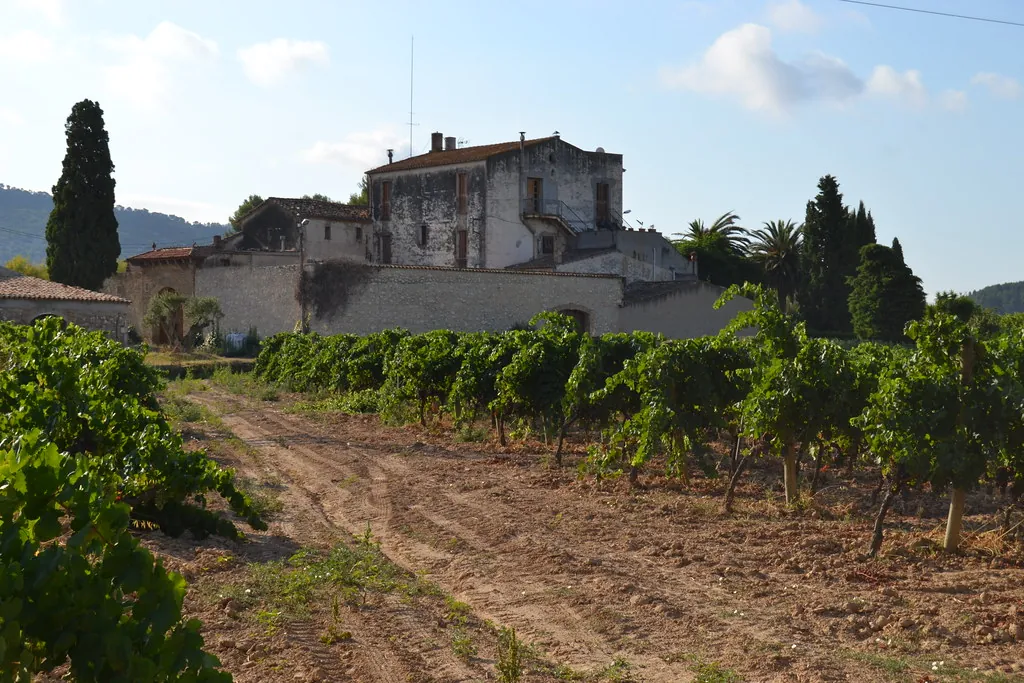
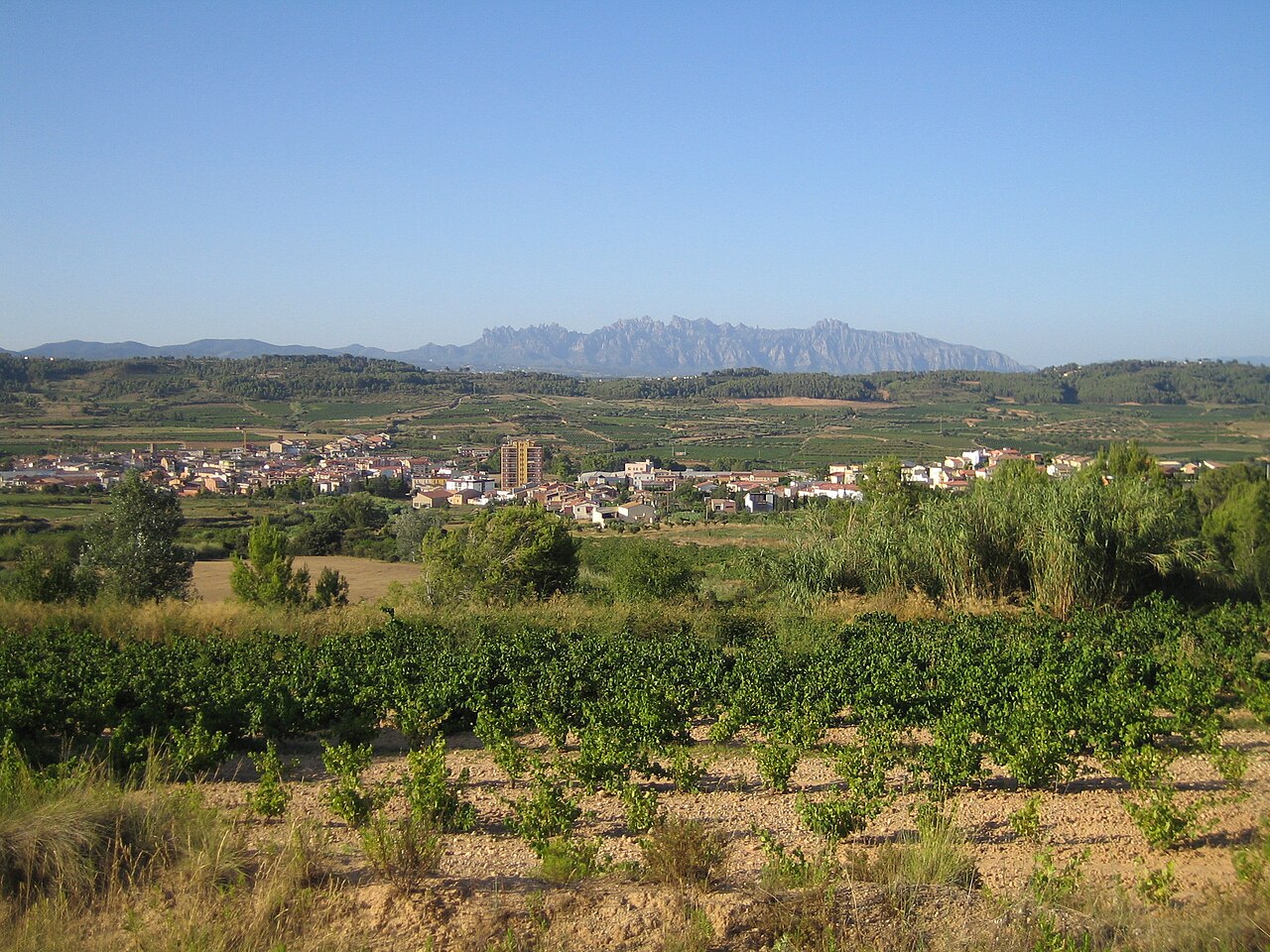
Vilafranca keeps one foot in the countryside. Cross the Rambla de Sant Francesc in the late afternoon and look towards the edges of town. Rows of vines appear quickly, laid out like open notebooks. From the mirador de les Ferreres, one of the viewpoints on the Miravinya route, the Penedès landscape stretches far out. On clear days, the outline of Montserrat appears on the horizon, its uneven shape looking as if it had been cut out with scissors.
The cool scent of cellars
The VINSEUM has occupied the former Palacio Real since the mid-20th century. On the ground floor, a stone slab remains where large wine vessels once rested. Stand still for a moment and something familiar comes through: that cool scent of cellars, a mix of old wood, damp earth and young wine.
Inside, thousands of objects connected to wine culture are kept. Tools, old bottles, labels from another era sit in quiet rooms. Beyond the displays, the place has its own rhythm. Footsteps echo across the stone floor. Light filters into the galleries from high windows. The silence feels closer to that of a working cellar than a typical museum.
To taste cava at an unhurried pace, it helps to leave the town behind for a while. The road linking Vilafranca with Sant Sadurní runs through vineyards for kilometres. Small wineries tend to appear along the side roads; places that still carry the smell of yeast and damp wood in their older cellars. Later in the afternoon, once organised groups have left, the atmosphere tends to settle.
The silence before the crown
The pace of the town shifts towards the end of August. The Festa Major de Sant Fèlix fills Plaça de la Vila with green shirts and neckerchiefs. The Castellers de Vilafranca build human towers that rise level by level as the square falls silent.
First comes the sound of the gralla, then the tamborino. The base, known as the pinya, tightens. The structure begins to climb. At the very top appears the enxaneta, sometimes a child of seven or eight, who crowns the tower and raises a hand. It lasts only a few seconds, yet the entire square seems to hold its breath.
People start gathering early for a clearer view. By early evening, long shadows stretch from the Casa de la Vila. There is still space to find a spot without pushing through crowds if you arrive with time and a little patience.
Mortar and milk chocolate
Xató tends to show up in winter, when escarole holds the sauce well and cold air sharpens the appetite. Each household prepares it in its own way, adjusting vinegar, garlic or the balance of nuts. At many tables, the ritual looks similar: a mortar placed in the centre, flaked salt cod waiting nearby, and a bottle of cava already open while someone finishes blending.
Across Penedès, a gastronomic route dedicated to this dish takes place towards the end of winter, moving through several towns in the area. Sharing portions makes sense; by the third plate, you’ll likely need a pause.
For something sweet to take away, confectioners in the centre often stock catànies. These are caramelised almonds coated in milk chocolate. They crack at first bite and then melt quickly. Warm weather is not their friend—best eaten soon after buying.
Tractors on local roads
March and April bring almond blossom to many paths in Alt Penedès. Between Sant Martí Sarroca and Santa Fe del Penedès, white fields appear that resemble low clouds resting on the ground.
September carries the smell of grape must and damp soil. Tractors move slowly along local roads during harvest; patience becomes part of your rhythm if you’re driving then.
July often hosts the ViJazz festival, which draws a noticeable crowd into every bar around Plaça de la Vila. August tends to be hot—stiflingly so in midday if you’re walking uphill from the station. Early starts make a difference if you stay overnight. Before eight, the square is still half empty and you can catch that first scent of freshly baked bread drifting out from nearby bakeries as shutters begin to rattle open.