Full Article
about Vilobí del Penedès
Town known for the Parque de los Talls and its cavas
Ocultar artículo Leer artículo completo
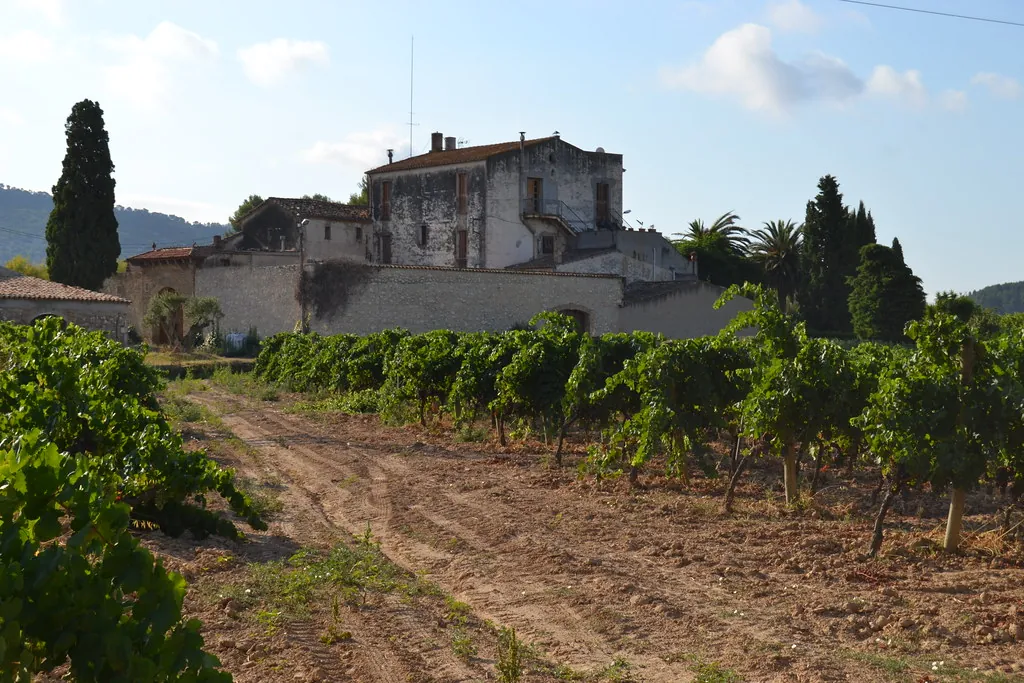
The moment you realise Vilobí del Penedès is serious about wine is the moment you count the streets. There are six. Then you count the wineries within a ten-minute drive: at least thirty. The maths tells the story—this is less a village, more a cork in the middle of a 2,000-hectare vineyard.
At 286 metres above sea level, the settlement sits just high enough for the air to cool at night, tightening the grape skins and giving the local xarel·lo its trademark bite. Montserrat’s saw-tooth ridge hovers on the northern horizon; to the south, the land pleats into gentle valleys that glow ochre after harvest. It is countryside that looks gentle until you try to cycle it—then the short, insistent gradients remind you that every slope has been trained for grapes, not gears.
A morning circuit: church, lakes and a bar that still writes tabs in biro
Vilobí’s medieval kernel can be paced in twelve minutes. Stone houses lean together as if gossiping; their ground-floor arches once sheltered animals, now they hide electric bikes and wheelie bins. The parish church of Santa Maria squats at the top, rebuilt in the eighteenth century after a French lightning raid but still using its original Romanesque door. Sunday mass is at eleven, attended mainly by widows in wool coats even in July. Sit on the wall opposite and you’ll hear the priest switch fluidly between Catalan and Spanish, depending on which saint he’s scolding.
Five minutes downhill, the Pèlags lakes steal the show. These old gravel pits flooded decades ago and turned, almost by accident, into the district’s best birding spot. A flat, push-chair-friendly loop (signposted “Pèlags–30 min”) skirts reeds where purple herons practise their take-off. Two wooden hides face the deeper water; bring binoculars and you can tick off hoopoes in spring, booted eagles in autumn. Picnic tables sit under casuarina pines, but pack insect repellent—the lakes are shallow and the midges queue up for British flesh.
There is no ticket office, no gift shop, only a honesty box for parking (€1, coins only). The bar closest to the exit, Bar la Pau, opens at seven for farmers and keeps a running tab felt-penned on a cardboard flap. Order a café amb llet and they’ll slide a thimble of cava across the counter “to wake the blood”—refuse at your peril.
Cellar doors and Civil-war tunnels
Vilobí is not a place for coach-party wine routes. Most cellars are family operations whose websites still list a Hotmail address. The upside is access: phone the day before and you’ll probably be shown round by the winemaker’s daughter. Two addresses stand out:
- Loxarel. Fifth-generation growers who ferment in clay amphorae buried to the neck. Their ninety-minute tour ends in a stone-lined tunnel dug during the Civil War to shelter 200 villagers; bottles now sleep where refugees once hid. Tastings can be run in English if you e-mail ahead (visits €15, weekday mornings only).
- Celler Carles Andreu. A ten-minute drive towards Sant Martí Sarroca, specialising in pink cava. The owner keeps a 1950s riddling rack he still turns by hand; he’ll let you have a go until your wrist aches. Weekend grill sessions roast chicken that’s been brined in cava must—book 24 h ahead, €22 for half a bird and three generous pours.
Monday is the universal shut day; Sunday afternoon is hit-and-miss. Petrolheads can rent electric bikes in Vilafranca (12 km) and wobble between tastings on vineyard tracks—just remember Spanish drink-drive limits are lower than the UK’s and strictly enforced.
When to come, and when to stay away
April–May give you wild marigolds between the vine rows, daytime highs of 22 °C and the first outdoor calçotadas—spring-onion barbecues that leave your forearms smoky and your conscience unclear. September brings harvest: tractors block the lanes, the air smells of crushed grapes and every local has purple fingernails. Both seasons are ideal; both are ignored by the bulk of visitors who barrel down the AP-7 to Sitges and wonder why the motorway smells like juice.
August is trickier. Temperatures nudge 35 °C, the lakes shrink, and the village’s own Festa Major (last weekend) means brass bands at 03:00. If you need silence, book elsewhere. Likewise mid-winter: the altitude invites a sharp, damp cold that creeps into stone walls; many rural hotels close January–February entirely.
Feeding yourself without a car
Vilobí has one shop, a colmado that unlocks at 08:30 and rolls down its shutter promptly at 13:00. Bread arrives at nine and is usually gone by ten. The nearest supermarket is a 12-minute drive to Vilafranca’s giant Bon Preu—plan accordingly. Eating out choices are thin but honest:
- Restaurant Sol i Vi does a three-course lunch menu for €16 (wine included). Expect grilled rabbit with rosemary, or a bowl of cigrons amb botifarra—chickpeas and fat pork sausage that tastes better than it photographs.
- Hotel Rural Cal Ruget will fry you a full English if you ask the night before; they import bacon for homesick cyclists.
- Sunday morning shortcut: drive ten minutes to Sant Pau d’Ordal’s peach market (08:00–13:00). The Ordal variety is so juicy it ships to Fortnum & Mason; buy, then retreat to the lakes before the juice stains hire-car upholstery.
Dinner is early by Spanish standards—most kitchens close at 22:00. After that, the village belongs to hedgehogs and the night-watchman at the cooperative.
The practical grind
Getting here: Barcelona–El Prat is 78 km, mostly motorway. Car hire is simplest: take the AP-7, exit 28, follow C-15 to Vilafranca, then TV-2121 for ten minutes. Petrol is cheaper at the airport than on the autopista. No car? A train to Vilafranca and taxi the last stretch costs about €35 each way, but rural cabs need 24 h notice.
Cash: Vilobí has no ATM. Vilafranca’s banks close at 14:00 and won’t reopen. Fill pockets before you arrive.
Language: Catalan first, Spanish second, English a distant third. Download an offline Catalan dictionary; “bon dia” and “gràcies” oil most doors.
Where to sleep: two small rural hotels (14 rooms between them) and a handful of Airbnb farmhouses. Weekends book out during harvest; mid-week you can bargain.
The unsellable truth
Vilobí will not hand you Instagram gold. There is no beach, no castle on a crag, no chef with a Michelin star. What it offers is ratio: more vines than people, more birds than cars, more sky than noise. If that equation sounds boring, stick to Sitges. If it sounds like breathing space, set the sat-nav, stock up on cash and arrive before the rest of Britain notices the sum works.