Full Article
about Alàs i Cerc
Scattered Pyrenean municipality near Seu d'Urgell; noted for its Romanesque hermitages and natural setting.
Hide article Read full article
A small detour that changes the pace
Some places seem to slow everything down. You leave the main road in the Alt Urgell, take a short detour, and without really noticing it, you arrive somewhere that moves at a different rhythm. Tourism in Alàs i Cerc fits that idea well. This is a small municipality spread across several hamlets where the point is not to tick off sights, but to get a feel for life in the mountains.
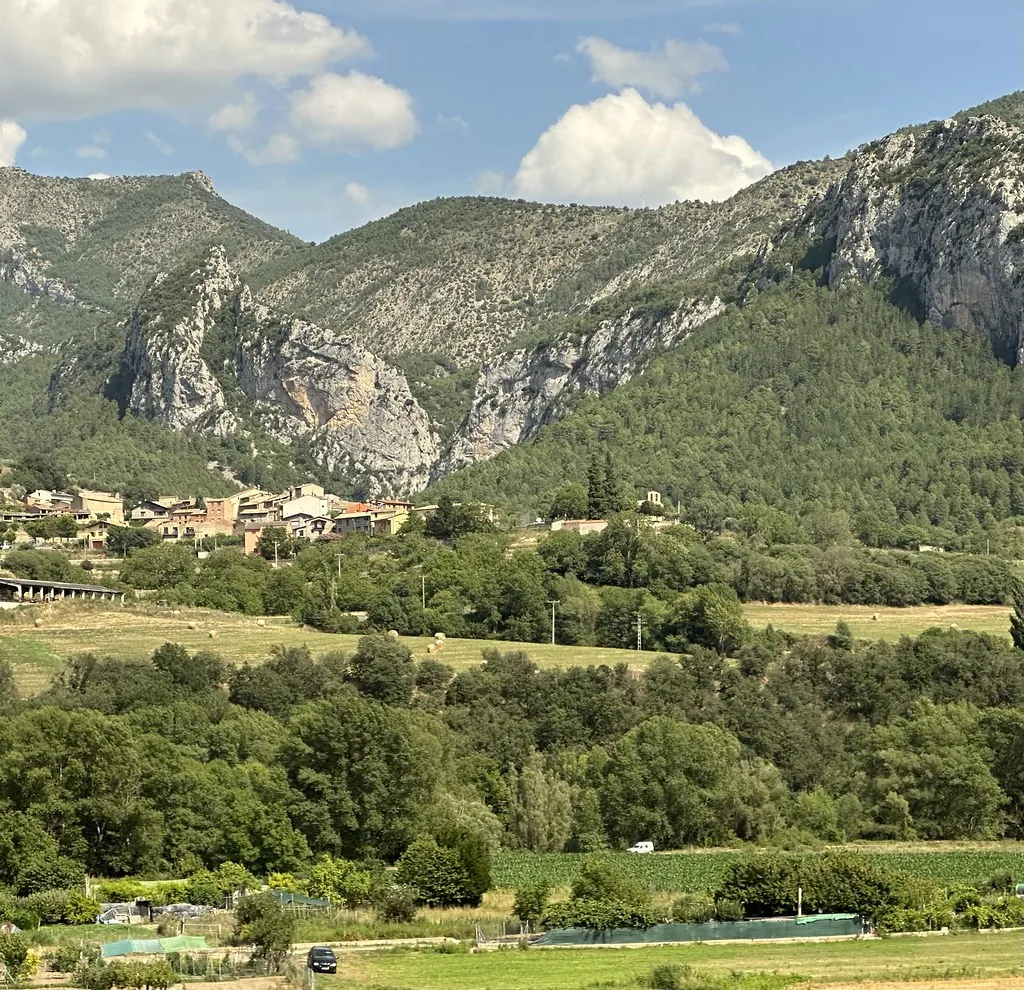
It sits very close to La Seu d’Urgell, just a few minutes by car, yet the atmosphere shifts quickly. Stone houses, open meadows and the Cadí mountain range cutting across the horizon. At first glance the landscape seems simple, but it holds your attention if you stop for a while.
A municipality made of small centres
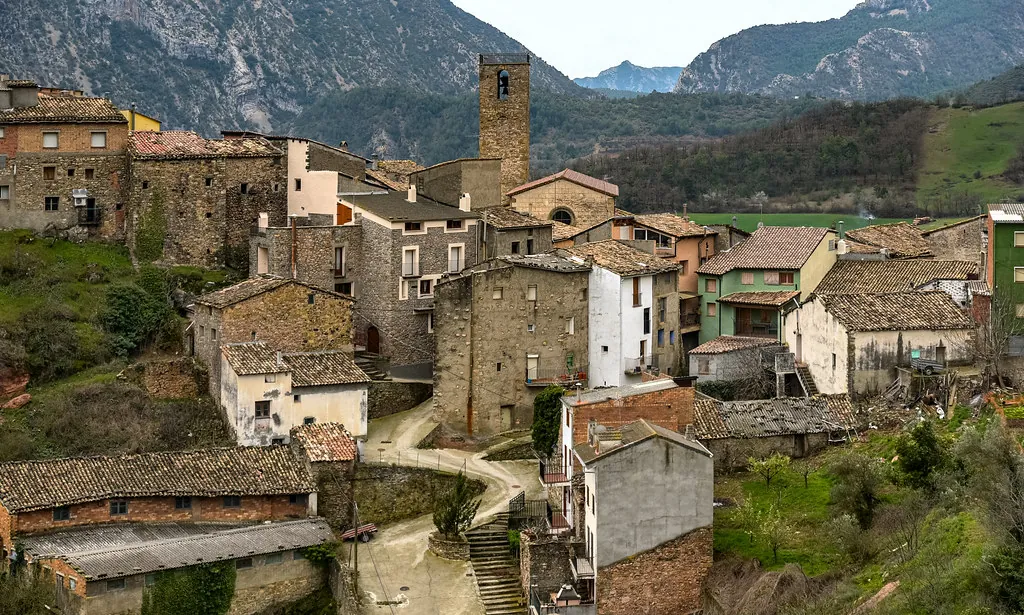
Alàs i Cerc is not a single compact village. It is a collection of small settlements scattered across the valley. Together they only add up to a few hundred residents, which explains the steady calm that defines the area.
Daily life here remains closely tied to the land. There are meadows for livestock, vegetable plots, and paths linking farmhouses and small churches. You will not find large squares or shopping streets. This is a place to move slowly, either by car or on foot, and to stop whenever something catches your eye.
The presence of the Cadí is constant. From many points in the municipality, the range appears like a wall of rock that shapes the entire view. It becomes a reference point as you move from one hamlet to another.
Romanesque churches that appear without warning
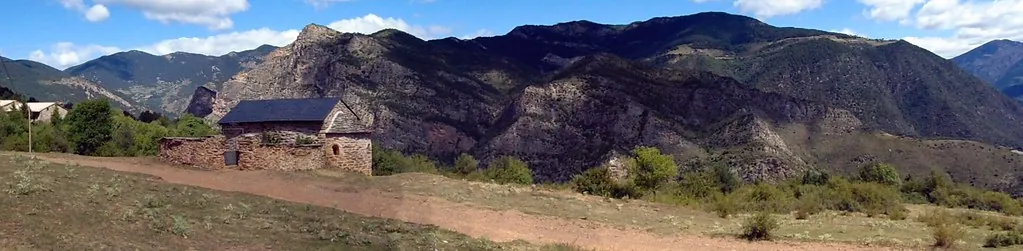
One of the most distinctive features of this area is how its churches reveal themselves. You follow a secondary road, turn towards a small settlement, and suddenly there it is: a Romanesque tower, dark stone, and a cemetery beside it.
Alàs i Cerc has several examples of this architectural style. The church of Sant Pere d’Alàs and the church of Sant Sadurní in Cerc are often mentioned when discussing Romanesque heritage in the Alt Urgell. They are not richly decorated buildings. These are sober structures, built to last for centuries and little more.
That simplicity fits naturally with the surroundings. Nothing feels out of place or overly restored. The churches seem to belong to the same rhythm as the fields and the mountains around them.
Walking through meadows and woodland
For those who enjoy walking, the municipality offers many traditional paths. Some of them were once routes used to travel between nearby villages. Today they are mainly used for walking or for mountain biking.
The landscape changes quickly as you go. One stretch may take you through open meadows, then soon after you find yourself in denser woodland. The mountains are always present in the background, giving a sense of continuity to the route.
This is the kind of place where you do not need a carefully marked trail. Sometimes it is enough to follow a dirt path and see where it leads. The experience is less about reaching a specific point and more about moving through the terrain at your own pace.
Quiet roads for cycling
The secondary roads that cross Alàs i Cerc carry very little traffic. That makes them appealing for cyclists, who are often seen climbing the slopes or linking one small settlement to another.
These are not famous Pyrenean passes, but they have a demanding profile. The terrain rises and falls repeatedly, and the effort becomes clear quite quickly if you are on a bike.
The reward is the setting. Most of the time you are riding with open views across the valley, with the Cadí in the distance. It is a straightforward combination of road, landscape and effort, without distractions.
Food in the area
Within the municipality itself, options for eating are limited, which is expected given the small population. Many visitors head to La Seu d’Urgell for a wider choice.
Across this part of the Alt Urgell, the cooking follows a clear pattern. The dishes are filling, based on local produce and shaped by mountain traditions. You will come across cured meats, aged cheeses and honey, along with dishes built around cabbage and potatoes or grilled meats. The approach is simple and direct, and it suits the setting, especially after time spent outdoors.
How to approach a visit
Alàs i Cerc is not usually a destination for a full trip on its own. It works better as a quiet stop if you are already travelling through the Alt Urgell or near the Cadí.
From La Seu d’Urgell, it is easy to reach. You can visit a few of the small centres, walk along the paths that cross the valley, and then continue your journey. In a couple of hours you can form a clear impression of the place.
It has something in common with visiting a friend who lives in the countryside. There may not be a detailed plan, yet time passes easily, and you leave with the feeling of having seen a very real part of the Pyrenees.