Full Article
about Cabó
A quiet, isolated valley; known for the Arrufat family heritage and its dolmens.
Hide article Read full article
Morning Light in a Small Pyrenean Village
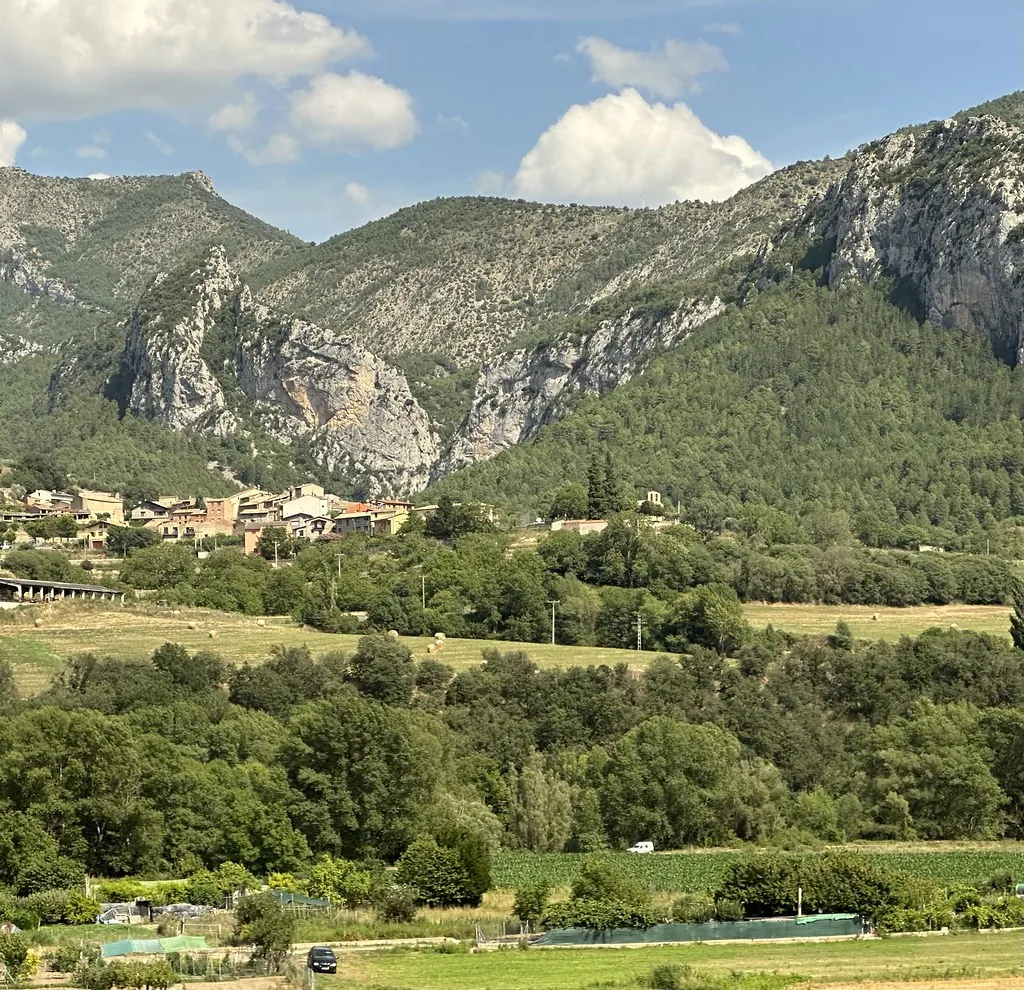
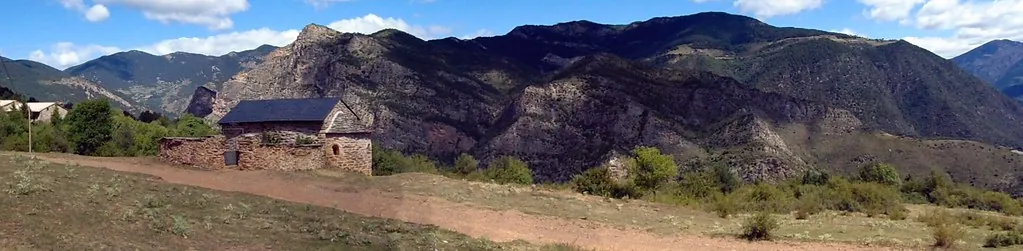
Early in the morning, when the sun begins to touch the slopes of the valley, Cabó is still half asleep. A dog barks somewhere in the distance, and the wind brushes through the trees. From the small rise where the church of Sant Serni stands, the view opens out towards the mountains of the Cadí. In winter their upper ridges are often white; in summer the landscape turns drier and more yellow. The light arrives from the side, catching the texture of the stone and drawing out every irregular surface.
Tourism in Cabó has little to do with organised itineraries or busy streets. This is a very small village in the comarca of Alt Urgell, with around 85 inhabitants, set in a transitional area between the valley floor and the first slopes of the Pre-Pyrenees. Daily life remains visible here. Firewood is stacked by front doors, small vegetable plots sit beside houses, and a car may be parked next to a restored hay barn.
There is no sense of spectacle. What Cabó offers is space, quiet and a way of seeing rural Catalonia that has not been redesigned for visitors.
Stone Houses and Short Streets
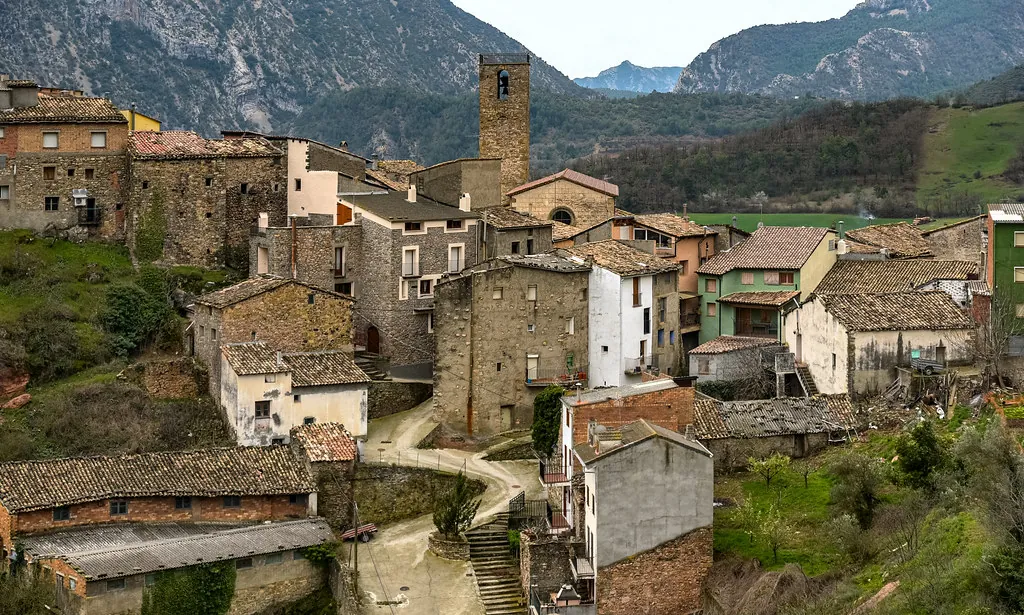
The village centre can be walked in a matter of minutes. A couple of short streets cross each other, forming tight corners edged by thick stone walls. Many roofs are covered in dark slate, and on some balconies you can still see wooden beams weathered by years of mountain climate.
Shops do not stay open all year, which shapes any visit. If you plan to spend time here, it makes sense to bring water or something to eat from La Seu d’Urgell, a few kilometres away by road. Cabó is less about ticking off sights and more about walking for a while and observing what is around you.
The scale is intimate. Doors open directly onto the street, and the stone façades show repairs and adaptations made over generations. There is little traffic and few signs. The atmosphere changes subtly with the season: sharper light and longer shadows in winter, softer evenings when temperatures rise.
Sant Serni and the Open Valley
The Romanesque church of Sant Serni marks the centre of the village. Built in pale stone, it has a simple form and a tower that rises just enough above the rooftops to be seen from most angles. Its design is sober, typical of rural Romanesque architecture in this part of Catalonia.
Inside, the space is plain. Some areas show the wear of centuries of use and of harsh winters. The surfaces carry the marks of time rather than restoration aimed at polish.
Beside the church lies a small cemetery lined with cypress trees. From this point, the valley opens out more fully. On a clear day, the outlines of the surrounding ranges are easy to distinguish, layered one behind another. The sense of elevation is gentle rather than dramatic, but the view gives a clear impression of Cabó’s position between valley and mountain.
This higher spot near Sant Serni is also where the changing seasons become most evident. Snow on the Cadí in winter contrasts with the dry tones of late summer. The light shifts quickly as clouds move across the ridges, altering the colour of stone and field within minutes.
Paths Through Oaks and Pines
Several paths lead out from Cabó, some descending towards the bottom of the valley, others heading into woodland. Not all of them are continuously signposted, so it is usually wise to carry a downloaded track or a map on your phone.
The landscape mixes oaks and pines with open clearings where fields once existed. In autumn the ground is covered with dry leaves, and the path crunches underfoot. Early in the morning or towards dusk, movement can sometimes be heard in the undergrowth. Roe deer and wild boar live in this area, although they usually disappear before they are seen.
After the autumn rains, this is also mushroom country. People from the surrounding comarca often know their preferred spots well. Caution is important, and only mushrooms that can be identified without doubt should be collected.
Walking here is straightforward rather than extreme. The terrain reflects its position in the Pre-Pyrenean foothills, neither high alpine nor completely flat. The mix of woodland and former agricultural land hints at a time when more fields were cultivated around the village. Today, some of those spaces are slowly being reclaimed by trees.
Silence plays a large part in the experience. Without constant traffic or background noise, small sounds become noticeable: wind in the branches, a distant animal, footsteps on gravel. The rhythm is unhurried, shaped by daylight and weather rather than schedules.
When to Visit Cabó
Spring and autumn are usually the most pleasant times to walk the surrounding paths. Temperatures tend to be milder, and the colours of the landscape shift noticeably, from fresh greens in spring to ochres and browns later in the year.
In summer, the heat can be strong at midday. Early mornings remain cooler, with some air drifting down from the mountains. Planning walks for the start or end of the day makes the experience more comfortable during hotter periods.
If you pass through in mid-August, you may coincide with days when residents who live elsewhere return to the village. At that time Cabó can feel slightly livelier than usual. For the rest of the year, the pace is very calm. That stillness is often the main reason to come.
Cabó does not compete for attention. It does not offer a long list of attractions or activities. Instead, it provides a setting where everyday rural life continues in a small community of the Alt Urgell, framed by the Cadí mountains and the first slopes of the Pre-Pyrenees. For those willing to slow down, walk a little and look closely, that is more than enough.