Full Article
about El Pont de Bar
Town rebuilt after a flood; wine museum and high-altitude vineyards
Hide article Read full article
A small village in the Pyrenean valley
Tourism in El Pont de Bar starts with something practical: the car. Visitors usually leave it at the entrance to the village or in small roadside spaces. During the week this is straightforward. In summer or at weekends it can take a bit more patience, although the village is small enough that a space usually appears without too much trouble.
A visit here is brief by nature. In under an hour it is possible to walk the main streets and reach the river. There is no extensive old quarter or a long list of monuments to work through. What defines the place is the Segre valley itself and the sense of being in a settlement that people pass through rather than linger in.
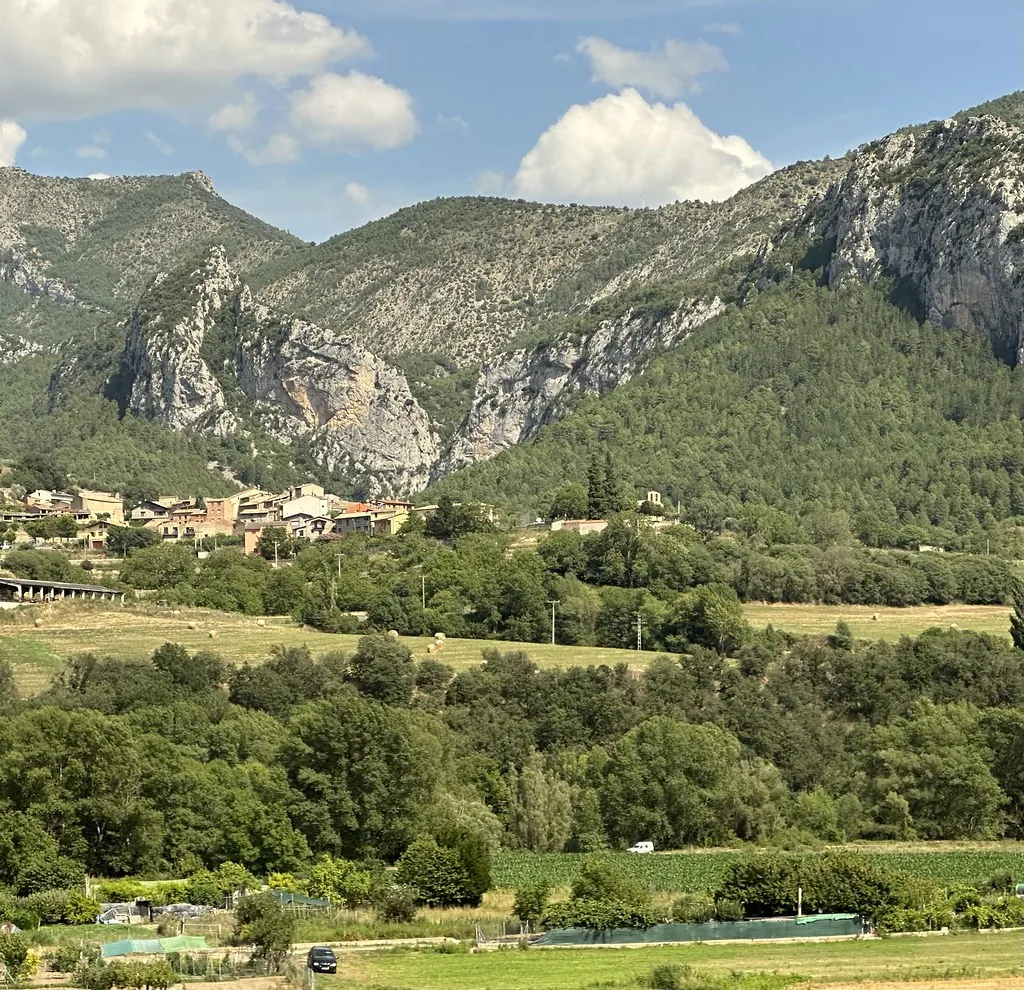
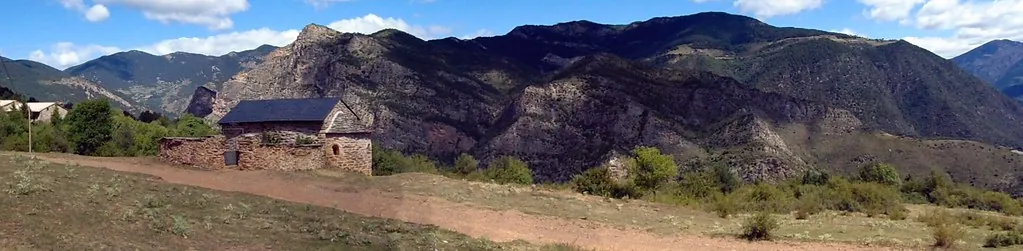
El Pont de Bar lies in Alt Urgell, a short distance from the French border. The surroundings are clearly Pyrenean: pine woodland, open meadows and mountains that rise above two thousand metres further north. The river Segre runs directly through the village, and its sound is noticeable when walking close to the water.
This is not a destination built around attractions. It functions more as a quiet point in the valley and as a base for exploring the wider area.
A short walk through El Pont de Bar
The parish church of Sant Pere is the most recognisable building in the village. Its origins are Romanesque, although it has been altered several times over the centuries. A simple bell gable remains, along with parts of the original stone structure. It is not a large or elaborate church, but it suits the scale of the place.
The bridge over the Segre explains the village’s name. Like many river crossings in the Pyrenees, it has been rebuilt in different periods. From here it is easy to understand how the settlement developed: houses close to the water, with the road following the line of the valley.
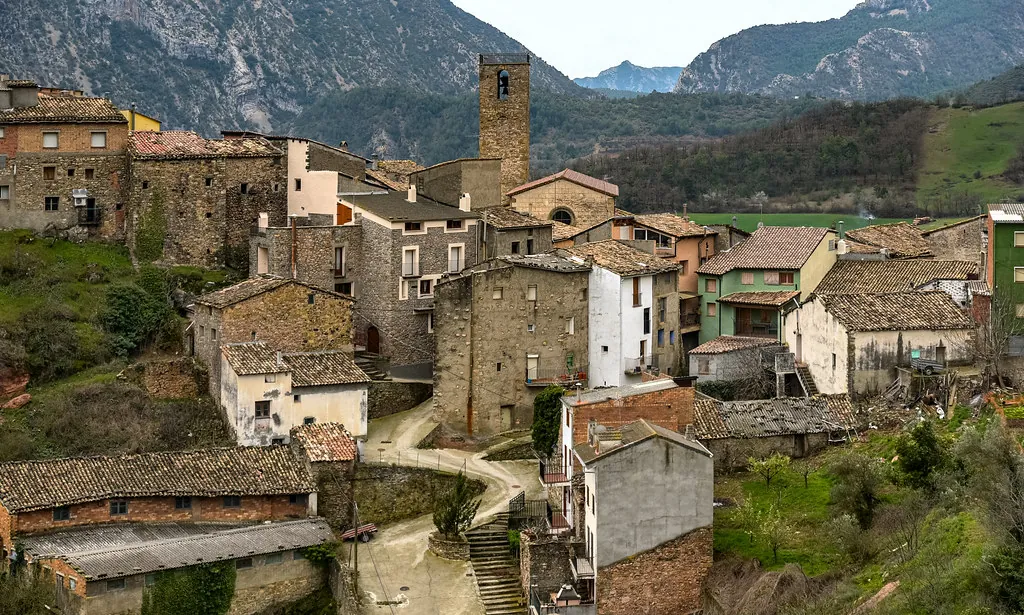
The houses themselves follow a clear mountain style. Stone walls, sloping roofs and very little in the way of decoration. The approach is practical rather than aesthetic. Walking along the two or three main streets gives a quick sense of the whole village.
A few minutes upstream or downstream, simple paths run alongside the river. They are not dramatic routes, but they are calm and easy to follow. The steady sound of the water is a constant presence.
Beyond the village: walking the valley
Spending time outdoors is the most natural way to extend a visit. Tracks and paths begin near the village and connect with forest roads and longer routes across the area. Some are signposted, others less so. Anyone planning to go further afield should be prepared with a map or GPS.
The landscape shifts noticeably with the seasons. Spring brings green meadows. Autumn introduces a mix of yellow and brown tones across the woodland. Winter is harsher, with cold temperatures and shorter days that change the rhythm of the valley.
With a bit of patience, birds of prey can sometimes be seen circling above. Nothing is guaranteed, but the terrain suits them.
For a wider range of services such as shops or places to eat, La Seu d’Urgell is the usual point of reference. It is a short drive away and gathers most of what the area offers in practical terms.
Local celebrations
In summer, the village usually holds its festa major, the main local festival found in many Catalan towns. During these days El Pont de Bar feels noticeably different. Families return, second homes fill up, and there is more activity than usual in the streets.
There is also a celebration linked to Sant Pere, with religious elements and gatherings among residents. It is not designed as a visitor attraction, but rather maintained as a local tradition.
Anyone seeking quiet surroundings may prefer to avoid these dates.
A brief stop along the Segre
El Pont de Bar makes most sense as a pause in a wider journey through the Segre valley or on the way towards the border. It works well as a short break: stretch your legs, walk by the river, take in the setting, and continue on.