Full Article
about Les Valls de Valira
Bordering Andorra; includes the village of Os de Civís (accessible only through Andorra)
Hide article Read full article
A Turn Off the Road to Andorra
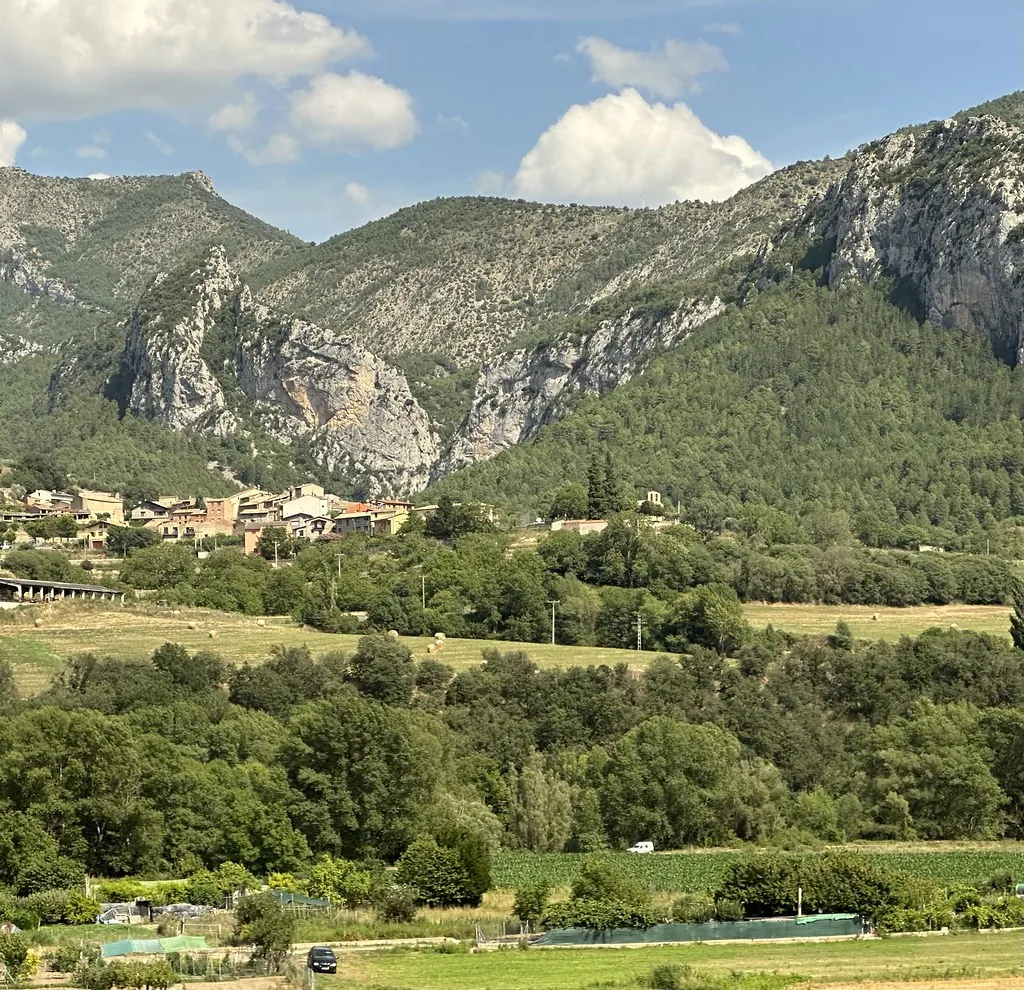
Les Valls de Valira is one of those municipalities that seems to sit quietly beside places far better known. Head towards Andorra, pass through La Seu d’Urgell, take a small turning, and the atmosphere shifts almost at once. The main roads fall away. There are no large mountain developments. Instead, you enter a valley of small settlements, restrained stone houses and a pace of life that has carried on without paying too much attention to tourism.
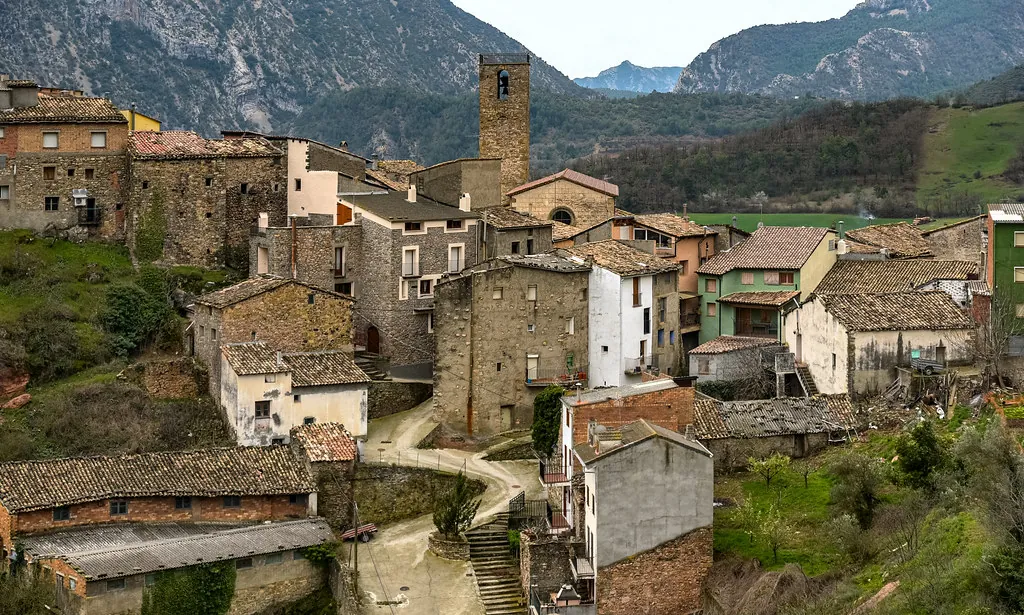
The municipality brings together villages such as Aravell, Ansovell, Arcavell and Bescaran. These are not places where everything is on hand around a central square. They are clusters of a few houses, a church, fields around them and little else. Walking through their narrow streets can feel like opening an old family album: walls that have stood for generations, courtyards where farm tools are still kept, tracks that lead out towards meadows and pine woods.
With La Seu d’Urgell nearby and the Andorran border close at hand, Les Valls de Valira works almost as the quiet back room of the area. Many people pass close by, few turn off. Those who do will not find souvenir shops or vast car parks, but secondary roads winding up through forest and footpaths where it is perfectly possible to walk for some time without meeting anyone.
Stone Churches and Subtle History
Heritage here does not announce itself with grand statements. It appears when you turn a corner or glance up in the middle of a village.
The church of Sant Serni de Aravell is a good example. It is one of those mountain Romanesque churches built to last: solid stone, simple proportions and a square bell tower visible from various points in the valley. It is not monumental or richly decorated, yet its solidity fits the landscape in a way that feels entirely natural.
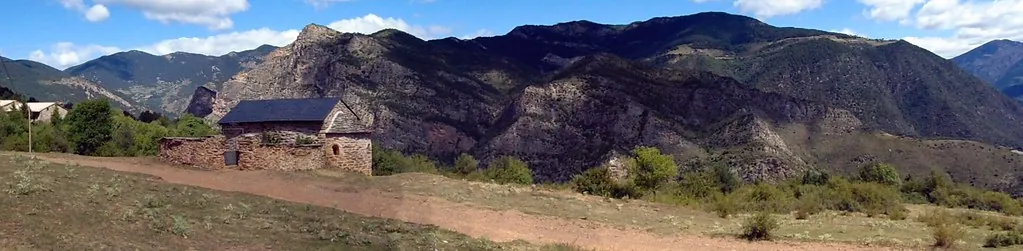
Arcavell also has an old church, smaller in scale. Looking at it gives a sense of how these villages have grown over time: discreet extensions, repairs carried out when something needed fixing or when the community required more space. There have been no dramatic transformations.
Between the different settlements you come across small chapels, dry stone walls and old paths that still link one village to another. Each detail is modest on its own, but together they say a great deal about how people have lived in these mountains for generations.
Walking Between Villages and Pines
In Les Valls de Valira, the most natural way to get around is on foot or by bicycle along the tracks that connect the villages. These are not famous hiking routes, nor are they heavily signposted trails. They are rural paths, some paved, others dirt, used for years as practical links from one place to another.
One simple way to explore is to join several settlements together in the course of a morning. Leave one village, cross meadows, enter a pine forest, pass an isolated masía, a traditional farmhouse typical of rural Catalonia, and before long you are approaching the next cluster of houses. The landscape does not change dramatically, yet it rarely feels repetitive.
For cyclists there is plenty to work with. The secondary roads carry little traffic, though the gradients make themselves known. These are not endless Alpine passes, but in this terrain you are almost always climbing or descending.
The river Valira runs through much of the municipality. In certain stretches, and when the season allows, you may see people fishing, particularly for trout. It is important to check the relevant permits and zones in advance, as these vary depending on the section of river and the time of year.
Mountain Food, Plain and Filling
In this part of Alt Urgell, cooking remains closely tied to the mountains. Expect spoon dishes, hearty meats and cured sausages prepared in much the same way they have been for years. After a couple of hours walking these slopes, it becomes clear why substantial meals are so appreciated here.
Local cheeses are also common, along with simple breakfasts of bread, honey, cured meats and strong coffee. There is nothing elaborate about it, yet it fits the rhythm of valley life.
Village Traditions That Still Matter
Local festivals continue to mark the calendar in many of these small settlements. In summer there are usually modest celebrations that bring together residents of the municipality and those who return to the village for a few days. A mass, a shared meal, traditional music in some cases. The tone is simple and community-focused.
Anyone expecting major events or large-scale festivals will not find them here. Les Valls de Valira offers something different: a glimpse of how many Pyrenean villages still function when they are not shaped primarily around tourism.
The effect can be subtle. You take a secondary road “just for a moment” and end up staying longer than planned. Not because there are countless sights to tick off, but because the place gently slows your pace. In itself, that is already quite something.