Full Article
about Peramola
Picturesque village with rock formations and hermitages; luxury hotel in Can Boix
Ocultar artículo Leer artículo completo
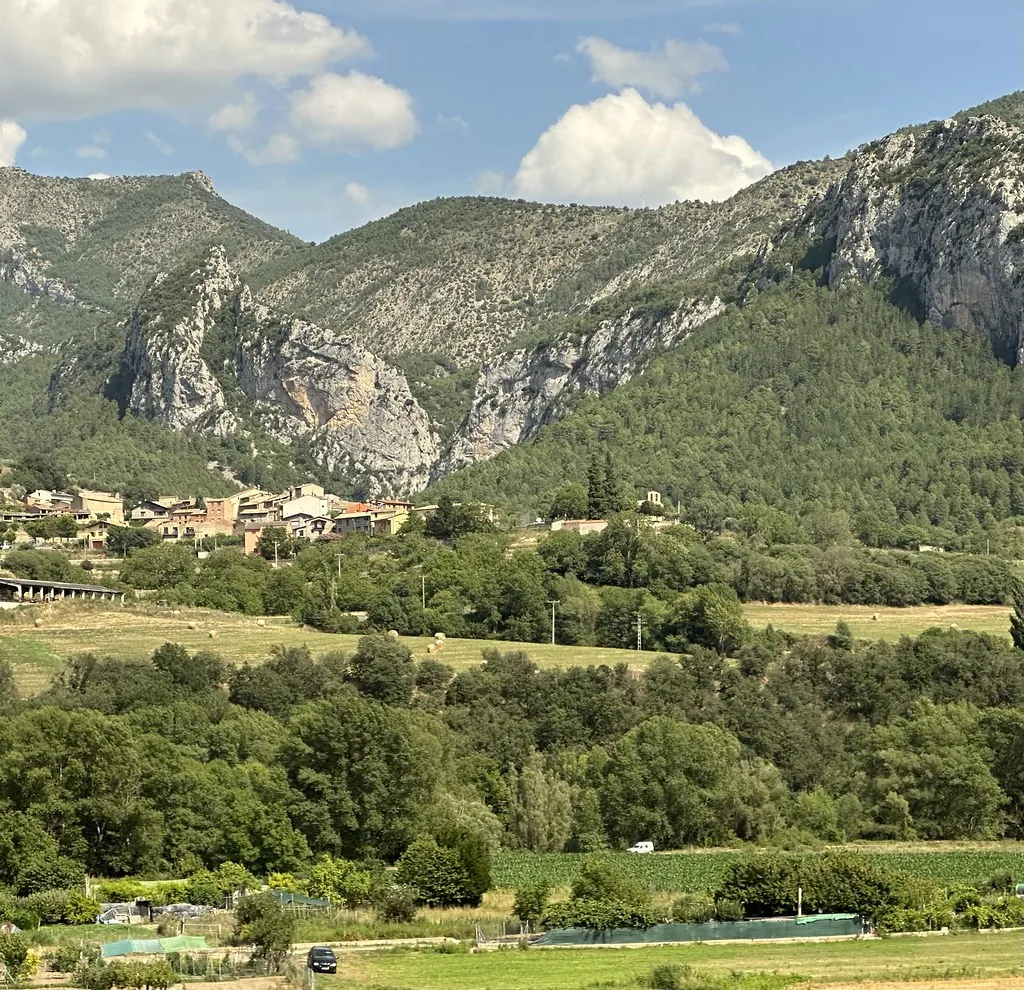
The morning light hits the grey limestone walls at 07:23, give or take a minute, and for a quarter of an hour the whole scatter of farmsteads looks like it’s been plugged in. Then a tractor coughs, a dog barks, and the plateau returns to its normal state of near-silence. This is Peramola, 566 m above sea level, where the Segre river bends east and the proper Pyrenees still sit forty minutes up the road. It isn’t pretty-pretty; it’s simply honest—stone, cereal fields, and a sky big enough to make you check the map twice.
A Parish, a Pint of Water, and a View
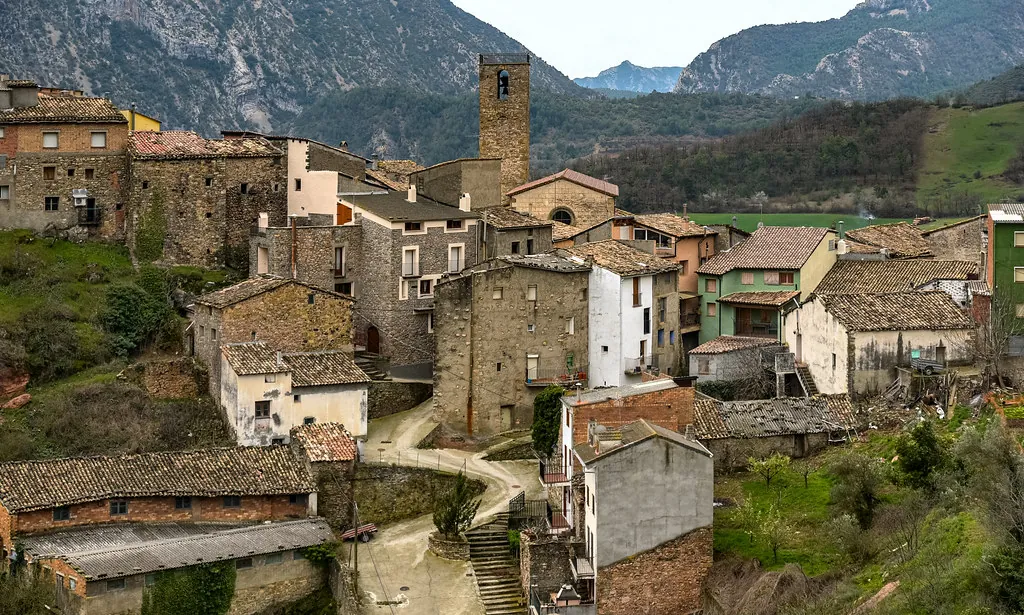
Most visitors roll in along the C-14, swing past the petrol station that doubles as the village shop, and stop at the church square. Sant Julià de Peramola won’t make the cover of any glossy Iberian-architecture supplement. The portal is Romanesque, the roof is nineteenth-century tin, and the bell tower was mended after someone drove into it in 1983. Step inside, though, and the temperature drops five degrees; the smell is of candle wax, old timber and the faintest trace of grain from the bodega next door. Locals still refill their 5-litre jerrycans from the stone fountain outside—there’s no mains chlorine tang here—so bring a bottle and save on plastic.
Walk fifty metres uphill past the school (twelve pupils this term) and the tarmac gives out. A farm track climbs through holm-oak and the first of the abandoned terraces where olives used to grow before the 1956 frost. Ten minutes later you’re on a limestone bluff looking straight across the Segre to the cliff they call Roca del Corb. Griffon vultures lift on the thermals, but they’re outnumbered by swifts whose screaming seems to bounce off the rock face like feedback from a cheap amp. No ticket office, no railing, no postcard seller—just vertigo and the smell of wild thyme crushed under your boots.
Wheels, Boots and the Occasional Mushroom
The village is spread thin—hamlets with names like Els Masos de Sant Marc, El Vilar, La Tossa—so you’ll need a car unless you fancy a very long yomp along tarmac. Once that’s sorted, the choices open up. Road cyclists treat the valley road as a rolling interval session: south to Ponts is 26 km of almost-flat wheat fields; north to La Seu d’Urgell is a 400-metre climb that feels twice as long when the wind funnels down-canyon. Mountain bikers can string together farm tracks to make a 35-km loop via the gorge at Terradets, but check the forecast—clay turns to axle-deep glue after October storms.
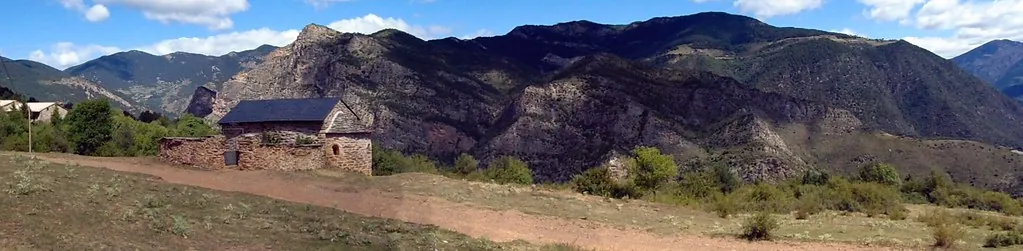
Walkers have it easier. The signed “Camí de les Fonts” leaves from the picnic area by the river and ambles 7 km through reed beds, almond groves and three springs cold enough to chill a bottle of cava. No great elevation, just enough roll to justify lunch. Serious calves can continue up to the ruined hermitage of Sant Honorat (1,061 m). The path is way-marked but rocky; allow two hours up, ninety minutes down, and start early—there’s zero shade after 11 a.m. in high summer.
April and late-October weekends bring out the boletaires, Catalonia’s answer to the New Forest mushroom hunter. They’re friendly unless you block the lay-by with a UK-plated Volvo, but don’t tailgate them into the woods—every spot is claimed by cousin or compadre. Even if fungi aren’t your thing, the smell of wet earth and pine needles is worth the detour.
What Passes for a Menu
Forget tasting menus and starched linen. Food here is served on melamine and arrives within four minutes of ordering. The only public bar is attached to the petrol station; open hours are printed on a scrap of cardboard and amended in biro every few weeks. Order the truita de riu—river trout caught the previous night, grilled with nothing more than olive oil and a squeeze of lemon. Chips are frozen, but the fish tastes like it’s never seen a freezer. Pa amb tomàquet, the local embutits (try the thin pork whip called fuet, mild enough for a child), and a glass of Costers del Segre red will leave you with change from €14—so long as you remember to ask for the house wine, not the Rioja they keep for tourists who don’t read price lists.
If you’re self-catering, stock up in Balaguer (thirty minutes south) before you arrive. The village shop opens 09:00-13:00, closes for lunch, then unlocks again “about five”—or not, if Marc has taken his mother to the doctor. You can buy tinned tuna, local almonds and a lottery ticket; fresh milk is hit-and-miss.
When to Come, When to Stay Away
May and late-September are the sweet spots: 24 °C at midday, 12 °C at dawn, and daylight that lingers long enough for an after-supper walk. August is a furnace—35 °C in the shade, cicadas drilling into your skull, and half the houses shuttered while owners work coastal jobs. Winter is crisp, often sunny, but night frost can be hard; the road north is briefly closed when ice sheets off the cliff. Unless you’re happy chaining tyres, stick to April-June or September-November.
Accommodation is thin on the ground. Cal Pacho, a three-bedroom stone house with a splash-pool, lists on Airbnb for £110 a night and books up early with French families who know the area. Two rural apartments above the baker’s cooperative charge €70 but share a single bathroom—fine for hikers, less so for honeymooners. Camping isn’t officially allowed by the river, though you’ll see the odd van; the local police attitude is “don’t make a fire, don’t leave loo-roll, move on after breakfast.”
The Quiet Calendar
There isn’t a jazz weekend, craft fair or artisan-cheese market. The Fiesta Mayor happens around 15 August—foam machine, brass band, communal paella and a disco that shuts at 01:00 sharp because the generator hire is expensive. Visitors are welcome, but you’ll be the only person whose surname isn’t in the parish records back to 1836. Easter Monday brings a gentler pilgrimage to Sant Honorat: mass in the open air, coffee from a thermos, and almond cake sold by the widow whose husband used to ring the bell. That’s it. If you want flamenco, go south; if you want Michelin, drive to La Seu.
Getting Here, Getting Out
Fly to Barcelona or Reus, collect a hire car, and head northwest. The AP-7 toll is €7.40, the C-16 tunnel another €7.10; after that the C-14 is free and empty enough to play spot-the-HGV. Total drive from Barcelona airport: 2 h 15 min if you resist the urge to photograph every viaduct. Public transport looks doable on paper—train to Lleida, bus to Balaguer, another bus toward La Seu—but the final leg is school-run only and turns a two-hour journey into a six-hour odyssey that arrives after dark. Don’t.
Leave time for the return detour to Montsonís, twenty minutes south, where a thirteenth-century castle perches on a plug of limestone and the café does a decent Victoria sponge—proof that even Catalans sometimes fancy a bit of British comfort.
Peramola won’t change your life. It will give you calloused feet, dust on your boots, and a reminder that “nothing to do” can still feel like plenty. Turn up with a full tank, an offline map and modest expectations, and the place might just let you in on its best-kept secret: the quieter the village, the louder the landscape.