Full Article
about Argençola
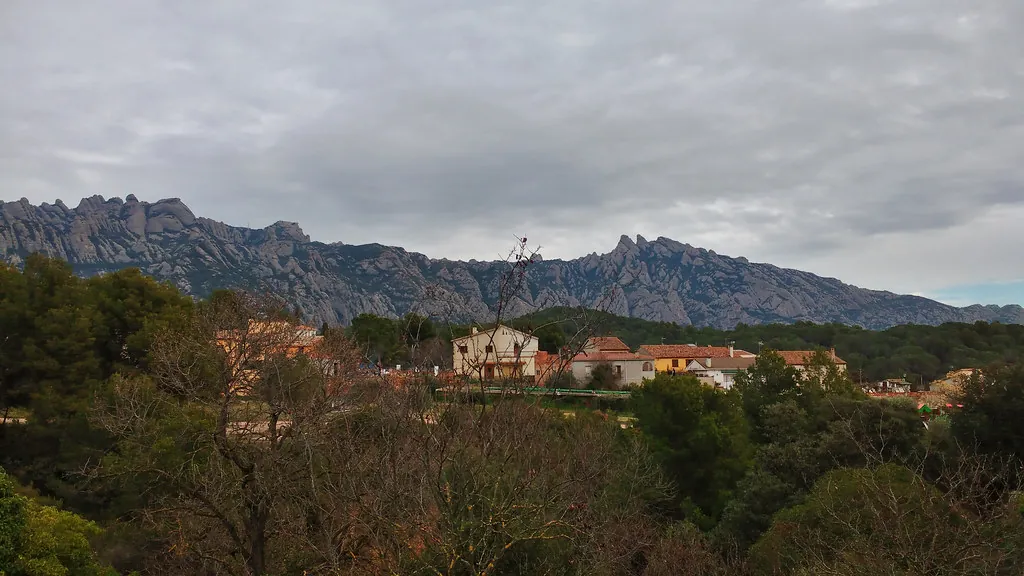
Small rural village in the Anoia, dominated by the ruins of its old castle and farmland.
Ocultar artículo Leer artículo completo
The village square empties at half eleven sharp. Not because anything closes—most things never opened—but because the tractor driver has finished his coffee and needs to get back to the barley field before the sun climbs too high. This is how time works in Argençola, 716 metres above sea level in the Catalan interior: appointments are made in relation to harvests, not Google Calendar.
With 216 residents registered at last count, the place feels closer to a working farm collective than a tourist destination. Stone houses lean together as if sharing gossip, their wooden balconies sagging under the weight of geraniums that nobody planted on purpose. The only shop doubles as the bakery; bread arrives at 7 a.m., sells out by 9, and that’s the day’s commercial pulse taken care of.
The Church That Refused to Grow Up
Sant Martí squats at the top of the only paved slope, a Romanesque affair that never got the memo about expanding into a proper basilica. Its doorway is shoulder-width, designed for medieval shoulders at that, and the bell still rings by hand—one tug for noon, two for funerals, none for weddings because nobody’s held one here since 1998. Inside, the paint peels in flakes the colour of dried paprika; the priest drives in from Igualada on Sundays and brings the communion wine in a Lidl bag. Yet the building anchors the village in a way GPS never could: give directions in Argençola and they start at “desde la esglesia…”
Below the church, lanes narrow until they become staircases. Some houses still have the iron rings where travellers tethered mules; others have satellite dishes pointing at odd angles, trying to clear the neighbour’s wall. There is no centre as such, just a gravitational pull towards the fountain where cold water gushes year-round. Locals fill 5-litre jugs there rather than pay for tap water, and they’ll nod at visitors who do the same—acceptance comes in litres here.
Heat, Hills and How Not to Get Lost
The municipality spreads across 35 square kilometres of creased terrain, a patchwork of cereal fields, almond groves and holm-oak scrub. Marked footpaths exist, but they’re signed for people who already know the way: a splash of yellow paint on a rock, two stacked stones, sometimes just the absence of wheat. The safest strategy is to follow the dry-stone walls; they lead, eventually, to a masia whose dogs will announce your arrival long before you see the farmhouse.
Summer walking starts at dawn or doesn’t start at all. By 11 a.m. the thermometer kisses 36 °C and the only shade belongs to the vultures circling overhead. Spring and autumn are kinder: skylarks, bee-eaters, the smell of turned earth. In winter the mist sits in the valleys, turning every ridge into an island and every tractor into a ship’s horn. Snow is rare but not impossible; when it arrives the village locks its doors until the sun does the gritting.
Cyclists arrive with road bikes, tempted by loops that roll rather than hammer. The C-1412 to Igualada is smooth tarmac with a respectable 4 % gradient; the back lane to Carme offers potholes and views in equal measure. Nobody stocks energy gels, so pack figs and almonds like the farmers do.
What Passes for Food Around Here
Argençola itself keeps no restaurant. The closest thing is Fonda Can Llobet, four guest rooms above a bar that serves whatever Teresa bought at the market. Lunch might be escalivada on toast followed by rabbit with romesco, dinner could be tortilla and beer, or nothing if she’s short-handed on the farm. Set menus run €14–16; cash only, and don’t ask for gluten-free unless you fancy plain lettuce.
Picnickers do better. Buy tomatoes still warm from the plastic tunnels outside town, a slab of goat’s cheese from the vending machine at Mas d’en Gall (yes, an honesty fridge in a stone hut), and a bottle of local plonk made by a man called Jordi who labels bottles only if he’s in the mood. Eat on the south-facing wall of the ruined chapel above Clariana; from there you can see Penedès vineyards shimmering 30 kilometres away and work out why the Romans bothered.
Sleeping Without Souvenirs
Accommodation totals three legal options. La Rectoria de Clariana sleeps ten around a heated pool that nobody has time to heat; expect church bells and the occasional tractor at dawn. Fonda Can Llobet offers simpler doubles from €55, shared balcony, Wi-Fi that forgets passwords. The third is a converted mas 2 kilometres out, reachable by dirt track; the British owner calls it “rural luxury,” which translates to solar showers and geckos in the kitchen. Booking ahead is polite but not essential except during the fiesta major in November, when half of Igualada descends for the sardana dancing and the village square smells of grilled onion calçots for three days straight.
Getting There, Getting Out
Public transport is a timetable written in pencil. One bus leaves Igualada at 13:10, returns at 6 a.m. next day; miss it and you’re walking 19 kilometres along the C-1412, a lesson in hedgeless verges. Car hire from Barcelona airport takes 75 minutes via the AP-2 toll road (€12.40 each way) then a swing onto the C-1412 at Martorell. Petrol stations close at 8 p.m.; fill up before the final climb because the village pump closed in 2003.
Leaving is easier. The same road that brings you in carries you out, past almond orchards that flower like popcorn in February and wheat that turns from green to gold to stubble while you’re still deciding whether you liked the place. Most visitors stay a night, sometimes two, then drift towards Montserrat or the cava houses of Sant Sadurní. They depart with dust on their shoes and a vague sense that somewhere between the church bell and the tractor exhaust they lost the urge to check their phone. That quiet lasts about twenty kilometres down the mountain, after which the motorway roar reminds you what century you’re in.