Enterrament doble sota la creu de Cabrera d'Anoia.jpeg
Josep Salvany i Blanch · Public domain
Cataluña · Sea, Mountains & Culture

Cabrera d'Anoia

The church bells strike noon, and the only other sound is a tractor growling through barley stubble. No tour groups, no selfie sticks, not even a s...

1,772 inhabitants · INE 2025
330m Altitude

Why Visit

Cabrera Castle Hiking trails

Best Time to Visit

summer

Main Festival (August) agosto

Things to See & Do
in Cabrera d'Anoia

Heritage

  • Cabrera Castle
  • Bleda Stream

Activities

  • Hiking trails
  • mountain biking

Festivals
& & Traditions

Fecha agosto

Fiesta Mayor (agosto)

Las fiestas locales son el momento perfecto para vivir la autenticidad de Cabrera d'Anoia.

Full Article
about Cabrera d'Anoia

Municipality known for its housing developments and the natural setting of the Anoia valleys.

Ocultar artículo Leer artículo completo

The church bells strike noon, and the only other sound is a tractor growling through barley stubble. No tour groups, no selfie sticks, not even a souvenir shop—just the smell of tomato-rubbed toast drifting from Bar-Restaurant Cal Pau and a farmer leaning against a gate, checking his phone with the patience of someone who knows the fields aren't going anywhere.

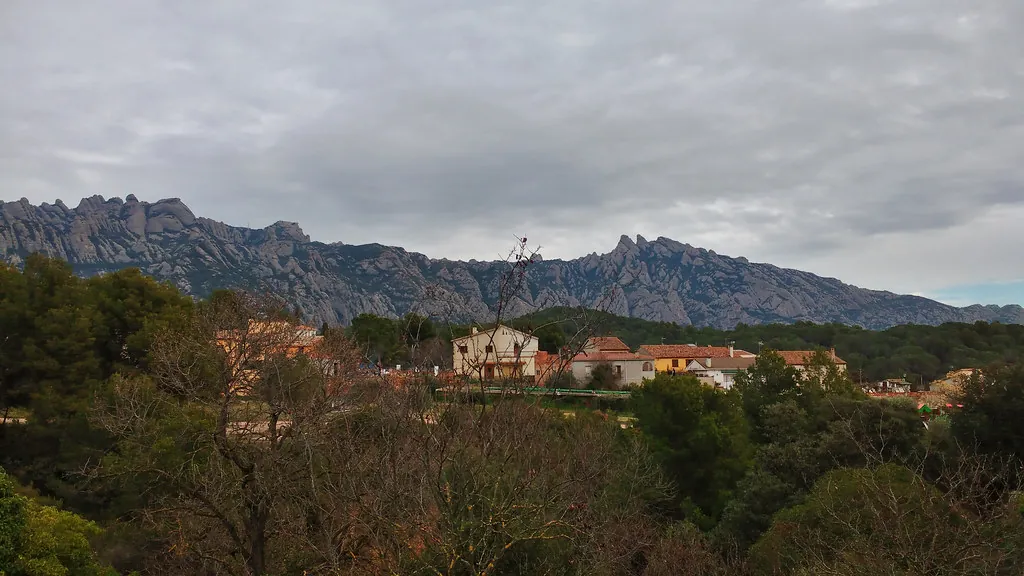
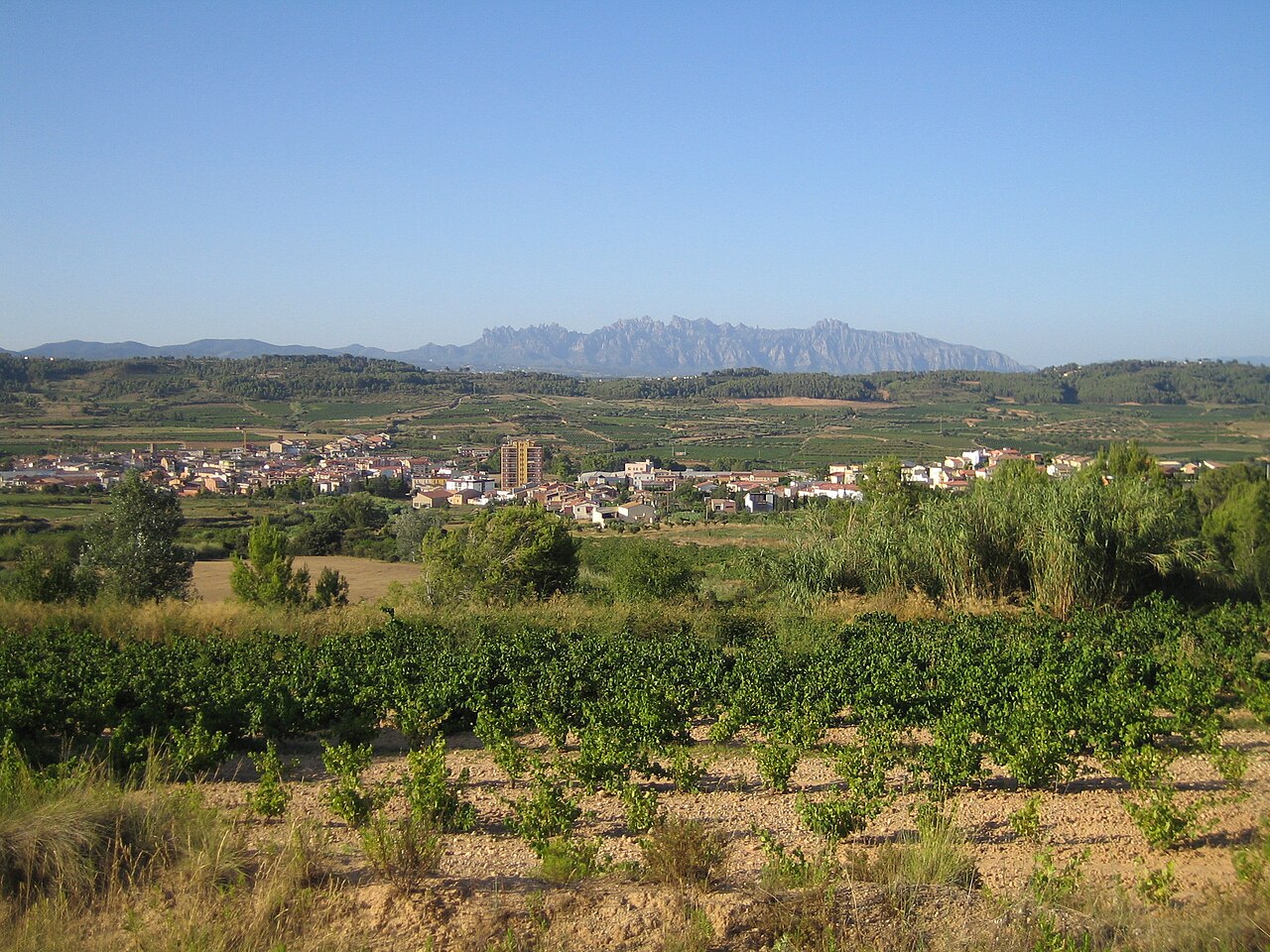
Cabrera d'Anoia sits 330 m above sea level in the Anoia comarca, 45 minutes inland from Barcelona airport yet barely registering on the tourism radar. Roughly 1,300 permanent residents share three narrow streets, a handful of stone farmhouses scattered across wheat belts, and a ruined castle that serves more as a local dog-walking destination than a heritage highlight. The village makes no effort to impress, which is precisely why it lingers in the memory longer than many postcard-perfect contenders.

Morning: Coffee, Castle, and a Crash Course in Catalan Farming

Start at the only bar that bothers with opening hours. Cal Pau opens at seven for field workers and serves coffee so strong it could revive medieval masonry. Order a café amb llet and watch the ritual: farmers shuffle in, exchange two sentences of gossip, knock back an espresso, leave. By eight-thirty the place is empty except for the occasional cyclist refuelling with pa amb tomàquet—toasted farmhouse bread rubbed with ripe tomato, olive oil, and salt. It's vegetarian, child-safe, and costs €2.50; ask for sense pernil if you want it without the customary ham.

From the bar it's a twelve-minute walk to the Castell de Cabrera, or what's left of it. The path starts between houses number 23 and 25 on Carrer Major, signed only by a hand-painted wooden arrow that fades a little more each summer. The climb is short—roughly 80 m of elevation—but trainers suffice only in dry weather; after rain the clay surface turns into something resembling chocolate mousse. At the top you get 270-degree views over grain fields, almond terraces and the corrugated-iron roofs of distant masías. Interpretation boards never arrived, so history is whatever the nearest grandparent feels like telling you: typically that the fortress once controlled the valley route between Barcelona and Lleida, and that its stones were later recycled to build village houses. Bring a sandwich and consider it a picnic spot rather than a monument.

Afternoon: Pedal or Plod Through Vineyard Chessboards

The Anoia landscape works best at cycling speed. A quiet secondary road loops 23 km south-east to Sant Sadurní d'Anoia, centre of Cava production, passing through villages where roadside honesty stalls sell bottles of brut nature for €5—about half UK retail. The route has three short climbs, none longer than 800 m, and traffic averages one car every four minutes on weekdays. If you haven't brought a bike, hire one in Igualada (€25 per day) and take the train back; Rodalies regional services allow cycles free of charge outside rush hours.

walkers aren't short-changed either. A signed rural path, the Camí de les Masies, heads north for 6.5 km through wheat, oats and regimented vines belonging to the Cooperativa de Cabrera. The co-op building itself—an ochre 1950s block on the edge of the village—offers free weekday tastings of young white MACABEO, poured into whatever glasses are clean. They close at 13:30 sharp; arrive late and you'll find only the caretaker hosing down the forecourt.

Food: Order the Off-Menu Special—Time

Cabrera's kitchens stick to what the land produced yesterday. Cal Pau's weekday menú del dia costs €14 and changes according to what the proprietor's sister harvests: expect escalivada (smoky aubergine and pepper), grilled butifarra sausage mild enough for children, and a thimble of crema catalana torched to order. Vegetarians can swap sausage for mongetes (white beans stewed with bay), but you must ask; dietary requirements are still regarded as a quaint foreign hobby.

Sunday lunch is the social event of the week. Locals eat at 14:00 and tables stay full until the coffee brandy appears around 17:00. Visitors are welcome, but bookings are taken by phone only (no website, no email). Turn up unannounced and you might be squeezed onto a table in the corridor, next to the coat rack and the coffee machine. August 15 brings the annual fiesta: brass bands, correfoc devils with fireworks, and enough bangers to make Guy Fawkes Night sound like a tea party. Accommodation within the village disappears six months ahead; stay in nearby Igualada if you dislike sleeping through pyrotechnics.

Getting There, Getting Away, Getting Cash

Cabrera has no station. From Barcelona-Sants take the R4 Rodalies train to Igualada (hourly, 70 min, €7.60 return). A taxi completes the final 12 km for €20–25; book the previous evening via WhatsApp at +34 666 123 456—English spoken, but replies can take hours. Drivers should leave the AP-7 at Martorell and follow the C-244; the approach road is single-track for the last 3 km, so reverse into gateways if you meet a combine harvester.

Bring euros. Card machines exist, yet many businesses switch them off for bills under €20, citing bank charges that would "frighten a bishop". The lone ATM belongs to CaixaBank and sometimes hibernates at weekends; Igualada's supermarkets offer cashback if you're stuck.

The Catch: Silence Can Feel Like a Second Language

Even enthusiasts admit the place flat-lines after 22:00. Nightlife is whichever bench the pensioners occupy while waiting for dogs to urinate. If you crave boutique hotels, spas, or cocktails that arrive smoking, aim for Sitges on the coast instead. Mobile reception is patchy beyond the church square—download offline maps—and August temperatures can top 36 °C, when the only shade is the castle ruin or the inside of Cal Pau's freezer.

Yet for travellers who measure value in elbow room rather than Instagram likes, Cabrera d'Anoia delivers something increasingly scarce: a working Catalan village that functions perfectly well without you. Come for the tractor-paced rhythm, the wine that costs less than bottled water, and the realisation that "nothing to do" can be a legitimate itinerary. Leave when the bells next strike the hour—and notice, halfway home, that you've started counting time in fieldwork seasons rather than calendar days.

Key Facts

Region
Cataluña
District
Anoia
Coast
No
Mountain
No
Season
summer

Official Data

Institutional records and open data (when available).

  • Turó d’Agullàdols I – PK 6700 de la C-244
    bic Jaciment arqueològic ~0.5 km
  • Barraca 8771
    bic Edifici ~0.6 km
  • Barraca 8770
    bic Edifici ~0.7 km
  • Jaciment PK 7125 de la C-244
    bic Jaciment arqueològic ~1 km
  • Cal Tort
    bic Edifici ~0.7 km
  • Cal Xic de l'Ànima
    bic Edifici ~0.7 km
Ver más (40)
  • Cal Tut
    bic Edifici
  • Ca l'Ànima
    bic Edifici
  • Cal Jan
    bic Edifici
  • Can Busquets, Cal Moixó i Cal Paella
    bic Edifici
  • Cal Jeroni
    bic Edifici
  • Maset de la Sal
    bic Edifici
  • Barraca 8791
    bic Edifici
  • Agullàdols
    bic Edifici
  • Santa Margarida d'Agullàdols
    bic Edifici
  • La Freixeneda
    bic Edifici

Planning Your Visit?

Discover more villages in the Anoia.

View full region →

More villages in Anoia

Traveler Reviews