Full Article
about Castellolí
Near the Bruc pass, it has a speed circuit.
Ocultar artículo Leer artículo completo
The morning bell of Sant Pere church strikes eight and the reply comes not from another belfry but from a distant, mechanical howl: racing karts tearing round Parcmotor, half a mile away. That split-second duet—iron bell, two-stroke engine—tells you most of what you need to know about Castellolí. It is a farming village that happens to host the nearest circuit to Barcelona where petrol-heads can legally hit 160 km/h before lunch.
At 415 m above sea, the air is a touch thinner and cleaner than on the coast; drive the A-2 west for forty-five minutes, climb the last gentle ridge, and you'll feel the temperature drop a couple of degrees. The Pyrenees still lie two hours away, but even this modest altitude is enough for spring mornings that demand a fleece and summer evenings when you’ll keep your pint of lager outside the bar to stay cool.
Stone, Grain and Asphalt
The old centre fits inside a ten-minute loop. Alleyways narrow until they admit nothing wider than a donkey—deliberately medieval traffic-calming—then widen into a sunny plaça where elderly men occupy the same benches their fathers used. Look up and you’ll spot 17th-century lintels carved with bunches of grapes; look down and the stone is speckled with rubber marbles blown off kart tyres from the nearby track. Past and present collide here without asking permission.
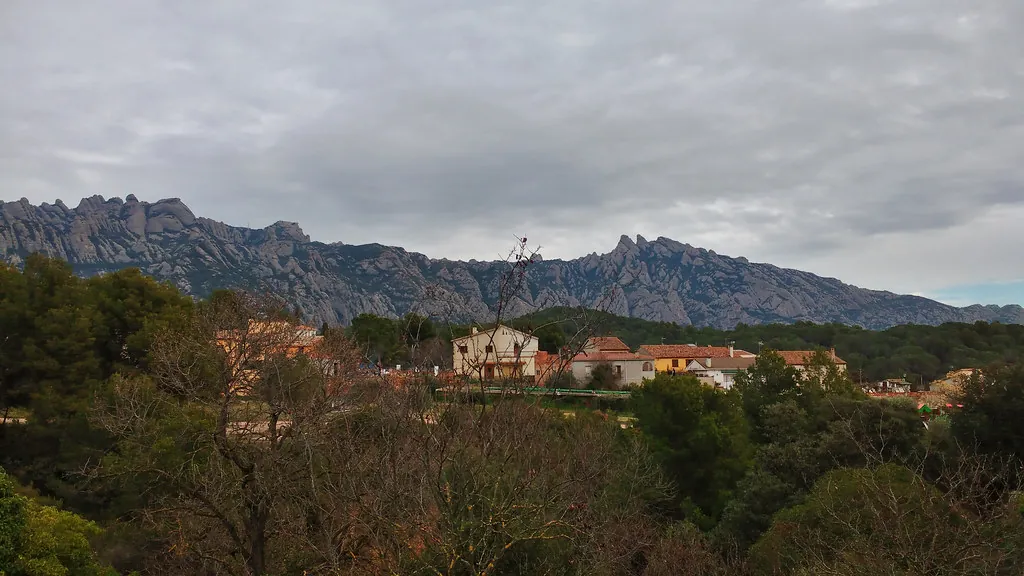
There is no castle in the village itself, despite the name. The ruined fortress everyone refers to as “the castle” sits 2 km south on a limestone tooth. The path starts behind the football pitch, gains 140 m in twenty minutes, and offers zero shade—start early or carry water. From the top Montserrat floats on the horizon like a broken canine, and on clear winter days you can pick out the telecom masts of Tibidabo above Barcelona, 65 km away.
Fields round the village still follow the same mosaic they did in the 1850s: wheat, barley, almond, the occasional stripe of vineyard. Stone terraces, dry-built and lichen-blackened, keep the hills from sliding downhill during October downpours. Tractors work after dawn; by nine the smell of diesel has been replaced by that of grilling botifarra from the bar opposite the church.
Breakfast, Brunch and a Blast of Octane
Cal Mou opens at seven for farmers and track mechanics alike. Order a fork-breakfast—fat country sausage and white beans, mild enough for a British palate—and the owner will push the tomato bowl towards you: smear pa amb tomàquet on toast, drizzle oil, sprinkle salt. Locals pay €4.50; tourists are charged the same if they greet in Catalan, €5 if they try Spanish, so brush up on “Bon dia”.
Ten minutes up the C-15, Parcmotor’s gates reveal a tarmac oval that looks unprepossessing until the first 125 cc kart exits the pits and hits 100 km/h before the uphill hairpin. Adults get 15 minutes for €28, cheaper than any comparable circuit near London, but book online: Saturday slots vanish to stag parties from Barcelona. If you prefer your adrenaline vicarious, stand on the pedestrian bridge; the vibration rattles fillings loose.
Gentler exercise is available on the web of farm tracks that link Castellolí with neighbouring villages. A flat six-kilometre loop north-east reaches La Pobla de Claramunt, where the station gives access to Barcelona in under an hour—useful if you’re car-free. Cyclists appreciate the secondary roads: smooth asphalt, hedgerows replaced by pine and almond, and so little traffic that a rabbit can sit in the middle for a full minute before bothering to hop away.
When to Come, What to Bring
Spring is the sweet spot. From mid-March the hills glow green, almond blossom drifts across windscreens and daytime temperatures hover around 18 °C—perfect for walking without the sweat patches. Autumn runs a close second; September still hits 26 °C at midday, but mornings smell of crushed grapes and the light turns the stone walls honey-coloured.
High summer is doable if you adjust your clock: do the castle walk before ten, siesta through the furnace hours, re-emerge at six when the plaça refills. August fiestas mean free concerts, late-night verbenas and a communal paella that feeds half the county. The downside is accommodation: only twenty rooms exist in the whole village, most above private houses, so book early or stay in Igualada ten minutes away.
Winter is quiet, sometimes bleak. Night frosts are common, the kart track closes mid-week and many restaurants shut in January. On the plus side you’ll have the castle view to yourself and the village bar still serves a decent three-course menú del dia for €12, wine included.
Cash remains king. The only ATM stands outside the pharmacy and empties on Friday night; both village bars prefer notes to cards, and the Sunday market stall selling local cheese won’t even look at plastic. Bring a couple of tens, plus mosquito repellent for May through October—the Segre plain traps humidity and the little blighters love it.
A Nightcap and a Reality Check
Evenings end early. By eleven the plaça is silent except for the clack of dominoes in the bar and the occasional scooter buzzing home. If you want nightlife, accept the 35-minute drive to Vilafranca del Penedès or simply sit on the church steps with a bottle of brut nature cava from Sant Sadurní—drier than most supermarket fizz back home and half the price.
Castellolí will never feature on a “Top Ten Catalan Hideaways” list, and that is precisely its appeal. It offers a functioning slice of inland life: tractors at dawn, engines at midday, silence by midnight. Come for the karting if you must, but stay for the stone alleys, the almond-scented breeze and the lesson that Catalonia doesn’t need to be photogenic to be worth the detour. Just remember to greet in Catalan, carry cash and walk the castle before the sun climbs too high.