Full Article
about El Bruc
Historic town at the foot of Montserrat mountain, famous for the legend of the drummer.
Hide article Read full article
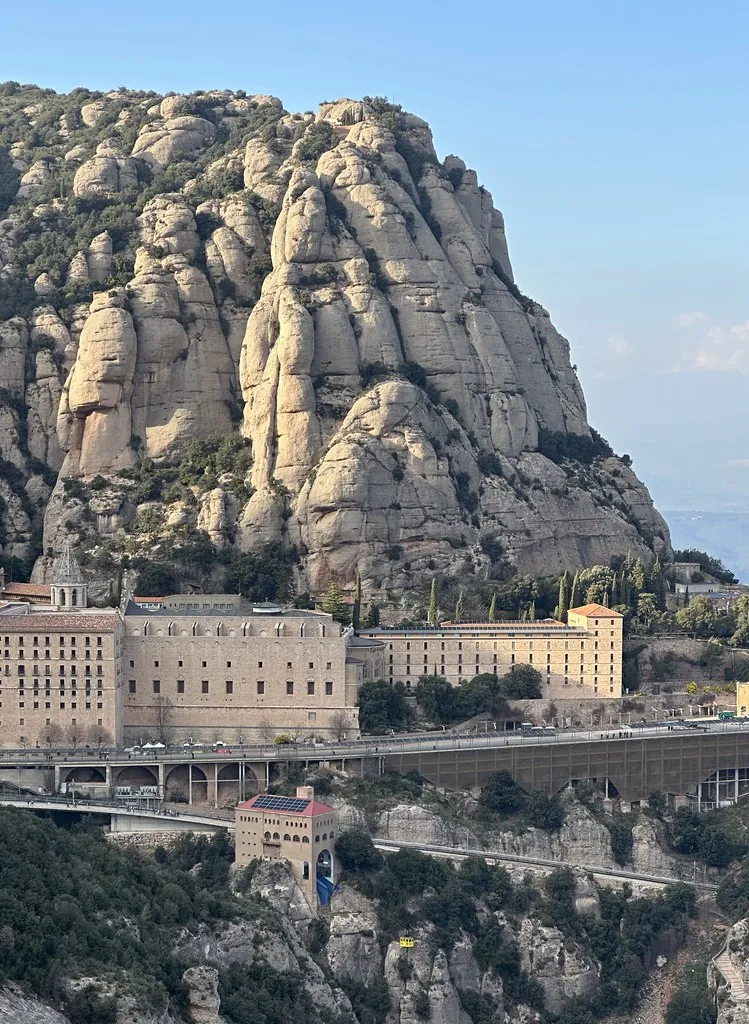
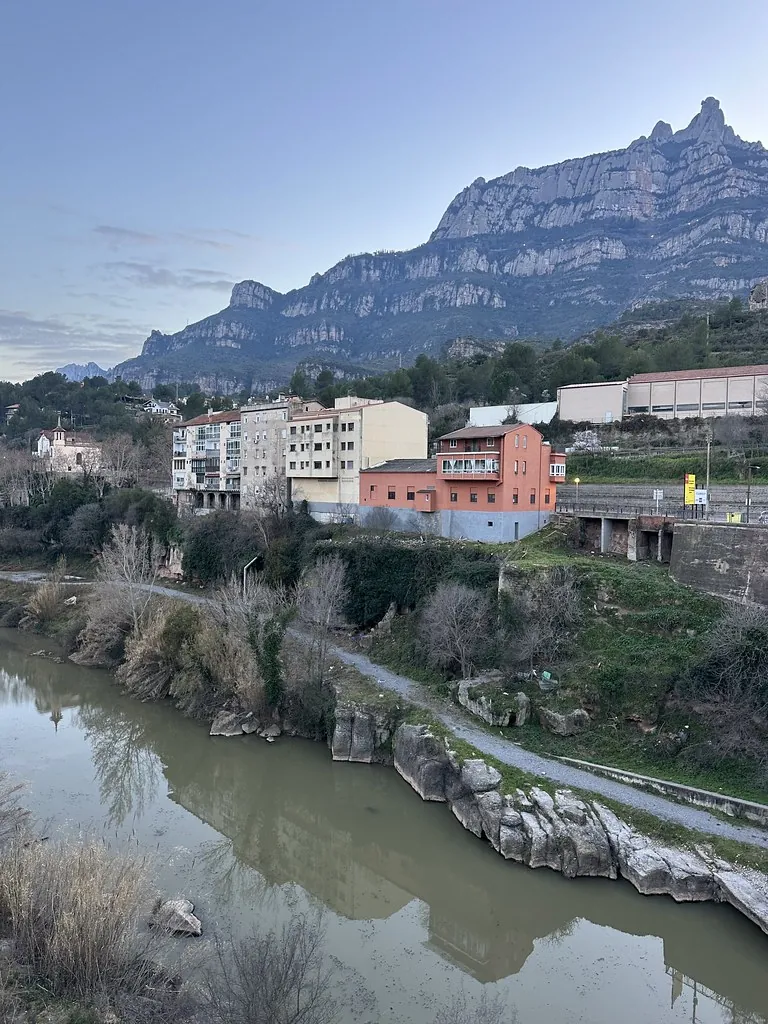
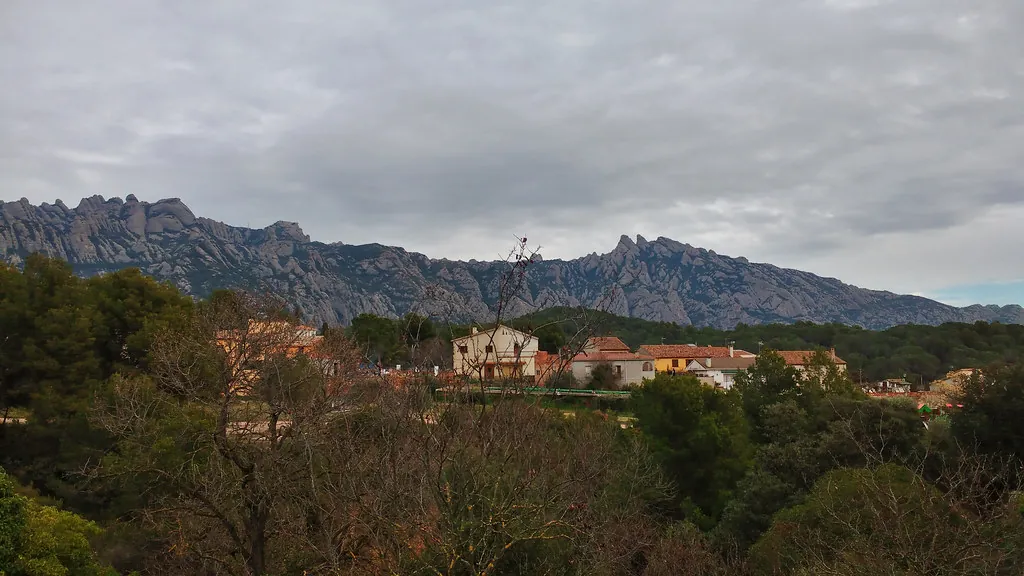
At six in the morning, mist clings to the pine woods like a damp blanket. From the Plaça Major, Montserrat suddenly appears, an impossible serrated wall against a pearl-grey sky. The village is still asleep. There is only the sound of water in the stream and, far off, the first lorry heading up the C‑15 towards Igualada.
El Bruc asks to be walked. Start along carrer de Sant Pau, where low houses keep their weathered wooden doors and slightly crooked wrought-iron balconies. The smell of burning wood drifts from chimneys. In winter, many homes still rely on stoves fed by what the mountain provides. The cold months bring a sharp bite in the air, while in summer the stone walls hold a cellar-like coolness.
The drumbeat and the mountain echo
Head up carrer del Timbaler. It is a steep cobbled slope that turns slippery in the rain. At the top stands a monument: a bronze boy with a drum, facing Montserrat.
According to tradition, Isidre Lluçà, a boy from Santpedor, played a drum here in June 1808 during the early clashes with Napoleonic troops. The echo from Montserrat multiplies the sound, bouncing it back from different rock faces. Those who tell the story say the noise made French soldiers believe a much larger force was hiding in the mountains.
When the air is still, the effect can still be noticed. A sharp clap near the rocks rebounds several times before fading.
At the beginning of June, El Bruc commemorates this episode with the Fiesta del Timbaler. Over a weekend, the square fills with gralles, drums and music. It feels more like a neighbourhood gathering than a large event. By Sunday afternoon, things are already winding down.
Walking to the castle and into the needles
From the square, a sign points to “Castell, 25 min”. The path climbs between almond trees and Aleppo pines. Stones sound hollow underfoot. At the ridge, there are remains of the old castle: low grey walls and a cistern partly covered by vegetation.
From here the whole valley opens up. The road snakes below, the reddish roofs of El Bruc cluster together, and beyond them Montserrat shifts shape as the clouds move. On warm days, the air carries the scent of rosemary and resin.
A more demanding route starts from the Can Maçana pass and leads into the area known as les Agulles. The path enters light woodland, then approaches rock formations that look as if they have been driven into the mountain. Carry water; there are hardly any springs once inside. The stone is rough and the ground uneven in places. On clear days, from certain gaps, a silvery strip appears on the horizon that many identify as the sea.
Stone, bells and carob trees
The parish church of Santa Maria stands at the top of the old town. Its tower, of Romanesque origin, is austere, built in rough stone with almost no decoration. At midday, its bells still set a rhythm for daily life. The sound bounces off the mountain and takes a few seconds to fade.
Inside, it’s dim, with the scent of wax and old wood. A Baroque altarpiece depicts soldiers and smoke from battle.
Further down, beside the stream, stands Sant Pau Vell. Next to it is an old rectory marked by a doorway of pinkish stone. In its small garden grows a large carob tree; in summer its shade is deep and complete.
On some Sunday mornings in August, people still gather there. After mass, small groups linger in conversation before heading home.
What you’ll taste
Food here is simple and closely tied to what grows nearby. Many households still prepare escalivada, with aubergine and onion roasted directly over embers, served with thick allioli on toasted pa de pagès.
For taking away, carquiñolis are almost a signature of El Bruc—long, dry biscuits made with almonds from these hillsides. In the morning when they are baking, their sweet smell hangs in carrer Major.
Olive oil is part of this landscape too; you see olive trees on dry terraces exposed to wind coming down from Montserrat’s slopes. The oil tends to be green-gold with a peppery finish that catches at your throat.
A note on timing
Spring noticeably changes things here: almond blossoms appear first then fresh grass spreads across fields around village edges—though April can bring sudden storms so pack something windproof if you plan walking any distance away from sheltering walls or trees lining streets within town itself where buildings offer protection against gusts blowing through valley gaps between mountainsides nearby like Montserrat’s jagged silhouette looming overhead always present no matter which direction one looks while exploring area surrounding El Bruc during seasonal shifts throughout year marking passage time quietly observed by residents who call this place home year-round rather than just visiting briefly before moving onto next destination along their journey through Catalonia’s diverse regions each offering unique experiences worth discovering firsthand without rushing ahead too quickly missing subtle details along way such as scent rosemary after rain or sound water running over stones creek bed below road leading out towards wider world beyond these foothills where history echoes still today if listen closely enough especially early morning hours when mist lingers among pines before sun burns it away revealing clear view across valley below waiting explored step step slowly taking everything sensory experience has offer fully immersed moment now here present fully aware surroundings both natural man-made elements blending seamlessly together creating sense place distinct memorable long after departure date arrives eventually as all trips must end but memories remain vivid recall later when needed most reminding us why travel matters deeply human level connecting us landscapes cultures histories different our own yet shared common threads humanity binding all together universal tapestry life itself woven countless individual stories intersecting briefly time space creating something beautiful meaningful lasting impact soul forever changed encounter new perspectives gained along journey called life itself lived fully each day given us cherish appreciate gift existence precious fleeting embrace joy wonder discovery always possible around next corner path ahead beckoning onward forward into unknown future awaits with open arms ready welcome weary traveler seeking rest renewal inspiration continue onward journey never truly ends only transforms new beginnings await horizon line where sky meets earth promise tomorrow’s adventures yet come live dream explore world vast wonderful place full surprises delights await those brave enough seek them out courage curiosity heart open possibilities infinite potential realized moment decision take first step towards destination unknown but destined become part personal legend written own hand script unique individual contributing collective story humankind spanning generations past present future interconnected web life eternal cycle birth death rebirth continuous evolution consciousness expanding ever outward inward simultaneously paradox unity duality merging one seamless whole complete perfect exactly as meant be according divine plan unfolding gracefully effortlessly naturally flow universe aligned harmony love light peace abundance prosperity health happiness fulfillment purpose passion creativity expression authenticity truth integrity wisdom knowledge understanding compassion forgiveness gratitude humility grace elegance beauty art science spirit matter energy vibration frequency resonance attraction manifestation co-creation reality dream awake asleep lucid aware mindful present focused intentional deliberate conscious choice free will destiny fate karma cause effect action reaction balance equilibrium stability foundation structure form function design architecture engineering construction deconstruction reconstruction transformation metamorphosis butterfly caterpillar cocoon wings flight freedom liberation enlightenment awakening ascension elevation transcendence immanence omnipresence omniscience omnipotence sovereignty mastery dominion kingdom heaven earth hell purgatory limbo void abyss chaos order entropy syntropy synergy symbiosis mutualism commensalism parasitism predation competition cooperation collaboration community society civilization culture tradition innovation revolution revelation apocalypse renaissance golden age dark age ice age stone age bronze iron industrial digital information quantum singularity artificial intelligence virtual reality augmented mixed extended dimensions multiverse parallel alternate timelines probabilities possibilities potentials actualities realities dreams nightmares fantasies illusions delusions hallucinations visions prophecies predictions forecasts projections extrapolations interpolations assumptions presuppositions prejudices biases beliefs values ethics morals principles virtues vices sins crimes punishments rewards incentives disincentives carrots sticks honey vinegar sugar salt spice everything nice naughty list checklist bucket list wish list manifest vision board goal setting planning strategizing executing monitoring evaluating adjusting iterating improving optimizing maximizing minimizing simplifying complicating complexifying diversifying specializing generalizing standardizing customizing personalizing individualizing collectivizing socializing privatizing nationalizing globalizing localizing decentralizing centralizing democratizing autocratizing bureaucratizing meritocratizing plutocratizing technocratizing corporatizing militarizing pacifisting anarchising organizing disorganizing reorganizing downsizing rightsizing upsizing resizing supersizing miniaturizing scaling amplifying attenuating modulating demodulating encoding decoding encrypting decrypting compressing decompressing archiving retrieving backing restoring recovering salvaging rescuing saving wasting losing finding hiding seeking searching researching discovering inventing creating innovating pioneering leading following copying imitating emulating adapting adopting integrating assimilating accommodating rejecting resisting opposing fighting warring peacemaking negotiating mediating arbitrating litigating adjudicating judging jurying witnessing testifying confessing denying admitting accepting rejecting proposing disposing deposing exposing imposing composing decomposing recomposing presupposing supposing positing postulating hypothesizing theorizing speculating contemplating meditating reflecting ruminating pondering wondering questioning answering explaining describing narrating storytelling mythmaking legend crafting history writing chronicling documenting recording registering cataloguing indexing tagging labeling naming classifying categorizing typologizing taxonomizing systematizing methodologizing proceduralizing operationalizing implementing instantiating embodying incarnating personifying characterizing representing symbolising signifying denoting connotating implying inferring deducing inducing abducing reasoning rationalising irrationalising emotionalising intellectualising spiritualising materialising dematerialising etherealising solidifying liquefying gasifying plasmafying crystallising amorphousifying structuring destructuring restructuring superstructuring infrastructure hyperstructure metastructure ultrastructure nanostructure microstructure macrostructure megastructure gigastructure terastructure petastructure exastructure zettastructure yottastructure googolstructure infinite structure eternal timeless spaceless formless nameless faceless voiceless soundless odorless tasteless touchless senseless mindless heartless soulless spiritless lifeless deathless birthless beginningless endless limitless boundless measureless countless numberless weightless massless sizeless dimensionless directionless purposeless meaningless significant insignificant relevant irrelevant important trivial major minor primary secondary tertiary quaternary quinary senary septenary octonary nonary denary binary ternary quaternary quinary senary septenary octonary nonary denary undenary duodenary tredenary quattuordenary quindenary sexdenary septendenary octodenary novemdenary vicenary trigintenary quadragintenary quinquagintenary sexagintenary septuagintenary octogintenary nonagintenary centenary millenary millionary billionary trillionary quadrillionary quintillionary sextillionary septillionary octillionary nonillionary decillionary undecillionary duodecillionary tredecillionary quattuordecillionary quindecillio