Full Article
about La Pobla de Claramunt
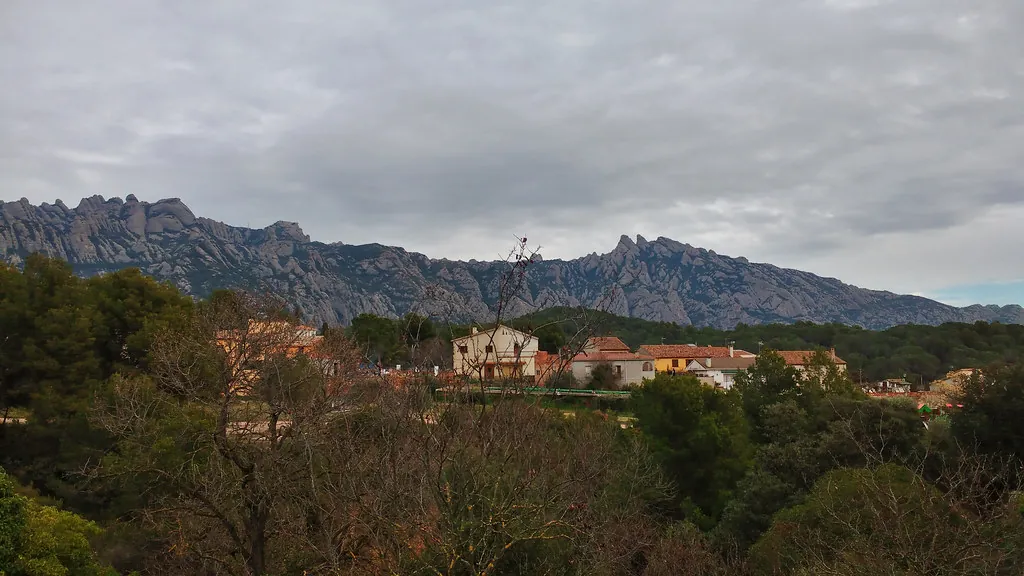
Famous for Claramunt Castle, one of the finest in Catalonia.
Ocultar artículo Leer artículo completo
The castle keep appears first, a square stone tower balanced on a crag above the Anoia valley like a chess piece waiting to be moved. From the road it looks close enough to touch; in reality it's a twenty-minute thigh-burner up an old mule track that switches back through holm oaks and discarded almond shells. By the time you reach the ticket booth—€4, cash only—you've already worked for the view.
A fortress that still calls the shots
Claramont Castle (Catalans drop the final "u") was built in the tenth century to police the frontier between Christian Catalonia and Al-Andalus. The audioguide is only in Spanish and Catalan, yet the walls speak clearly enough: arrow slits angled for cross-fire, a cistern cut into living rock, a chapel whose apse frames Montserrat forty kilometres away. On haze-free days the Pyrenees show up as a saw-tooth horizon; more often the valley fills with a milky lid that makes the tiled roofs below look like a tray of burnt-toffee squares.
The descent is easier, but watch for loose scree above the final hair-pin. Back in the grid of narrow streets, the church of Santa Maria closes promptly at 12:30; arrive earlier if you want to see the neoclassical façade that replaced a Romanesque original smashed in the 1796 earthquake. Inside, the only splash of colour is a nineteenth-century fresco of the Annunciation—powder-blue robes, gilt sandals, the angel looking slightly bored.
Lunch at farmer o'clock
Shuttered houses make the place feel abandoned until the church bell strikes two. Then doors fling open and the smell of garlic and sweet paprika drifts across the small plaça. The daily menu del dia is chalked on a blackboard outside Bar la Plaça: three courses, bread, wine and coffee for €14. Nobody asks if you want it; you simply sit down and it starts arriving—perhaps a bowl of fideuà (short noodles cooked like paella), then rabbit with prunes, finally crema catalana blistered under a hot iron. Attempting Catalan greetings earns a complimentary glass of local cava; English is met with polite, puzzled smiles.
Vegetarians do better in late winter when calçot season turns the outskirts into a smoke-haze of barbecued spring onions. A bib is essential: the ritual involves dipping the charred white shaft into romesco, tilting your head back and lowering the onion like a fire-eater. Most farmhouses sell bundles for a few euros; the castle picnic area provides bricks to wedge the grill, but bring your own charcoal.
Vineyards instead of souvenir stalls
There is no tourist office, just a small glass case outside the ajuntament with a faded map of walking routes. One yellow-daubed path strikes west between rows of tempranillo, the vines kept low to catch the afternoon heat. After twenty minutes the tarmac gives way to a dirt track that climbs gently to Masia Suria, a stone farmhouse producing small-batch DO Penedès reds. Ring the bell and someone's grandmother appears, wiping her hands on an apron. Tastings are free if you buy a bottle (around €9); the young garnacha smells of strawberries and pepper, tastes like liquidised garrigue.
Cyclists use the village as a pit-stop on a loop that threads Capellades, Orpí and la Llacuna. The gradients are civilised—rarely above 6 %—and traffic consists mainly of tractors pulling trailers of pruning. A water fountain on Carrer Major has a brass cup chained to it; fill your bottles before heading out because cafés thin out fast beyond the last roundabout.
Saturday is moving day
Market morning transforms the plaça into a low-budget theatre. Farmers park white vans nose-to-tail, tailgates flipped down to display crates of artichokes, blood-red pomegranates and eggs still speckled with feather. One stall sells only knives, another only socks. The baker arrives at nine sharp with a tray of coca de llardons—flatbread scattered with crispy pork fat—then sells out in twelve minutes. If you need picnic fodder, queue with the wicker baskets; plastic bags mark you as an outsider.
By noon the square empties, metal shutters clatter down, and the village reverts to siesta silence. Use the lull to explore the paper museum four kilometres away in Capellades, where medieval waterwheels once powered Spain's first industrial mills. A taxi from the rank outside the pharmacy costs €12; buses back are hourly and stop dead at seven.
Beds, board and getting out again
Accommodation is thin on the ground. Hotel Robert, halfway up Carrer de la Creu, offers twenty functional rooms, a small pool that catches the evening sun and a breakfast strong on embutidos. Doubles run €65 mid-week, €80 at weekends; book direct for a five per cent discount and free parking. The alternative is Can Gramunt, a stone manor turned B&B three kilometres out among almond groves, where the owner speaks fluent English and keeps a fridge stocked with craft beer from Sant Sadurní.
Trains from Barcelona Sants reach Igualada in 1 h 10 min; from there a twice-daily bus coincides with the morning arrival. The last return leaves Igualada at 19:10—miss it and a taxi to the city costs €90. Hire cars give more flexibility: take the AP-7 toll road, swing inland at Martorell and follow the C-15 past terraced olive groves; the whole run is 55 minutes unless you meet a convoy of lorries crawling uphill to the cement works.
When the wind turns cold
Winter sharpens the valley. Night temperatures dip below freezing, almond blossom appears in January like premature snow, and the castle closes early because no one wants to stand guard in a northerly. Spring brings a brief, brilliant burst of green before the sun burns everything biscuit-brown; autumn smells of crushed grapes and wood smoke. July and August are simply hot—thirty-five degrees by mid-morning—so start the castle walk at eight or save it for after six when the stones release their stored heat and the valley below turns violet.
La Pobla de Claramunt will never make a "must-see" list, and locals like it that way. Come for half a day, stay for the menu, buy a bottle of wine you can't pronounce. Then leave the chess-piece tower where it stands, watching roads that carry traffic elsewhere.