Full Article
about Sant Martí de Tous
Town with a medieval castle and a white doe legend
Ocultar artículo Leer artículo completo
The church bell strikes noon and the village falls silent. Not hushed, not quiet—proper silent. Even the dogs know the rules. Sant Martí de Tous, perched at 465 metres where the Catalan plain starts buckling into pre-Pyrenean folds, still observes the mid-day truce. Shops pull down their metal shutters, the bakery dims its lights, and the lone bar keeps a single table free for whoever wanders in after the morning’s cycle.
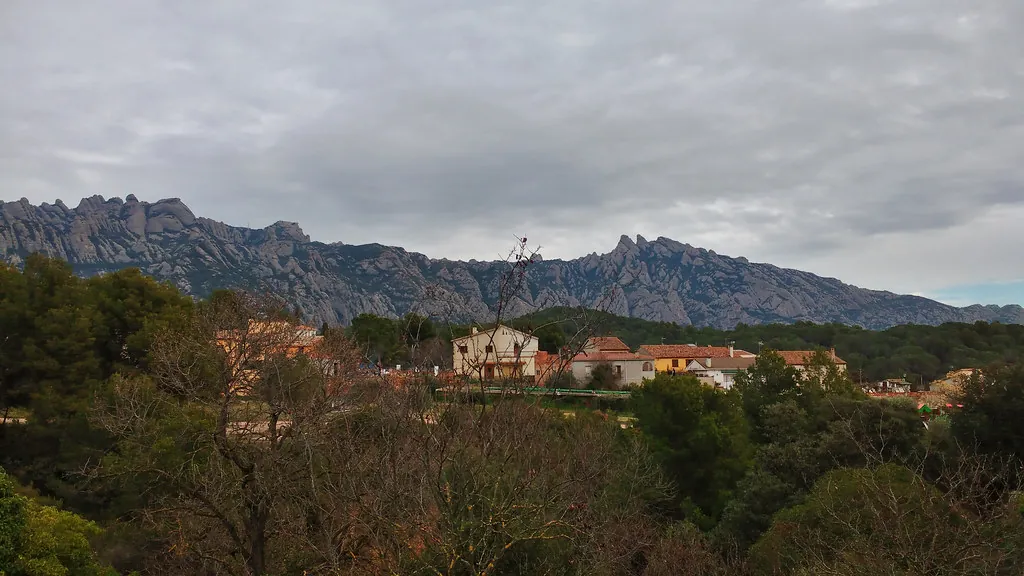
This is not a place that competes with Barcelona’s noise or the Costa’s cocktail lists. It competes with itself: cereal fields that flip from emerald to gold inside a fortnight, a stone church whose bell tower doubles as the local weather station—if Montserrat’s jagged silhouette is visible, rain is still two days away—and a Monday market so small you can buy your tomatoes, soap and gossip in under six minutes.
A Plateau that Breathes
Stand on the Plaça Major and you feel the altitude. The air is thinner than on the coast, sharpened by oak smoke in winter and by dry earth in July. Mornings can start at 4 °C in February; by August lunchtime the same square hits 34 °C, but the breeze that drifts up from the Anoia valley stops it ever feeling swampy. British walkers arriving from the Camino de Santiago’s more humid stages notice the difference: shirts dry on your back.
The village sits astride the watershed. North of the church the lanes tilt gently upward toward the first 800 m ridges; southward they unravel across a chequerboard of wheat, barley and sun-browned vines. A two-hour loop on foot—head past the fortified masia of Cal Tico and follow the stone-margined track known locally as el camí dels Francesos—gains only 180 m of height yet delivers views that stretch 50 km to the Llobregat. Cyclists swap stories about the same circuit: “No traffic, one tractor, three buzzards, zero Strava trophies—perfect.”
Winter rewrites the rules. When a northerly tramuntana blows, the temperature drops six degrees in an hour and the single daily bus from Igualada can be cancelled for “excessive wind”. Accommodation websites add honest caveats: “4×4 recommended December-February.” Snow is rare but ice is not; those picturesque stone alleys become a curling rink after dusk.
Stone, Wood and the Smell of Bread
Sant Martí’s medieval core was built for defence, not display. The parish church of Sant Martí itself—11th-century bones clothed in 18th-century skin—lacks the frescoed bling of Catalan super-villages, yet its interior rewards the patient. Look for the Romanesque window now embedded inside the south wall: morning light filters through it like a lantern slide, picking out the grain of ancient oak beams. The font lid is 1674; lift it (the sacristan keeps the key behind the altar) and the hinge still purrs.
Manor houses line Carrer Major in various states of confession. One sports a 1597 datestone above a modern PVC window; another has bricked up its Gothic portal to fit a garage door. The architectural mish-mash tells the truth: people live here, they adapt, they refuse to become a museum. Peek through an open doorway and you’ll see bicycles leaning against 400-year-old arches, a reminder that conservation can be practical rather than cosmetic.
Wood-smoke is the village’s winter signature. By 17:00 the air tastes of oak and, on Thursdays, of the baker’s cocas—flatbreads caramelised with onion and pine nuts. The Forn de Pa opens at 06:00, closes at 13:00, and sells out of croissants by 08:30. Bring cash; the owner still writes receipts in pencil.
Eating Between Shifts
Lunch is the engine of the day, and the village keeps it uncomplicated. L’Eucaria serves a three-course menú del día for €14; expect roast chicken with prunes, followed by crema catalana thick enough to hold a spoon upright. Vegetarians get the same courtesy—grilled escalivada arrives warm, not microwaved—provided you ask when seated, not when the bill arrives. El Sol across the square does grilled meats and chips under €12; British cyclists appreciate the optional “no garlic” instruction that doesn’t raise an eyebrow.
Evening dining is more precarious. Both restaurants close at 17:00 and reopen only if reservations hit double figures. The workaround: buy a loaf at the bakery before it shuts, add local fuet sausage from Monday’s market, and picnic on the steps of the 19th-century washing trough where the water runs potable and cold.
Roads, Tracks and the Lack of Buses
Sant Martí survives on wheels, not timetables. The single bus from Igualada—essentially a school run—leaves at 07:15, returns at 19:30, and vanishes altogether at weekends. Miss it and a taxi costs €28, assuming the lone driver isn’t ferrying grapes to Vilafranca. Car hire from Barcelona airport (82 km, mostly AP-7 toll) takes 55 minutes if you dodge the 08:30 lorry rush heading for the Martorell refineries.
Once here, park on the eastern edge where the road widens; the historic core is a maze of single-lane alleys designed for mules, not Golfs. Walking trails are signposted in Catalan, but paint flashes on dry-stone walls do the real navigation. Yellow-white means GR long-distance, green-white denotes local loops. Mobile signal drops to GPRS inside the oldest houses—download your map before leaving the square.
When the Village Lets its Hair Down
The Fiesta Mayor (around 10–13 August) turns decibels up to eleven. A brass band marches at 02:00, fireworks ricochet between stone façades, and the plaza hosts a communal paella that needs a three-metre spoon. Visitors love the theatre; residents love the rental income. Book accommodation six weeks ahead, request a back-room if you intend to sleep, and bring earplugs shaped like olives—nothing else fits.
November’s festa is smaller, colder, more authentic. The highlight is the matança del porc, a traditional pig-killing that starts at dawn with hot wine and ends with every balcony draped in sausages. Tourists are welcome to watch; vegetarians are advised to take the day’s circular walk to La Panadella and return after the hosing down.
Leaving Without the Gift-Shop Bag
There isn’t one. Sant Martí offers no fridge magnets, no flamenco dolls, no “I ❤ Catalonia” towels. What you can take away is a kilo of local barley from the cooperative (50 cents, BYO bag), a memory of silence so complete it rings in your ears, and the knowledge that somewhere between the plain and the Pyrenees the agricultural calendar still outranks the Google one. Drive back down the C-241z and the village shrinks in the mirror: first the bell tower, then the wheat, then just the smell of wood-smoke on your jacket. It may not be spectacular, but it sticks.