Full Article
about Sant Pere Sallavinera
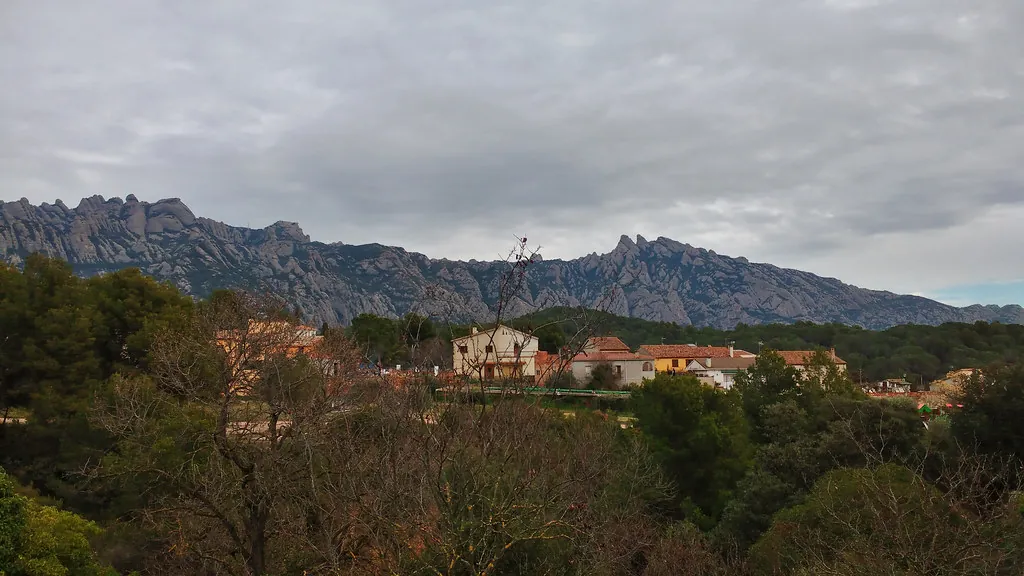
Small rural settlement with the Boixadors castle within its boundaries
Hide article Read full article
There are places where you arrive, step out of the car and quickly understand how things work. Sant Pere Sallavinera is one of them. Life here does not revolve around visitors, and that shapes the whole experience. Coming to this small village in Catalonia’s Anoia comarca means stepping into a setting where daily routines still follow a village scale.
Set among gentle hills and cereal fields, Sant Pere Sallavinera has just over a hundred residents. That alone tells you plenty. There are no shop windows aimed at passing travellers and no busy streets filled with activity. Instead, you find stone houses, dirt tracks leading out from the centre and a notable sense of quiet.
At around 600 metres above sea level, the landscape opens out. This is not dramatic terrain of towering peaks or deep gorges. It is the inland Catalan countryside, which changes noticeably through the year. In spring the fields turn green. As the cereal ripens they shift to yellow, and when summer tightens its grip, the tones become dry and ochre.
The Village Core and the Church of Sant Pere
The heart of Sant Pere Sallavinera is small and easy to walk. Even at a relaxed pace, pausing to look at the houses or across the surrounding fields, you can cross it in about twenty minutes.
The parish church of Sant Pere stands at the centre. Its origins are generally placed in the Romanesque period, although the building was altered later on. What you see today is a simple stone structure with the solid feel common to many rural churches in Catalonia. There is nothing ornate about it. The design is functional and direct.
The streets around it are short and very calm. Plain façades, small windows and the occasional old doorway hint at interior courtyards behind thick walls. At the edge of the village lies the small cemetery, a quiet reminder that generations have followed one another here without much fuss.
Scattered around the main settlement are several masías, traditional Catalan farmhouses, and working agricultural holdings. Some continue to cultivate the land. Others appear more subdued, yet they still help explain how life has long been organised in this part of the Anoia. The pattern of fields and farm buildings shows a landscape shaped steadily over time rather than redesigned for visitors.
Walking Between Fields and Holm Oaks
If you make the trip out to Sant Pere Sallavinera, the most natural thing to do is head out on foot. There are no major signposted routes within the municipality itself, but there are many rural paths linking fields and small stands of holm oak.
This is the sort of terrain that suits an unhurried walk or a gentle cycle ride without worrying too much about traffic. At times the track runs between cultivated plots. At others it slips into patches of shade where the only sound is wind moving through leaves.
It is also a good area for noticing birdlife, particularly in spring or during migration periods. On overhead cables, along field margins or circling above open ground, you are likely to see small common species typical of the region. Occasionally a bird of prey scans the earth below for movement.
The experience is understated. There are no dramatic viewpoints or headline attractions waiting at the end of the path. The interest lies in the rhythm of the land itself, in how the fields stretch and fold gently, and in the way light shifts across them during the day.
Eating and Shopping Nearby
Sant Pere Sallavinera does not have bars or restaurants where you can sit down for a meal. It is one of those villages where it makes sense to arrive having already eaten, or with plans to do so elsewhere.
The simplest option is to drive to other municipalities in the comarca, where there is more activity. In this part of the Anoia it is easy to find traditional embutidos, Catalan cured meats, olive oil and fairly hearty dishes that suit a morning spent walking. The food of the area reflects its agricultural base, straightforward and filling rather than elaborate.
As for shopping, the village itself offers no real retail scene. Supplies and services are found in nearby towns, reinforcing the sense that Sant Pere Sallavinera remains focused on everyday local life rather than tourism.
Local Festivities and the Pace of the Year
The main annual celebration, the festa major, is usually held around the feast of Sant Pere at the end of June. Dates can vary from year to year, so it is worth checking in advance. As in many small Catalan villages, the festa major is primarily for residents and people from the surrounding masías. It tends to be modest in scale, reflecting the size of the community.
For the rest of the year, the rhythm is very steady. In summer the landscape dries out, yet the light at sunrise and sunset can be particularly striking, especially for those interested in photography. In winter the atmosphere becomes even quieter, with fewer signs of movement in the fields.
Seasonal changes are more evident in the colours of the countryside than in any shift in activity. The village itself remains consistent, its buildings and streets largely unchanged by the passing months.
Is It Worth the Detour?
Sant Pere Sallavinera is not a destination for a full day packed with things to do. It works better as a short stop on a broader route through the Anoia.
You pause, take a walk, look out over the fields and gain a sense of what life is like in a small inland municipality in Catalonia. There is no attempt to entertain or impress. The appeal lies in its ordinariness, in seeing a place that continues at its own pace.
After a while, you move on. And that, in many ways, is exactly how Sant Pere Sallavinera makes the most sense: as a brief, quiet interlude in the wider landscape of the comarca.