Full Article
about Vallbona d'Anoia
Town known for its living nativity scene and the old royal road
Hide article Read full article
A Village That Keeps Its Own Time
By mid-morning on a September day, the sound of lorries on the main road blends with birdsong from the elms in the old quarter. Light slips between roof tiles and stone walls, and the smell of damp earth drifts through the narrow streets. Once the first rush of the day has passed, tourism in Vallbona d'Anoia makes more sense: this is a place that moves at its own pace.
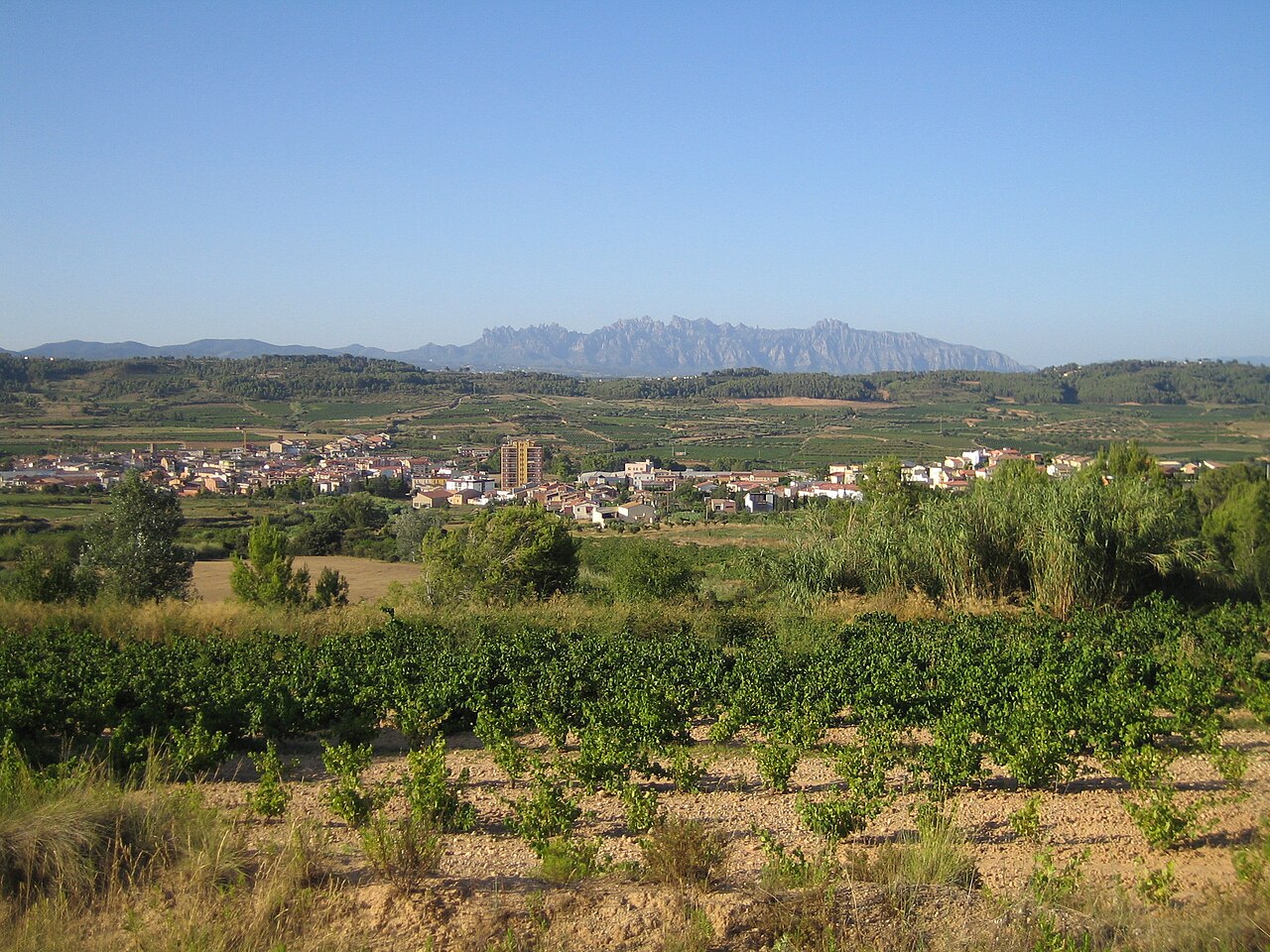
Vallbona d'Anoia is a small municipality in the comarca of Anoia, with just over 1,400 residents. Agriculture still shapes daily life. Around the built-up area there are fields of cereals, vineyards and family vegetable plots that shift in colour with the seasons, pale green in spring and dry yellow when the summer heat settles in.
There is no single landmark that defines the village. Instead, the character of Vallbona d'Anoia lies in its textures and routines, in how the rural landscape meets the streets and how the year follows a steady, familiar rhythm.
Around the Church of Sant Miquel
The old centre has an irregular layout. Some streets narrow without warning, and stone houses with small windows lean into the shade. At the heart of it stands the parish church of Sant Miquel, a building with ancient origins that has changed over the centuries.
Its façade is sober. Weathered stone blocks show the marks of rain, a simple rose window sits above the entrance, and a coat of arms can be made out if you step closer. Nothing here calls for grand statements. The church belongs to the village as it is, shaped over time rather than by a single moment.
In the early afternoon, the quiet breaks in ordinary ways. A shutter rolls down. A conversation echoes between two doorways. A car engine hums as someone looks for a place to park. These small sounds fill the space between the houses and remind you that this is a lived-in centre, not an open-air museum.
Tracks Through Vineyards and Masías
Beyond the edge of the village, rural tracks begin. Some pass by isolated masías, traditional Catalan farmhouses with thick walls and sloping roofs. Many remain closed for much of the year, while others show signs of activity in open courtyards or agricultural storerooms still in use.
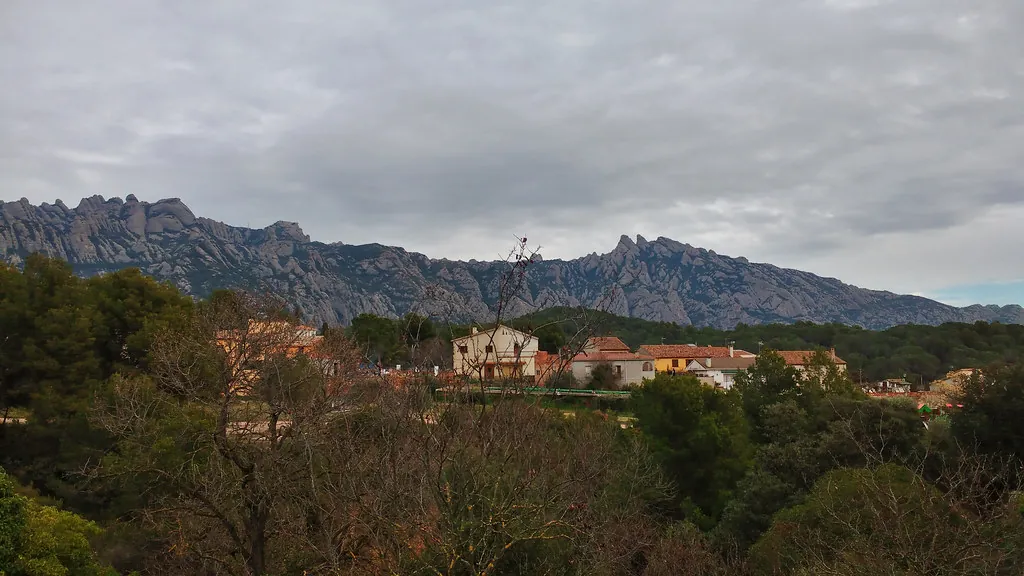
The terrain is gentle, with low hills that roll away from the urban core. On clear days, the outline of the Serra de Rubió can be made out on the horizon. The river Anoia runs nearby and shapes part of the agricultural landscape that defines this area.
There are paths suitable for walking or cycling. They are not marked out in a dramatic or showy way, yet they allow you to understand the territory. Scattered holm oaks punctuate the fields. Small irrigation ponds appear between plots. Dirt tracks still carry tractors from one field to the next.
Summer brings intense heat in the middle of the day. Early starts make more sense during those months, as the sun falls directly on the open land once it reaches its height. In spring and at the beginning of autumn, temperatures tend to be milder and the fields change colour, which adds another layer to the landscape.
Eating in the Anoia Way
Food here follows the patterns of the comarca. The cooking that appears on local tables across Anoia is simple and hearty. During festivals or family gatherings, coca de recapte is common. This traditional Catalan flatbread is usually topped with roasted vegetables or other savoury ingredients. Cured embutidos, local sausages, also feature, along with wines from the surrounding area.
Seasonal produce from nearby vegetable plots makes its way into meals when available. The emphasis is on what the land provides at that moment rather than on elaborate presentation.
Vallbona d'Anoia is not a destination for large dining rooms or terraces filled with crowds. The atmosphere leans towards small village establishments where the pace is calm and the product comes first. Meals form part of everyday life, closely tied to the agricultural surroundings.
Nearby Towns and Open Landscapes
Vallbona d'Anoia lies relatively close to Igualada, which functions as the comarca’s main centre. The mood shifts there. You find more shops, busier streets and a historic quarter with buildings from different periods.
Secondary roads connect Vallbona d'Anoia to several other small towns in Anoia. Some sit on hilltops, where the patchwork of fields that characterises this inland part of Catalonia spreads out below. From these higher points, the agricultural mosaic becomes clearer, with plots divided by tracks, tree lines and gentle slopes.
The contrast between the quieter village and the more active county town helps place Vallbona d'Anoia in context. It belongs to a wider network of settlements that share similar landscapes and traditions, each with its own scale and tempo.
Festivals and the Local Calendar
The annual calendar remains closely tied to traditional celebrations. In August, the Fiesta Mayor usually takes place. Streets become busier than usual and activities organised by local associations fill the programme. Sardana dances, the traditional circle dance of Catalonia, are often held in the square. Neighbours gather and conversations stretch into the evening.
The feast of Sant Miquel, patron saint of the parish, also includes religious events and popular gatherings. These are simple celebrations, designed above all for the people who live in the municipality. Visitors who happen to be there at the time see a village focused on its own community rather than on spectacle.
When to Go
Spring and early autumn tend to be the most pleasant times to explore the surroundings on foot or by bicycle. The temperature is softer and the fields are in transition, either brightening into new growth or fading towards harvest tones. In high summer, the heat can be intense during the central hours of the day.
Anyone who makes the journey to Vallbona d'Anoia will find a small village with an unhurried rhythm. The interest lies less in a single monument and more in the details: wind moving across the fields, fine dust rising from rural tracks, daily life continuing without excessive haste.