Full Article
about Veciana
Rural municipality with scattered farmhouses and castle ruins
Ocultar artículo Leer artículo completo
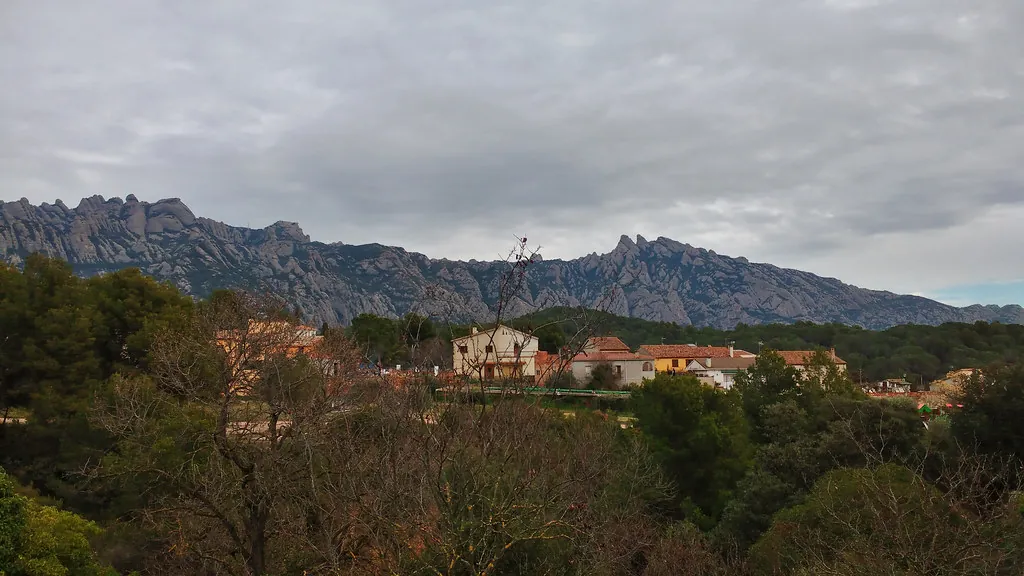
The church bell strikes noon and only three cars pass through Veciana's single junction. At 564 metres above sea level, this scrap of Anoia comarca feels higher than it sounds—summer haze thins out, winter fog pools in the valleys below, and the Pyrenees show their teeth on clear October mornings. One hundred and eighty-two residents share space with golden wheat, regimented almond groves and the kind of silence that makes your ears ring.
Veciana sits an hour's drive west of Barcelona, yet the city might as well be on another continent. There is no train station, no bus on Sundays, no souvenir shop. What exists is a grid of stone houses tiled the colour of burnt toast, a bakery that opens when the owner feels like it, and a landscape engineered for cereal. Look north and the land rolls like a gentle swell; look south and it drops sharply towards the Conca d'Òdena, a reminder that this is border territory between central Catalan plain and pre-Pyrenean foothills.
Stone, Wheat and the Shape of a Village
Sant Martí church dominates the modest skyline. Parts of the nave date to the eleventh century, though later refurbishments added a baroque altar and, more recently, LED spotlights that give the sandstone an unfortunate yellow glow during evening mass. The building is usually unlocked; inside, the temperature drops five degrees and the smell is of wax, old paper and the faint sweetness of extinguished candles. Locals still use the adjacent porch to store a medieval olive press—two granite wheels the size of tractor tyres that once produced oil for the whole district.
Houses follow the traditional Catalan farm-town blueprint: three storeys, wooden balconies, ground-floor archway wide enough for a mule cart. Many stand empty; inheritance laws sliced properties into unusable fragments and younger generations have settled in Igualada or Manresa. Those that remain are immaculately kept: geraniums in oil drums, brass door-knockers shaped like a woman's hand, freshly limewashed corners sharp enough to slice bread. Notice the stone gutters worn smooth by centuries of rainfall—Veciana receives barely 450 mm a year, so every drop mattered.
Walking Without Waymarks
Official hiking routes stop at the municipal boundary, but farm tracks form a readable lattice for anyone carrying a 1:25,000 map. A rewarding circuit heads north-east past Mas de Cal Pons, an eighteenth-century manor whose dovecote still houses stock pigeons, then climbs to the ridge at 720 m where views stretch from Montserrat to the Cardó massif. The round trip is 8 km, takes two and a half hours, and requires no technical skill—just decent shoes and a litre of water outside winter months. Cyclists favour the same lanes: tarmac is patchy, gradients rarely exceed six per cent, and traffic averages four vehicles per hour.
Spring brings poppies streaked between wheat rows, while late May sees the cereal harvested almost overnight by combine harvesters that look alien against the medieval backdrop. After the stubble is baled, hoopoes and crested larks patrol the short stubble for seeds and insects. Bring binoculars but don't expect hides; a stone wall works perfectly.
What You'll Eat—and What You Won't
Veciana itself has no restaurant. Midday hunger is solved by driving ten minutes to La Panadella, a motorway service village that sounds grim yet harbours El Portalet, a family tavern serving calçotada (grilled spring onions) from January to March and rabbit with snails the rest of the year. Three courses, bread, wine and coffee hover around €18—card payments accepted, despite the rural postcode. Alternatively, load up at the Saturday market in Igualada (22 km) on fuet sausages and mountain cheese, then picnic on the church steps; benches face south and catch lunchtime sun even in December.
If you rent a cottage with a kitchen, buy vegetables from the honesty box outside Cal Ton's farmhouse on the road to Rubió—prices scrawled on a broken roof tile, change dropped through a slit in an old biscuit tin. The tomatoes actually taste of tomatoes, a revelation after British supermarkets.
When to Come, When to Stay Away
April and mid-September to late October offer 20 °C afternoons, cool nights and barley fields that glow like brushed velvet. August is technically hot—32 °C is normal—but altitude keeps humidity low and evenings are pleasant on a terrace with a glass of local cava. January dips to -5 °C at night; roads are gritted promptly yet rental cars rarely include winter tyres, so check before you set out from the airport.
Festivity is low-key. Around 11 November Sant Martí brings a communal paella, a sack race for children and a cider tent run by the village football club (currently bottom of the county league). Visitors are welcome but there are no glossy programmes; turn up, buy drink tickets from the lady with the fanny pack, and try to follow the Catalan banter. Fireworks are modest—think supermarket rockets rather than Alicante-style pyrotechnics.
Beds, Keys and Other Practicalities
Accommodation inside Veciana amounts to two rural cottages licensed by the Generalitat. Can Carreras sleeps six, has thick stone walls, Wi-Fi that struggles with Netflix and a roof terrace ideal for night-sky photography—there is no street lighting, so the Milky Way arrives in full HD. Expect to pay €120 per night with a two-night minimum; firewood is extra and you'll need it outside June–August. Book directly through the town hall website (Spanish and Catalan only) and wait for the caretaker, Maria, who appears on a moped with the key and a cake tin of almond biscuits.
Public transport exists but feels theoretical. Monday to Friday a bus leaves Igualada at 13:15, reaches Veciana at 13:45 and departs for the return leg at 14:00—barely time for coffee. A hire car from Barcelona El Prat runs about €40 per day including basic insurance; take the A-2 west, exit 527, then follow the C-1412 for 19 km. Fuel at the village pump is self-service and occasionally cash-only.
Last Light
Sunset here is abrupt. One moment the church façade blushes pink; five minutes later shadows swallow the narrow streets and swifts give way to bats. You'll hear dogs barking across the valley, the mechanical whisper of an irrigation pump, maybe a tractor changing gear on the far hill. Nothing else. Veciana doesn't sell itself because it has never needed to; it survives on grain subsidies, stubborn pride and the conviction that quiet is a resource worth protecting. Turn up with realistic expectations—no craft breweries, no boutique galleries—and you'll understand why, for some travellers, the absence of things is precisely the attraction.