Full Article
about Vilanova del Camí
Municipality linked to Igualada with the Anoia river park
Hide article Read full article
Morning by the Anoia
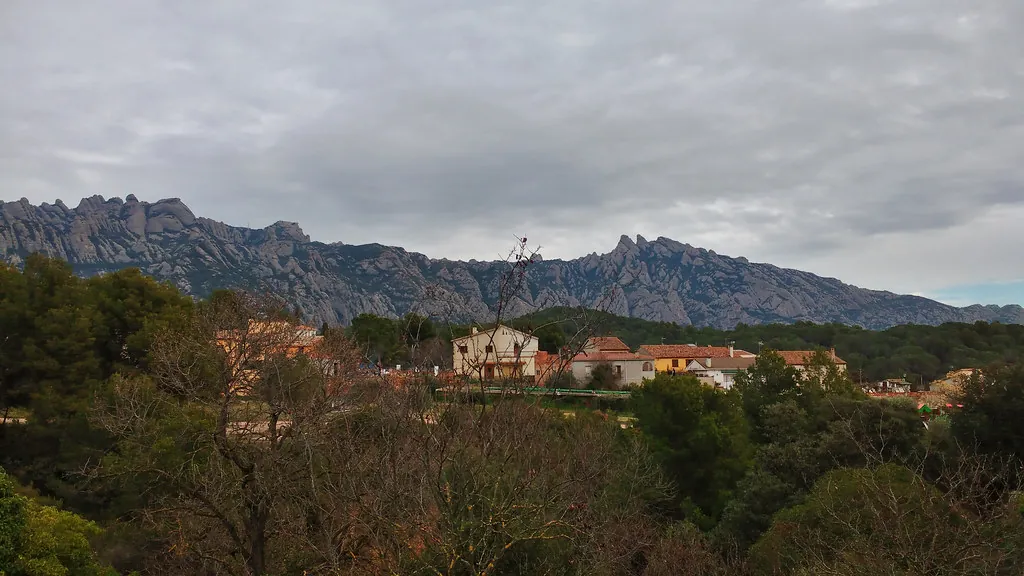
At eight in the morning, Vilanova del Camí smells of freshly baked bread with a hint of toasted almond. Along Carrer Major, the metal shutters of the bakeries rise slowly, and the aroma mingles with the cool air drifting from the River Anoia, which runs just behind the buildings. This is the hour when locals head out for bread and coffee, before the town fully wakes and traffic begins to flow towards nearby Igualada.
Vilanova del Camí does not rush to impress. It sits quietly in the comarca, its streets unfolding at a steady pace, shaped by water, industry and the habits of its residents. To understand it, it helps to start with the river.
Following the Mills
Vilanova was born where water made milling possible. Long before it existed as a municipality, the monks of Sant Cugat were already harnessing the force of the Anoia to turn their millstones. That early relationship with the river left physical traces that can still be seen today.
The Ruta de los Molinos begins in Plaça Major and follows the right bank of the river for five kilometres. Along the way, the retaining walls of those medieval constructions remain in place. In autumn, when the plane trees lining the path turn yellow, the trail takes on a softer light. It becomes easy to picture carts loaded with grain labouring up the old Camino de Aragón.
Water has shaped the town in more than one way. After the textile crisis of the nineteenth century, which left Vilanova with fewer than five hundred inhabitants, work returned thanks to the gypsum works, supported by the arrival of the railway. A shorter, more practical industrial route passes red-brick warehouses and the station where commuter trains still stop. On the walls of the former gypsum factory, the name “Can Roca” can still be read in flaking letters, as though time has not quite decided whether to erase or preserve it.
The river continues to dictate the pace of life. In summer it runs low; in winter it can carry off whatever lies in its path. It is not a dramatic river, yet its banks have learned to be useful. The stretch linking Vilanova with Igualada is four kilometres of wide track, used for cycling to buy bread or for a walk after lunch. Halfway along stands the bridge of Can Roca, its iron railing scratched with messages left by teenagers using their keys. From there, the old factory can be seen, now converted into a logistics warehouse, and beyond it the cereal fields that still surround the town.
When the water drops particularly low, the foundations of the old mills reappear. They look like stone teeth pushing up through the gravel. A handful of local anglers insist that barbel still linger in the deeper pools, the same species the medieval monks once caught.
A Calendar Measured in Almonds
In Vilanova del Camí, the year is marked by dough and ground almonds. When October turns the surrounding fields orange, bakeries prepare their first panellets for All Saints’ Day. These small almond sweets are typical across Catalonia, yet here they contain more almond and less sugar than those found in Barcelona. The exact proportions are guarded closely. On the first of November, grandmothers still wrap the sweets in tissue paper before taking them to the cemetery.
Easter brings the mona de Pascua, shaped as a low, round bun and topped with whole, unpainted eggs. It is eaten on Easter Monday in the countryside, with families sitting on the low stone walls of the masías that dot the outskirts of the town.
In August, for the feast of San Hilari, the coca de recapte appears. Thin as a communion wafer and topped with escalivada or salt cod, it is shared at long tables set up in the streets. The air carries the scent of rosemary and grilled sardines, and neighbours gather outside as evening settles in.
Days When the Town Dresses Up
The Festa Major begins on the third weekend of August with an unusual kind of silence. The giants, stored in the casal de cultura, wait for their moment. At midday, when the sun strikes the façades around the square, drums break the stillness. In Vilanova there are four giants, not two. They turn slowly while children try to touch their shoes. Later, the popular dance continues deep into the night, until the light begins to shift towards morning. As the heat of the celebration lingers, younger residents head down to the river to cool off.
The Cabalgata de Reyes on 5 January has a different atmosphere. From late afternoon, people from across the comarca park on the outskirts and walk into the square. The Three Kings arrive in convertible cars, not on camels, and throw sweets with such enthusiasm that children end up with sticky faces and bulging pockets. For a few hours, Vilanova feels like the centre of something larger than itself.
Practical Notes for a Visit
Vilanova del Camí is not a destination for intense sightseeing. It suits those who arrive early and sit in the square with breakfast, watching how the light gradually alters the colours of the façades. The town reveals itself in small shifts rather than grand attractions.
If visiting in August, the weekend of the Festa Major is best avoided by anyone seeking quiet streets. In October, the Saturday of the Fira de Tardor draws queues for artisanal cheese, and it is worth trying the new wine served in traditional earthenware porrones.
For the Ruta de los Molinos, late afternoon is the most rewarding time, when the sun drops behind l’Abadia and long shadows stretch across the path. Take water, as there are no fountains until the end. If it rains, the riverside track is best left alone. The mud quickly makes it difficult underfoot.
Vilanova del Camí does not promise spectacle. Its appeal lies in the steady presence of the Anoia, in the memory of mills and gypsum works, and in a calendar that moves from panellets to mona de Pascua to coca de recapte. Arrive early, follow the river, and let the town set its own pace.