Full Article
about Argençola
Small rural village in the Anoia, dominated by the ruins of its old castle and farmland.
Hide article Read full article
A high corner of l’Anoia
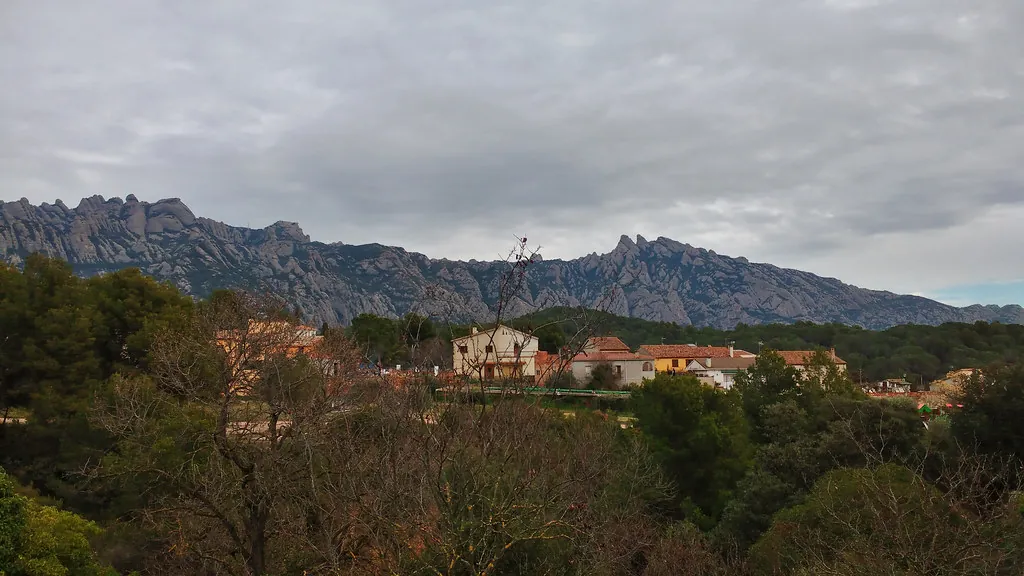
Tourism in Argençola begins with its location. This small municipality sits inland in the comarca of l’Anoia, in a raised area at around 700 metres above sea level. The landscape alternates between cereal fields, patches of woodland and scattered masías, the traditional Catalan farmhouses. With just over two hundred residents, Argençola lies outside the more travelled routes of inland Catalonia, and its appearance follows the logic of an agricultural setting rather than any development aimed at visitors.
Both the main settlement and the dispersed houses have adapted over time to an uneven terrain. Paths follow the natural curves of the land, while plots are marked out by dry stone walls. For centuries, the local economy has centred on dry farming and livestock. That origin is still easy to read in the surroundings: open fields occupy the gentler ground, while small woods of holm oak, oak and pine cover the less cultivated slopes.
The feel of the place shifts with the seasons. In spring, green spreads across the fields. Early summer brings ripened cereals covering many of the hills. Autumn introduces more muted tones and a drier atmosphere, typical of this part of inland Catalonia.
Sant Martí and the village core
The centre of Argençola is organised around the parish church of Sant Martí. It dates back to Romanesque origins, although later alterations have changed parts of the structure. It is not a large or imposing building, yet it retains features of the rural medieval architecture found across much of inland Catalonia. The bell tower and sections of the wall still show the simple stone construction typical of that period.
The church opens onto the main square, which acts as a meeting point for residents. From there, a handful of short streets lead away, descending or turning with the slope of the land. The layout does not follow any formal plan. Instead, it reflects centuries of gradual expansion and adjustment.
Walking through the village reveals stone doorways, façades with small openings and houses that have been modified at different times. It is not a monumental ensemble in the strict sense, yet it offers a clear example of rural architecture linked to agricultural life.
Beyond the village centre, the municipality includes several historic masías. Some still support farming or livestock activity, while others have taken on new uses over time. Many retain the typical structure of the Catalan masía: a compact volume, thick stone walls and a sloping tiled roof.
Paths across a working landscape
One of the simplest ways to get to know Argençola is by following the rural paths that connect the village with its masías and neighbouring municipalities. These are agricultural tracks and footpaths that cross fields and small wooded areas, used regularly by those who live locally.
The terrain is not extreme, though it is uneven. Paths rise and fall gently across low hills, offering wide views over the patchwork of crops and woodland that characterises l’Anoia. On clear days, the view extends across a broad stretch of surrounding land.
These open areas are also a good place to observe birdlife typical of the Mediterranean interior. Birds of prey are often seen taking advantage of air currents above the fields. It is a landscape that rewards slow walking and makes it easier to understand how a dry farming territory still functions.
Summer brings a practical consideration. Many areas lack continuous shade, so carrying water and protection from the sun is important rather than optional.
Food shaped by the interior
In a municipality as small as Argençola, the range of places to eat is limited. Daily life often revolves more around homes and agricultural work than around public venues. For a wider choice, it is usually necessary to travel to larger towns within the comarca.
The cooking of this part of l’Anoia reflects an inland tradition. Dishes tend to be hearty, based on dried legumes, pork or rabbit, along with seasonal produce from nearby gardens. These are recipes shaped by a rural economy, designed to sustain long working days rather than to follow changing trends.
Getting your bearings
Argençola lies in the western part of l’Anoia, in a transitional area between the basin of Igualada and the rising land that leads towards the Segarra. The city of Igualada concentrates most services and often serves as a reference point for moving around the region.
Access is via local roads that pass through fields and low hills. It is not a place associated with quick transit. The impression is of entering a quieter part of inland Catalonia, where the agricultural landscape continues to set the pace.