Full Article
about Aguilar de Segarra
Small, scattered rural municipality in Bages, surrounded by nature and farmland.
Ocultar artículo Leer artículo completo
The church bell strikes noon and only two things move: a tractor disappearing into wheat and a baker’s van doing its weekly round. That’s Aguilar de Segarra, a scatter of stone houses at 480 m on the roof of central Catalonia, where the census slips under 250 in winter and the nearest traffic light is 20 km away.
A Map of Stone and Soil
Aguilar isn’t a single village; it’s a loose federation of farmsteads sewn together by dirt tracks. The council boundary takes in La Buada, La Guàrdia, Puiggròs and two dozen isolated masías whose oldest stones were laid in the 17th century. Some still work the surrounding strips of barley and almond; others have become second homes for Barcelona families who arrive on Friday night and leave the shutters closed until Easter.
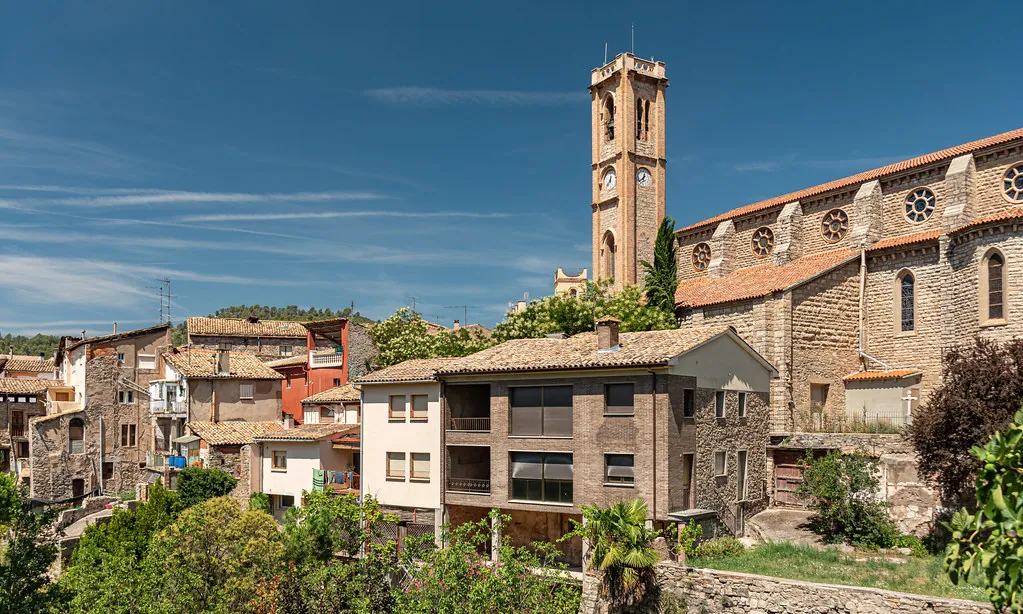
Sant Esteve parish church squats at the geographic middle, a Romanesque core swallowed by later touch-ups—Gothic arch here, Baroque plaster there. The door is usually unlocked; inside, the only illumination is from narrow slits that throw stripes across a 14th-century font where every local infant has been christened for seven hundred years. No ticket desk, no audio guide, just a printed sheet that ends with the curt line: “Turn lights off when leaving.”
Walking Without Waymarks
The district’s paths were built for mules, not marketing departments. A sensible loop starts at the cement trough outside the church, drops past the olive press ruins, then climbs for 40 minutes to the ridge above the Riera de Rajadell. From the top you can clock half of Bages county: the vertical cliffs of Montserrat to the south-east, the Pyrenees picking up snow on the northern horizon, and a chessboard of cereal plots that glow gold in late May.
Navigation is old-school. Metal waymark posts appear sporadically; sometimes they point left while the worn line in the grass goes right. Mobile reception is patchy, so screenshot the ICC (Institut Cartogràfic de Catalunya) 1:25,000 map before you set out, or take a paper copy like the locals do. Allow three hours for the circuit back to the bakery van—longer if you stop to photograph the solitary holm oaks that photographers here use as stand-ins for African acacias.
What You Won’t Find
There is no village shop, no cash machine, no petrol station. A single bar-restaurant opens on Saturday evenings and Sunday lunch only; the menu is grilled botifarra sausage, chips, and the tomato-rubbed bread that every British child learns to call “pa amb tomàquet”. Order the house calçots (spring onions) if you’re there between February and April—charred over vine prunings and served with romesco, they taste like sweet leeks wearing a smoky overcoat.
For supplies you drive 15 minutes east to the industrial fringe of Manresa where a Lidl and a Mercadona sit side-by-side. If self-catering, stock up before you arrive; after 8 p.m. the only edible thing still moving in Aguilar is the neighbour’s cat.
Seasons That Change the Roads
Spring and autumn are the comfortable windows. In April the fields stripe green and yellow, and daytime temperatures hover around 18 °C—perfect for cycling the gently rolling C-1411 loop that links neighbouring Navàs and Cardona. Summer turns fiercely hot; the thermometer can top 36 °C at midday, sending even the lizards into shade. Shade itself is scarce on the high plateau, so walkers start early or stick to the wooded ravines.
Winter brings a different problem. Night frosts harden the clay tracks into corrugated ridges, and a sharp tramuntana wind can make 5 °C feel like minus five. Snow is infrequent but possible; when it arrives the BV-3006 access road is the last stretch the gritters clear. If you book Cal Escuder’s stone villa for Christmas, request a 4×4 or carry chains—taxis from Manresa decline the trip when the white stuff falls.
Beds, Bikes and Blisters
Accommodation choices inside the municipal line fit on one hand. Cal Escuder, a six-bedroom converted farmhouse, has underfloor heating and a small pool that catches the afternoon sun. It books solid for Easter and August, so reserve early; owners Jordi and Montse speak enough English to sort bike storage or a local cheese platter, but they live 40 minutes away, so arrange arrival times by WhatsApp.
Most visitors base themselves in Manresa where the Urbi Apartments offer secure parking and kitchens wide enough to lay out ordnance-survey-style maps. The drive from Barcelona El Prat is 75 minutes on the A-2 motorway; after Manresa you leave dual-carriageway comfort for 12 km of switchbacks. Petrolheads love it; back-seat passengers less so.
One Festival, Twelve Fireworks
For twenty-something years Aguilar’s population graph has pointed downward, yet every 3 August the place inflates. The Festa Major honours Sant Esteve with a long weekend of sack races, sardana dancing in the dust, and a communal paella cooked in a pan the size of a satellite dish. At 11 p.m. on the final night the correfoc arrives: locals dressed as devils sprint through the single street waving sparklers and bangers. British visitors often retreat to the church steps—close enough for photographs, far enough to keep eyebrows intact.
Book accommodation a month ahead for the fiesta; even the Manresa hotels fill with returning aguilarencs whose idea of rural bliss still includes a bass-heavy disco until 4 a.m.
Heading Home
Aguilar de Segarra will never elbow the Costa Brava off a brochure. It offers space rather than spectacle, the sound of wheat brushing in the breeze instead of Wi-Fi. Bring walking boots, a sense of direction and a full cool-box; swap expectations for patience and the village gives back a clear sky, a cold beer at the weekend bar, and the small realisation that in some parts of Europe the 21st century is still optional.