

Full Article
about Cardona
Historic town dominated by an impressive castle and known for its salt mountain.
Hide article Read full article
A Small Town with a Long Reach
Cardona has the air of someone who likes to remind you of their family tree. At first, the claim that the Cardona lineage once controlled a large part of medieval Catalonia sounds like an exaggeration. Then you see the castle and begin to understand where that confidence comes from. Much of that influence rested on a surprisingly simple resource: salt.
For centuries, the salt extracted here generated wealth and power. In the Middle Ages, controlling salt was almost like controlling electricity today. Everyone needed it to preserve food, which made it strategic and profitable in equal measure. Cardona’s history is tied to that white mineral in ways that still shape the town’s identity.
The character of the place also reveals itself in more recent history. During the War of the Spanish Succession in the early 18th century, while other strongholds had already lowered their flags, Cardona held out longer than most. That resistance offers a clue to the town’s temperament. It is not loud about its past, but it does not shy away from it either.
The Castle That Refused to Give In
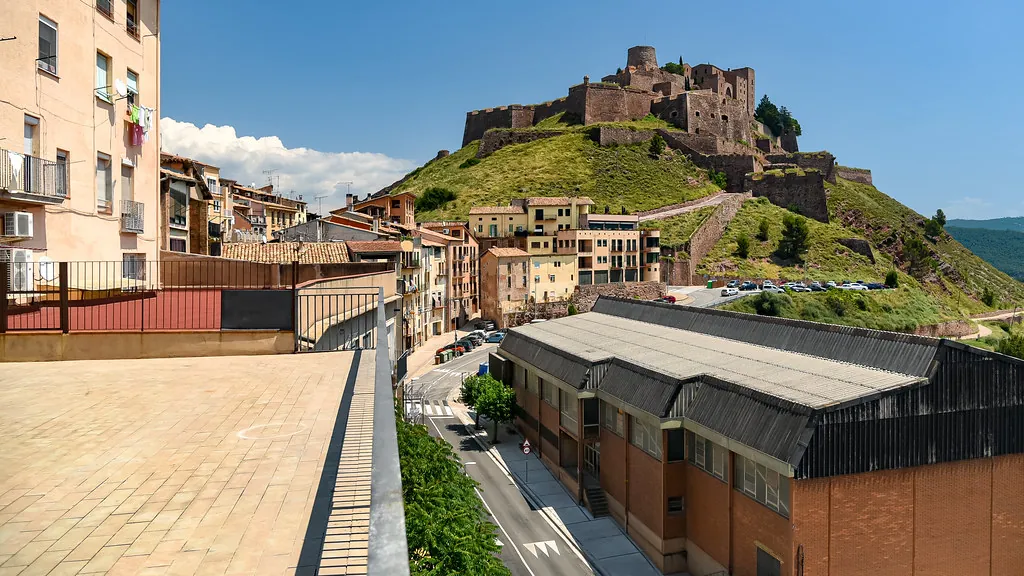
The Castell de Cardona is not the fairytale type with delicate turrets and theatrical silhouettes. It looks built for a purpose. Perched on top of a hill, it dominates the surrounding valley. Once there, it becomes obvious why taking it was never straightforward.
Its origins go back to the early Middle Ages, when Count Guifré el Pilós promoted the first fortification on this strategic height. Over time, the structure expanded and developed into one of the most formidable strongholds in Catalonia. During the War of the Spanish Succession it was among the last places to surrender, reinforcing its reputation as a fortress that did not give up easily.
Today, the complex is very well preserved. Part of it operates as historic accommodation within a public network, a curious contrast to its defensive past. The same walls that withstood sieges now see visitors arrive with wheeled suitcases. The atmosphere shifts with that detail, yet the sense of solidity remains.
One of the most photographed elements is the Torre de la Minyona. Like many medieval towers, it comes with a tragic love story. The tale usually involves the daughter of a nobleman who was locked away for falling in love with someone deemed unsuitable. The details vary depending on who tells it, but the essence stays the same. A dramatic story, a high tower, and the suggestion that personal feelings once collided with family honour.
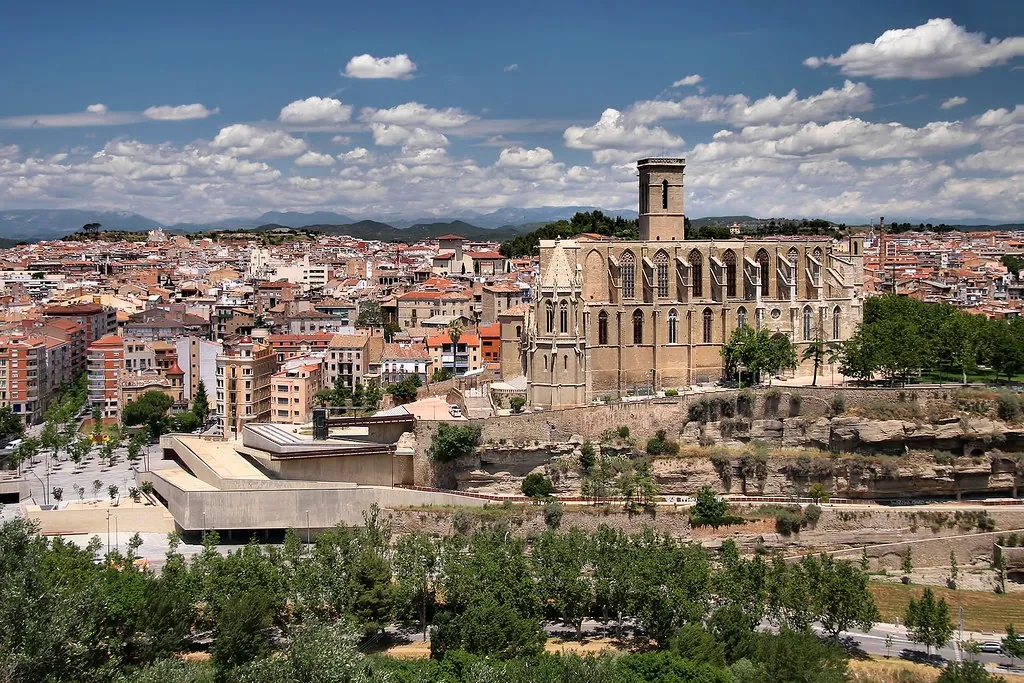
Within the castle grounds stands the church of Sant Vicenç, considered one of the best examples of Lombard Romanesque architecture in the area. From the outside it appears relatively austere. Step inside and the weight of centuries becomes tangible. The stone, the proportions and the quiet atmosphere combine to create a space that feels older than it looks at first glance.
The Mountain of Salt
If the castle explains Cardona’s military importance, the Muntanya de Sal explains everything else. It is difficult to grasp until it appears in front of you. A calm valley suddenly gives way to what looks like an entire mountain made of salt pushing up from the earth. It is not a metaphor. It is a vast salt diapir that has been exploited for centuries.
Salt was already being used here in Iberian times. Over the centuries it became a major source of wealth for the lords of Cardona. The ability to control production and distribution meant influence far beyond the immediate area.
A visit to the former mining complex sheds light on how it all worked. Exhibits show tools, extraction systems and the logistics behind the operation. The process may sound technical, yet it connects directly to everyday life. This salt preserved cod and cured meats, shaping diets across the region. Once that link is made, thoughts often turn quickly to food.
That chain of ideas leads naturally to the coca de Cardona. This local speciality sits somewhere between sweet and savoury, leaving you unsure whether it pairs better with coffee or with wine. It reflects the town itself: defined by salt, yet capable of surprising sweetness.
Streets That Demand a Slower Pace
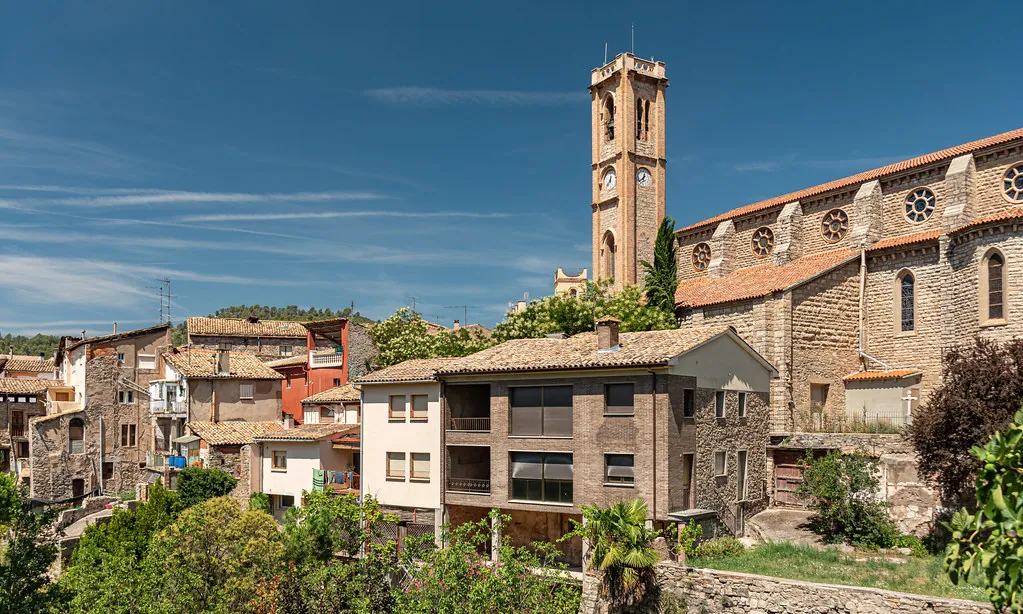
Beyond the hilltop fortress, the historic centre of Cardona unfolds through steep streets and stone houses. The layout encourages a slower rhythm, partly because some of the slopes make themselves felt. Effort replaces romanticism as the reason for pausing.
As you descend from the castle towards the older quarters, the mood becomes more everyday. Small squares appear, narrow lanes connect them, and residents carry on with their routines. The setting does not feel staged for visitors. It feels lived in.
Local conversation often drifts towards the Pont del Diable. According to popular accounts, construction stopped centuries ago when the money ran out, leaving the bridge unfinished. The explanation sounds medieval in origin, yet it also feels surprisingly current. Stories like this blur the line between legend and practical reality.
Cardona’s appeal lies partly in this ordinary dimension. After the grandeur of the fortress and the strangeness of a mountain made of salt, the modest scale of the centre brings everything back to human size.
Hearty Food from Inland Catalonia
Food in Cardona follows the patterns of inland Catalonia. Expect dishes designed for colder days: spoon-based stews, slow-cooked meat and recipes that prioritise substance over presentation.
Fricandó with mushrooms from the Bages region is one such example. At first glance it seems straightforward. The depth of the sauce tells a different story once tasted. Trinxat combines cabbage, potato and pancetta in a mixture that will not win beauty contests, yet it does exactly what it is meant to do.
Cured meats also make sense here. In a place whose history revolves around salt, preserving the annual pig slaughter through salting was once the most effective method available. Culinary tradition and natural resources are closely linked.
A Visit Without Rush
Cardona does not demand to be ticked off in a hurry. The castle is worth the climb, and the Muntanya de Sal provides the key to understanding the town’s past. Yet the memory that often lingers is simpler. A walk without a fixed route through the centre, a pause to look out over the valley, and the realisation that this relatively small town once held considerable influence.
If your visit coincides with the Fira de la Sal, usually held in autumn, the atmosphere changes noticeably. Stalls appear, demonstrations take place and the streets fill with activity. The festival reinforces the central role that salt has played here for centuries.
Cardona’s story revolves around that mineral. It shaped power, sustained livelihoods and defined local cuisine. Then, amid all that salt, something sweet appears in the form of a coca. The contrast sums up the town rather well: solid, shaped by necessity, yet capable of a softer side once you look a little closer.