Full Article
about Castellnou de Bages
Quiet municipality with housing estates and a Romanesque historic center.
Ocultar artículo Leer artículo completo
The first thing visitors notice is the silence. Not the eerie, horror-film variety, but the genuine absence of human noise that makes you realise how rare true quiet has become. Standing in Castellnou de Bages at 469 metres above sea level, the only sounds are the wind moving through almond trees and the occasional clank of farming equipment somewhere in the valley below.
This medieval village, home to roughly 1,400 souls, sits squarely in the geographic centre of Catalonia. While coaches full of tourists head east to the Costa Brava or west to the wine regions of Penedès, few venture into the agricultural heartland of Bages. Those who do find themselves looking across a patchwork of dry-stone terraces towards the saw-tooth silhouette of Montserrat, 25 kilometres away as the crow flies.
A Village That Never Learned to Whisper
Castellnou's strategic hilltop position made sense when castles needed commanding views, but it creates certain practical challenges for modern visitors. The narrow CV-1201 access road corkscrews upwards for eight kilometres from the C-16 dual carriageway, with sections so tight that meeting an oncoming tractor requires one vehicle to reverse to the nearest passing point. Satellite navigation systems frequently lose signal here; downloading offline maps before leaving Manresa isn't paranoid preparation, it's essential.
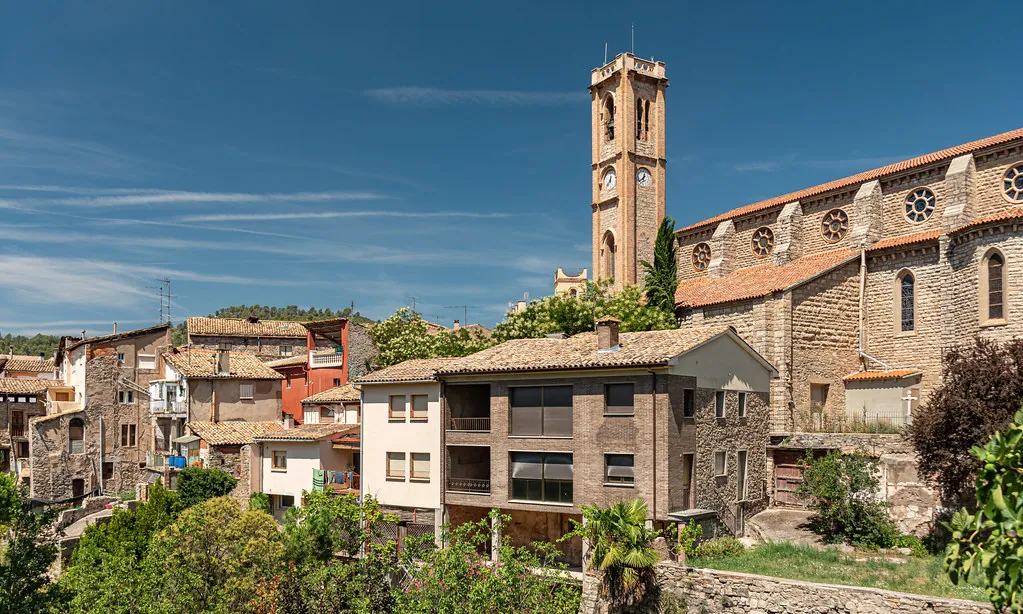
The village clusters around the 12th-century church of Sant Jaume, whose stone walls have absorbed centuries of village gossip. Unlike the grand cathedrals of nearby Manresa, this is a working parish church rather than a tourist attraction. Step inside during service times and you'll witness elderly women in black mantillas arguing about flower arrangements in rapid-fire Catalan while the priest pretends not to notice.
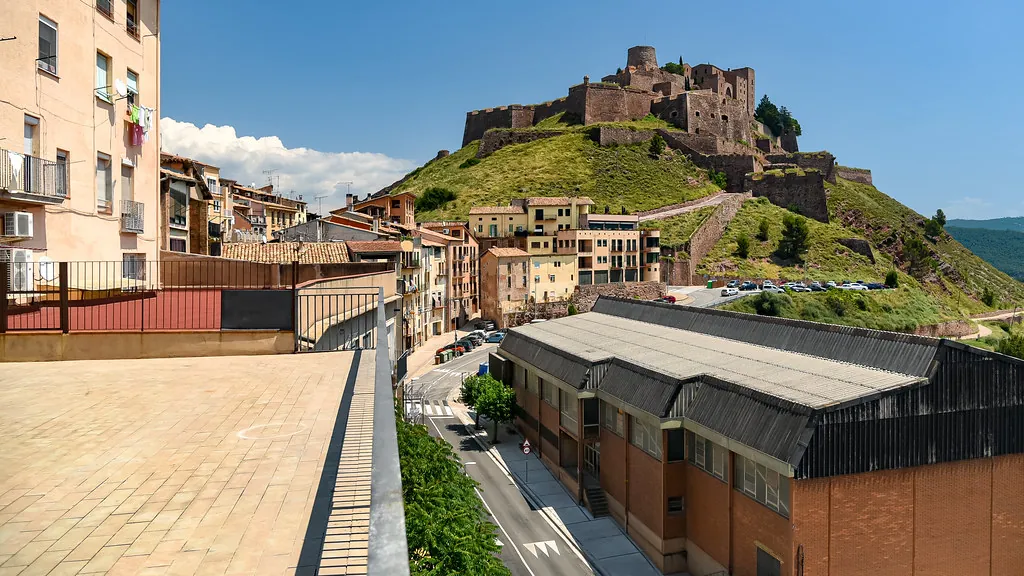
The castle ruins, from which Castellnou takes its name, occupy the highest point. What remains are crumbling walls and a restored tower offering 360-degree views across the Bages plain. On clear days, Barcelona's skyline appears as a distant smudge on the horizon. The climb takes ten minutes from the village square; sturdy footwear recommended after rain when the limestone paths become treacherous.
Eating When the Chef Feels Like It
Food here operates on agricultural time rather than tourist schedules. The single village restaurant, Can Xic, opens only for weekday lunches, serving a three-course menú del día for €14 that might include escudella (hearty Catalan stew) followed by rabbit with romesco sauce. Turn up at 8 pm expecting dinner and you'll find the metal shutters firmly closed.
Self-catering visitors should stock up in Manresa before driving up the mountain. The village's only shop functions as a hybrid social club and convenience store, opening sporadically and stocking basics: tinned tomatoes, locally made butifarra sausage, and ice cream that doubles as the village's unofficial currency among children.
Weekend evenings present two options: drive fifteen minutes to Santpedor for pizza, or embrace the Spanish schedule of substantial lunch followed by evening tapas. The latter works surprisingly well when paired with local cava purchased directly from producers in Sant Sadurní d'Anoia, forty minutes away and considerably cheaper than British supermarket prices.
Walking Without the Crowds
The Bages region offers 200 kilometres of marked walking routes, though "marked" might be optimistic. Yellow paint splashes on rocks indicate the GR-3 long-distance path, but following these requires occasional guesswork and willingness to backtrack when the trail apparently disappears into a barley field.
More reliable are the local routes starting from Castellnou itself. The 8-kilometre circular to Santpedor passes through almond and olive groves, with spring wildflowers creating natural confetti beneath the trees. Summer walking requires early starts; temperatures reach 35°C by midday and shade remains theoretical across much of the plateau.
Cyclists discover what local farmers have always known: these hills look gentle but pack surprising gradients. The climb to neighbouring Navàs gains 300 metres over five kilometres, testing leg muscles accustomed to flatter British terrain. Mountain bikes work better than road bikes on the rough agricultural tracks connecting villages.
When the Village Parties
Castellnou's festival calendar revolves around agricultural cycles rather than tourism. The Fiesta Mayor in late July transforms the main square into an outdoor cinema showing Catalan films with Spanish subtitles, while teenagers attempt to look cool at the mobile disco that arrives on Saturday night. It's endearingly amateur, with raffle prizes including legs of ham and vouchers for the agricultural suppliers.
Sant Jaume d'Hivern in January involves blessed bread distribution and elderly residents comparing whose grandchildren visit least frequently. Autumn's harvest celebrations focus on mushroom foraging and wine tasting, though "tasting" becomes generous pouring as the evening progresses.
These events aren't staged for visitors; tourists remain welcome but peripheral. Joining in requires basic Catalan greetings and willingness to stand corrected when attempting to pronounce place names. The effort gets repaid with invitations to join family tables and explanations of why particular recipes use rosemary rather than thyme.
The Reality Check
Castellnou de Bages won't suit everyone. Mobile phone reception varies between patchy and non-existent depending on network and weather. The nearest supermarket requires a twenty-minute drive down twisty mountain roads. Evenings involve self-catering or designated driving; taxis remain mythical creatures here.
Yet for walkers seeking empty trails, cyclists wanting challenging climbs without tourist coaches, or anyone needing proper digital detox, the village delivers. The views across to Montserrat justify the journey alone, particularly at sunset when the mountain glows pink and orange against the darkening sky.
Come prepared with phrasebook Catalan, downloaded maps, and realistic expectations about rural Spanish timing. Bring walking boots and appetite for proper country cooking. Leave behind assumptions about theme-park Spain and Instagram moments. Castellnou de Bages offers something increasingly rare: a place where daily life continues regardless of visitor numbers, where farmers still matter more than tourists, and where silence remains unbroken except by church bells marking the passage of agricultural time.