Full Article
about El Pont de Vilomara i Rocafort
Known for its magnificent medieval bridge over the Llobregat.
Hide article Read full article
Early light over the river
At nine in the morning, the sun has not quite cleared the Llobregat. From the bridge you can hear the water shifting the river stones, a dry, steady sound that comes when the flow runs clear after several days without rain. Down by the bank, an older man takes a fishing rod from the boot of a small car. There is hardly anyone around. The smell of fresh bread drifts over from the Manresa road.
Tourism in El Pont de Vilomara i Rocafort often feels like this: quiet moments that appear if you arrive early and stay still for a while. It is not a place that reveals itself all at once. You have to walk a little, cross the river, take on a few slopes.
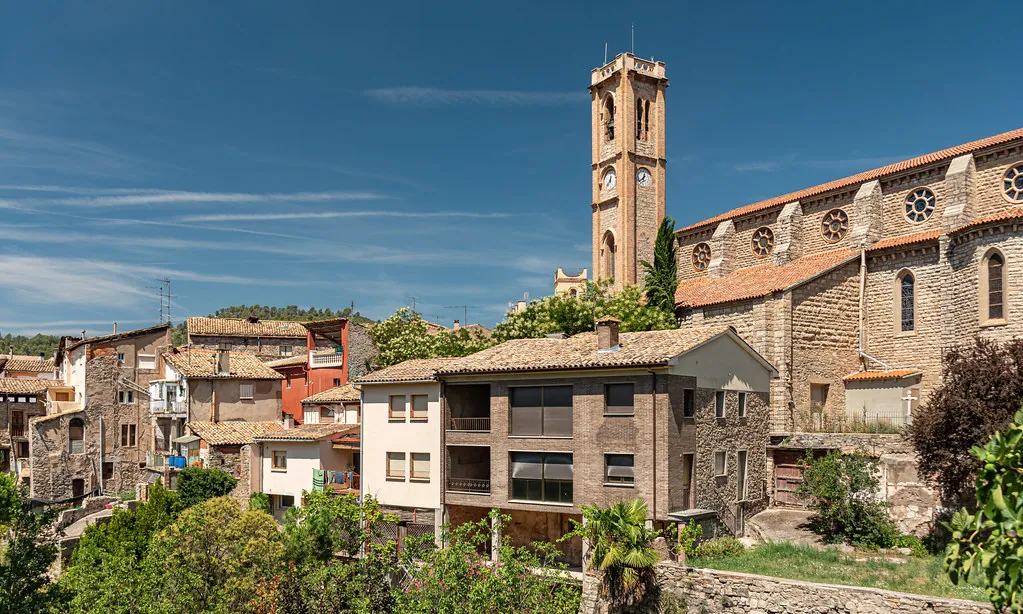
In the old centre, the houses are low, many built in stone with ceramic roof tiles and green shutters that open slowly as the morning goes on. Some streets climb towards the parish church between narrow façades and balconies where sheets still hang when there is a bit of wind.
The bridge that shapes the town
The stone bridge over the Llobregat gives the place its name and its rhythm. It is usually dated to the Middle Ages, probably the 13th century, with later alterations. Several arches span the river, and a wide parapet invites people to stop and look at the water or exchange a few words.
It does not stand apart as a monument. It belongs to daily life: a crossing between one side of town and the other, a spot where retirees sit in the sun, or where teenagers linger and talk as evening falls.
The central stones are smoother than those at the edges, worn down by centuries of footsteps. If you look closely at the parapet, you can spot marks on some of the ashlar blocks, signs left by the stonemasons when each piece still had its maker. In winter, when the river runs dark and heavy, the water hits the pillars and the sound rises to the deck as a low murmur.
Climbing towards Rocafort
Rocafort lies only a few kilometres away, but the road twists as it climbs. Some stretches are narrow, with bends that ask you to slow down.
An early start makes sense here. In the first hours, mist often lingers among the pine woods and the air carries the scent of resin and damp earth. As it clears, the landscape of the Bages region unfolds bit by bit: cereal fields, patches of holm oak, the occasional isolated farmhouse.
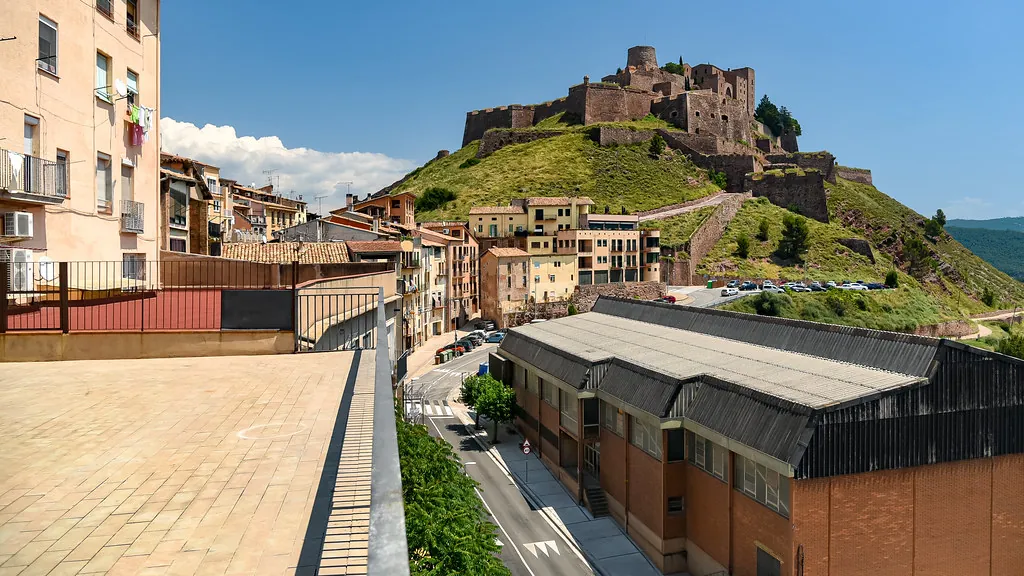
At the top are the remains of the castle of Nespola, already mentioned in early medieval documents. Today what you see are mostly fallen walls and part of a square tower. From the hill around it, the view opens wide over the surroundings, with the gentle rises of the Bages stretching in every direction.
Halfway up stands the church of Santa Maria de Matadars, one of those very old rural churches that have changed little over time. The building is usually placed around the 10th century. The doorway is low and made of irregular stone, and inside there is that cool smell of places that have spent many winters closed. Light enters through the small oculus in the apse and falls diagonally across the stone floor.
The tines and the memory of wine
On the nearby slopes you will come across several tines, dry-stone structures linked to wine production. Some are hidden among holm oaks, cork oaks and scrub. The tines d'en Bleda are among the best known in the area.
These are cylindrical constructions where grapes were pressed and fermentation began. Today they stand empty, many filled with dry leaves, but their shape is easy to recognise. The entrance makes you duck slightly, and once inside the silence feels almost cave-like.
In the walls you can still make out the opening through which the wine was drawn off. It takes a moment to picture what September must have been like here: baskets of grapes arriving from nearby vineyards, people moving in and out, must running over the stone.
In spring the surroundings change noticeably. Rosemary and yellow broom grow among the rocks, and their scent mixes with that of warm earth. At times you hear only bees, at others the distant sound of machinery working somewhere on the hills.
When to come
Spring is usually the most rewarding season in this part of the Bages. The fields are green, almond trees bloom on some plots, and temperatures make walking comfortable.
September has its own appeal. The weather is still good and the nearby fields begin to show the activity of the grape harvest.
In August, especially at weekends, the atmosphere shifts. More people arrive from Manresa and from the Barcelona area, and the town loses some of that early-morning calm.
If you plan to head up to Rocafort on foot or by bike, take water and some protection from the sun. There are stretches without shade and you will not always find fountains along the way. After rain, access to some of the tines can be slippery, as the mud here sticks to your soles.