Full Article
about Fonollosa
Rural municipality in Bages with scattered settlements and dryland landscape.
Hide article Read full article
Early in the morning, when the sun is still low over the fields of the Bages region, the silence around Fonollosa feels crisp and unfiltered. Tractors can be heard in the distance, a dog barks from a nearby masía, and little else interrupts the air. Tourism in Fonollosa often begins with that sensation: stepping away from the busier routes of the comarca and into an agricultural landscape that still sets the pace of daily life.
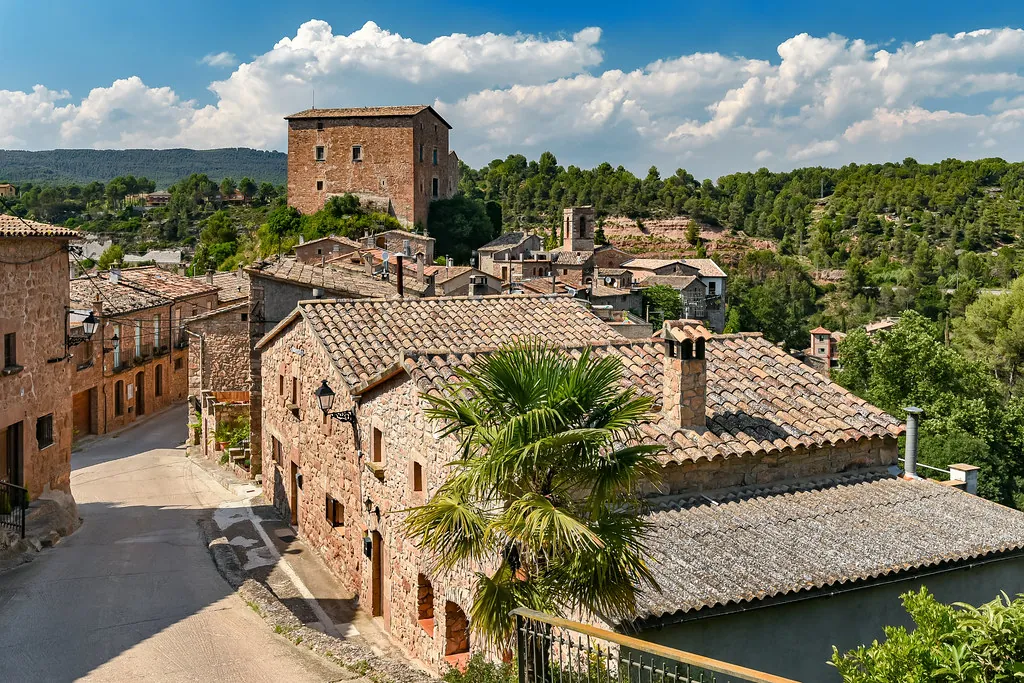
Fonollosa is not a single compact village. The municipality is spread out across small clusters of houses, rural tracks and isolated masías that appear between cereal fields, almond trees and holm oaks. Many of these buildings retain thick stone walls, wide doorways and small windows. They were designed to withstand cold winters and dry summers rather than to impress.
There are no grand monuments here and no streets crowded with visitors. What defines the place is the land itself and the way it changes through the year.
Sant Vicenç and the small village centre
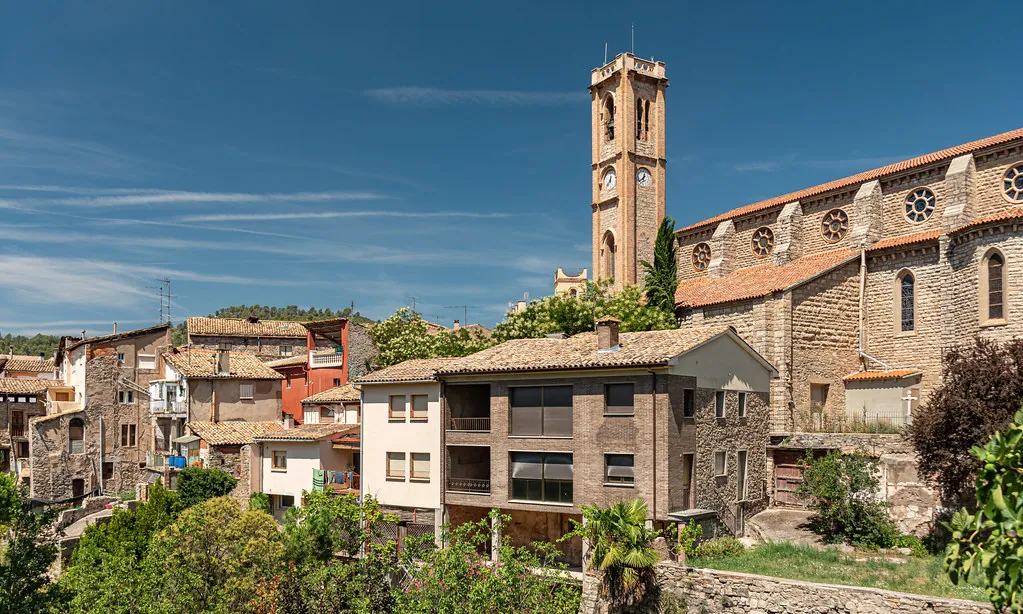
In the main nucleus, the parish church of Sant Vicenç provides a visual reference point. Its base is Romanesque, although the building has evolved over time and later additions are visible on the façade and other parts of the structure. Around it stand a handful of houses, a small square and a few short streets where the rhythm of the day remains slow.
By mid-afternoon, as the sun drops towards the fields, the stone walls take on a soft golden tone. It is a good time to wander through the centre without hurry and then follow one of the tracks that lead out towards the surrounding masías.
The village layout reflects its rural character. Houses sit close to one another near the church, then quickly give way to open land. Within a few minutes on foot, the built environment fades and the countryside resumes control.
Rural tracks through fields and vineyards
The terrain around Fonollosa is gently undulating, with no dramatic changes in elevation. Soft hills are crossed by dirt tracks that connect farms, cereal fields and scattered vineyards. There is no need to plan a long route. Following one of these paths is enough, allowing the scenery to shift gradually with each bend.
In autumn, dry leaves cover the ground and the air often carries the scent of damp earth. September brings a busier feel to the tracks, as grapes ripen across many plots in the Bages and tractors pass more frequently.
On clear days, from some of the higher points in the municipality, the silhouette of Montserrat appears on the horizon. Its distinctive jagged peaks stand out sharply against the sky and act as a constant reminder of the wider landscape beyond the fields.
One practical detail matters in summer: it is best to set out early or later in the afternoon. The sun falls hard on the open tracks and there are few stretches of shade.
Vineyards and produce of inland Bages
This part of the Bages has been linked to vine cultivation and dry farming for centuries. Small plots bordered by low stone walls remain visible, along with paths that have been used for generations.
Wines are produced here under the Pla de Bages designation of origin. Alongside them, cured meats and cheeses are made in the rural surroundings. Rather than a concentrated food scene, what exists is a dispersed network of producers and small projects tied to the land.
Some wineries in the wider area organise visits or tastings. It is common to check in advance, as many operate with limited opening hours. The emphasis remains on agriculture first, tourism second.
The presence of vineyards shapes the look of the countryside. Rows of vines alternate with cereal fields, and the agricultural calendar influences activity on the tracks and in the plots throughout the year.
Exploring further across the Bages
From Fonollosa, it is straightforward to reach other parts of the comarca. Manresa lies relatively close by car. From there, visitors can explore the Parc de la Sèquia, a medieval canal that for centuries has carried water from the Llobregat river to the fields of the Bages. The canal remains one of the defining features of the region’s agricultural history.
Montserrat is also within reach for a half-day outing. On clear days, its profile is already visible from many paths around Fonollosa, long before setting off towards the mountain itself. The contrast between the gentle farmland and Montserrat’s serrated outline adds depth to the wider landscape.
Even without leaving the municipality, that broader geography is always present. The horizon opens in several directions, and distant landmarks anchor the rural quiet in a recognisable Catalan setting.
Local festivals and village life
Celebrations in Fonollosa follow the traditional calendar of inland Catalan villages. The Festa Major usually takes place at the end of August, when the heat begins to ease at night and long tables fill the squares. Music and dancing form part of the atmosphere, with an emphasis on shared space rather than spectacle.
In June, bonfires are lit for Sant Joan, a festival widely celebrated across Catalonia to mark the summer solstice. In winter, around Sant Antoni, activities connected to animals and rural life are still organised.
These festivities are primarily intended for residents of the municipality and neighbouring villages. Anyone visiting at the same time is likely to encounter a close-knit setting with little formality. The scale remains local, rooted in community rather than in attracting large numbers from outside.
A landscape shaped by the seasons
Spring turns the fields a vivid green, and the wind moves through the cereal as if across water. Summer dries the land into yellows and browns, with dust rising along the tracks. Autumn brings ochre tones to the oaks and holm oaks. In winter, cold air clears the sky and leaves mornings bright and sharply defined.
Fonollosa does not rely on major sights or a packed programme of attractions. It is an agricultural municipality where the landscape continues to carry weight. Often the most rewarding experience is something simple: walking along a dirt track as evening light settles over the fields of the Bages.
For travellers seeking a sense of rural Catalonia without stepping far from the region’s better-known landmarks, Fonollosa offers space, quiet and continuity with the land. The pace is steady, shaped by crops, weather and long-used paths that still connect house to house across the countryside.