Full Article
about Manresa
Capital of Bages and an Ignatian city with an imposing Gothic basilica
Ocultar artículo Leer artículo completo
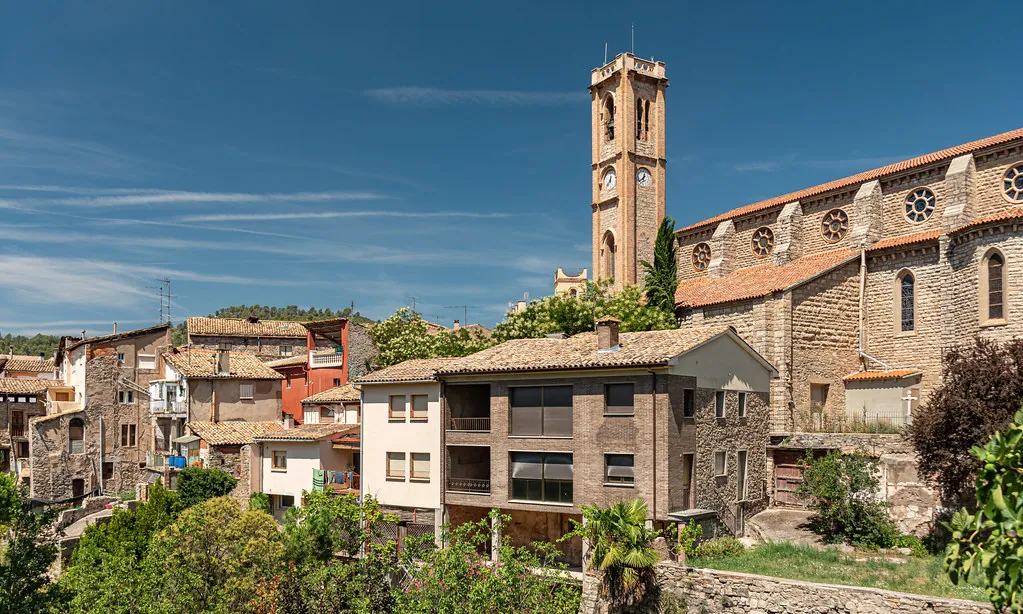
The first thing you notice from the train window is Montserrat sawing into the sky, its serrated ridge looking close enough to touch. Then the tracks dip, the river Cardener appears, and Manresa spreads out—neither postcard-pretty nor industrial sprawl, just a workaday Catalan city that happens to have a Gothic basilica taller than anything in Canterbury. Most travellers race straight through on the Barcelona–Montserrat circuit. Step off here and you’ll find prices drop by a third, menus stay in Catalan, and the only queue is for morning coffee at the market.
Manresa sits 65 km inland, 238 m above sea level, where the coastal plain folds into pre-Pyrenean foothills. The altitude knocks the edge off summer heat—temperatures hover five degrees below Barcelona—and brings sharp, clear nights from October onwards. Winter can bite: morning frost in January is common, and the Tramuntana wind whistles up the valley hard enough to close the higher Montserrat trails. Come March the almond orchards on the surrounding terraces flower overnight, turning the hillsides the colour of pale sherry.
Stone, Water and a Saint’s Cell
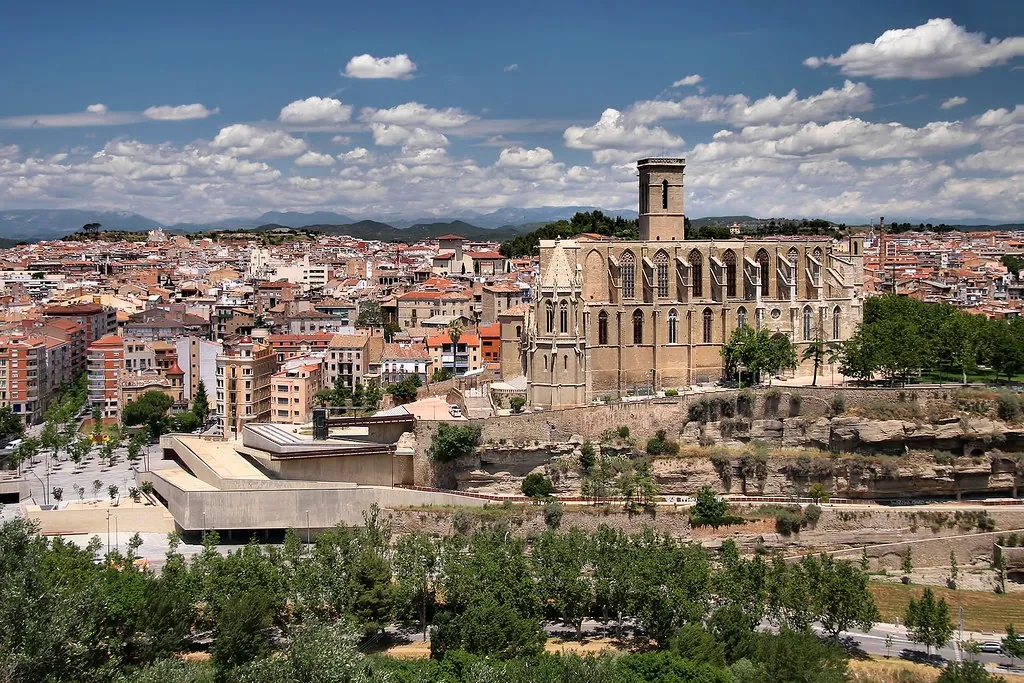
The city’s compass is the Seu, Basilica of Santa Maria, begun in 1322 and finished, give or take, 150 years later. One nave, 24 m wide and 70 m long, holds the space together like a single lungful of air. Climb the narrow spiral stair inside the south tower—€4, cash only—for a view that lines up the old cardo maximus beneath you, the river looping west, and the cement works at Montcada that keep the regional economy turning. Sunset is the sensible time; the stone glows warm honey and you can watch the city’s evening paseo start three storeys below.
Drop down from the cathedral terrace and you hit the Pont Vell, a 12th-century bridge that still carries local traffic. Stand on the downstream side: the central arch is slightly pointed, a Gothic engineer’s afterthought wedged into Romanesque foundations. Below, the Cardener is shallow enough to wade in summer; teenagers launch themselves off the cut-water, ignoring the bilingual “bany prohibit” signs. A riverside path leads south for 20 minutes to the Parc de l’Agulla, an artificial reservoir framed by pine and cypress. Locals cycle here with supermarket tinnies on Friday evenings; the water reflects Montserrat like a broken mirror and nobody tries to sell you anything.
Five minutes north of the bridge, a Baroque staircase climbs to the Cova de Sant Ignasi, the cave where a soldier-turned-mystic spent ten months in 1522, writing the Spiritual Exercises that would launch the Jesuits. Even agnostics linger inside the rock chamber; the temperature drops, traffic noise vanishes, and someone always leaves a single candle burning. Entrance is free, but you’ll need to surrender your phone at the desk—no photos, no exceptions. Pick up the English leaflet: it quotes Loyola’s diary entry about “the smell of shepherd fires drifting up the valley,” a sensation unchanged if you walk back at dusk.
Mercantile Bones and Contemporary Flesh
Behind the town hall, Carrer del Balç is a medieval shopping arcade compressed into 80 m of sloping alley. Overhanging timber galleries once let shopkeepers trade by pulley; today the ground floor hosts a baker who sells cocas topped with roasted aubergine at €2 a slice, and a workshop restoring violins for the Barcelona conservatoires. The alley spits you out onto Plaça Major, where Tuesday and Saturday markets spread across the stone. Look for mongetes del ganxet—small, hook-shaped white beans that fetch €8 a kilo and taste faintly of chestnut when stewed with wild boar.
Manresa’s turn-of-the-century textile wealth left a trail of modernista façades. The old Masana mill on Passeig Pere III now contains the Museu Comarcal: two floors of Roman mosaics, a room of 14th-century pharmacy jars, and a temporary exhibition space that last hosted a survey of Catalan ska posters. Admission is €5; on the first Sunday of each month it’s free, but doors shut at 14:00 sharp. Round the corner, the Kursaal theatre (1917) still programmes Catalan indie bands; tickets average €18 and the bar serves Estrella on tap cheaper than any venue in central Barcelona.
Eating Without the Coast
Forget paella. Manresa’s kitchen looks inland—wild boar, calçots (grilled spring onions), river carp, and anything that can be slow-cooked in a clay pot. Cal Spaguetti, despite its name, grills first-rate monkfish over vine cuttings; the waiter will fillet it tableside if you ask politely. A three-course lunch with wine lands around €24. For lighter wallets, Can Xarau offers a weekday menú for €14: roast chicken, chips and a salad bowl big enough for two. Vegetarians do better at La Cuina, where the tasting menu can be halved on request; they’ll swap pig’s trotters for roasted red-pepper terrine without the usual Catalan sigh.
Wine drinkers should track down DO Pla de Bages bottles—small production, high acidity, designed to cut through mountain stews. The tourist office keeps a list of four local cellars open for drop-in tastings; easiest is Cooperativa de Rocafort, a 15-minute taxi ride (€18) through almond groves. Try the picapoll blanc, an almost-extinct white grape revived here in the 1980s; it tastes of green apple and wet stone.
Getting There, Getting Round
From Barcelona Sants, regional Rodalies trains leave twice an hour; the journey is 75 minutes and costs €8.10 each way. Sit on the right for Montserrat views. Manresa’s station is a 12-minute walk downhill to the centre—no escalators, so wheelie cases bounce over granite sets. If you’re driving, park in the underground Plaça Sant Domènec garage (€1.30/h, €11/day); on-street bays disappear by 11 a.m. and the blue-zone tariff now runs on Saturdays.
The city folds in on itself; most sights sit inside a 1 km radius. Wear decent shoes—streets rise and fall like a graph of pre-crash property prices. Local buses exist but nobody uses them except schoolchildren. A shared e-bike scheme has docking stations every 200 m; registration is €1 via app and the first 30 minutes are free, enough to reach the Agulla lake and back.
When to Come, When to Stay Away
Spring, late April to early June, is the sweet spot: mild days, blossom on the terraces, and Semana Santa processions that drum through the old town without the tourist crush of Seville. September is equally good; the grape harvest brings weekend fiestas in nearby villages and hotel rates stay low. Avoid the last week of August, when the Fira de l’Aplec fills squares with fairground rides and doubles room prices. Winter is quiet—some restaurants close in January—but the cathedral’s hourly bell ricochets off cold stone in a way that audiophiles travel miles to record.
Hotels are limited and honest. The three-star URH Cardenal Pere de Portugal occupies a converted 16th-century hospital; rooms at €70 include breakfast, but walls are monk-cell thin. Budget travellers head to Hostal La Masia, 3 km out on the industrial ring-road—functional, spotless, and linked by half-hourly buses. Splurgers should wait: the city’s first boutique opening, inside a former textile warehouse, has been “six months away” since 2019.
Leave before dawn on your final day and you’ll see the basilica floodlights switch off at exactly 6:30 a.m., the Cardener steaming in the cool air, and Montserrat silhouetted like a broken saw. No souvenir stalls, no selfie sticks, just a city waking up to another working Tuesday. That, rather than any superlative, is Manresa’s modest offer: Catalonia without the brochure, served plain.