Cataluña - Tomo II - España, sus monumentos y artes, su naturaleza e historia - Monistrol de Montserrat (page 250 crop).jpg
sergei.gussev · Flickr 4
Cataluña · Sea, Mountains & Culture

Monistrol de Montserrat

The 09:34 from Barcelona pulls in at a station that looks more Swiss than Catalan. Painted timber eaves, a clock tower in modernista ironwork, and ...

3,250 inhabitants · INE 2025
161m Altitude

Why Visit

Mountain Monastery of Montserrat (access) Ascent to Montserrat

Best Time to Visit

year-round

Festival of San Sebastián (January) enero

Things to See & Do
in Monistrol de Montserrat

Heritage

  • Monastery of Montserrat (access)
  • Gothic bridge

Activities

  • Ascent to Montserrat
  • Rack railway

Festivals
& & Traditions

Fecha enero

Fiesta de San Sebastián (enero)

Las fiestas locales son el momento perfecto para vivir la autenticidad de Monistrol de Montserrat.

Full Article
about Monistrol de Montserrat

Gateway town for the rack railway up to Montserrat

Ocultar artículo Leer artículo completo

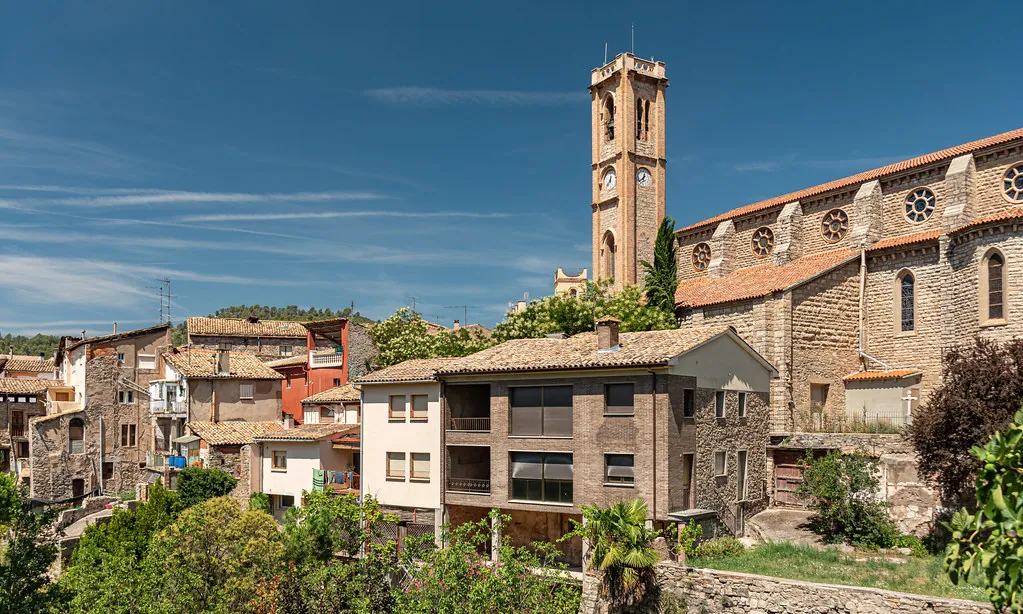
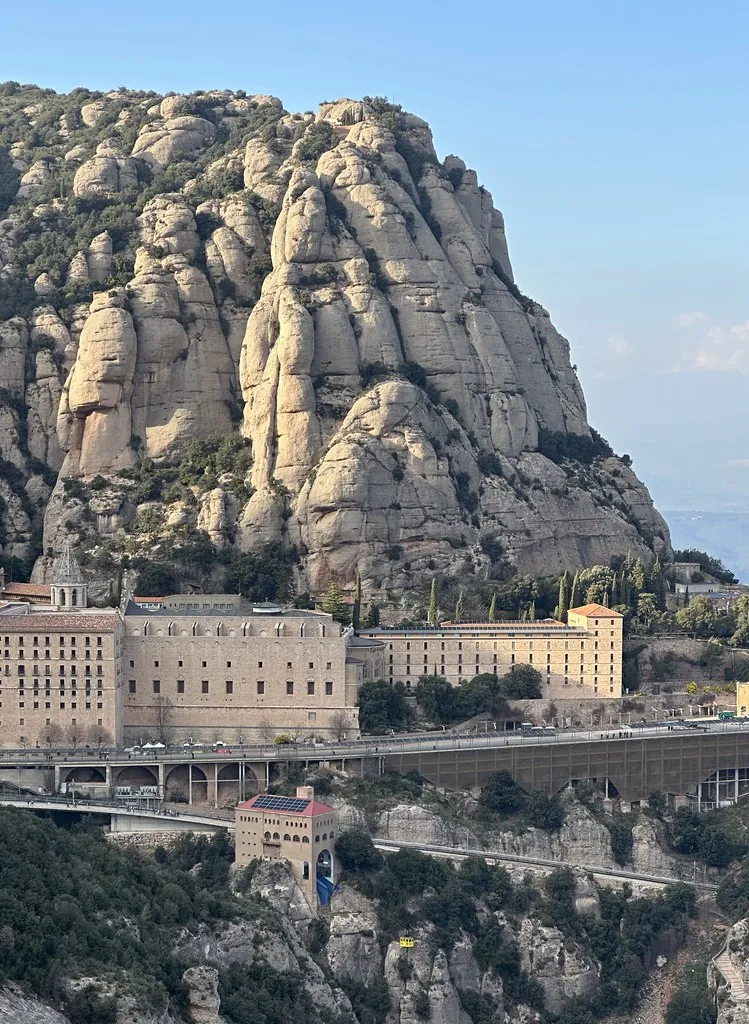
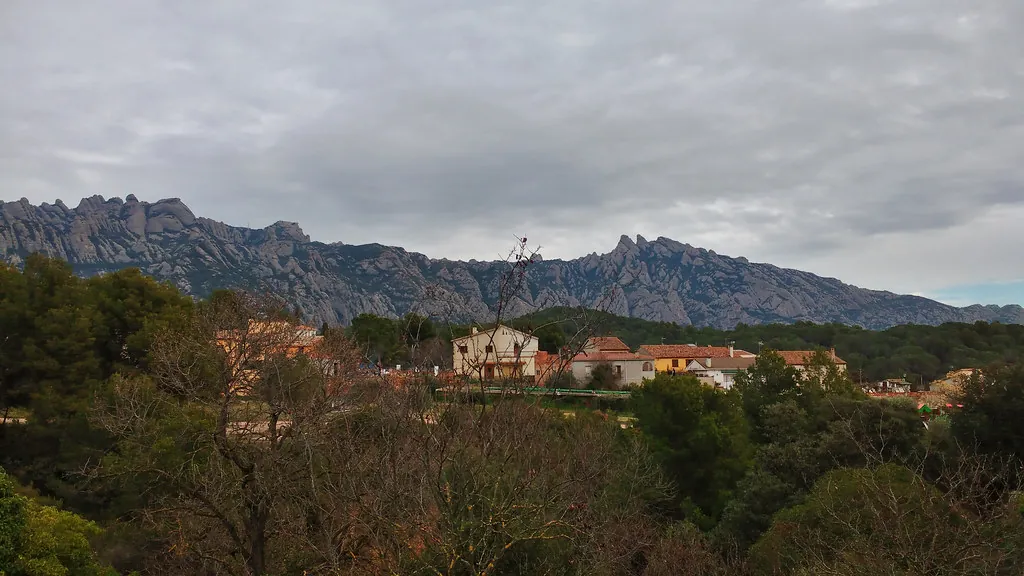
The 09:34 from Barcelona pulls in at a station that looks more Swiss than Catalan. Painted timber eaves, a clock tower in modernista ironwork, and behind it a wall of rock teeth—Montserrat—rising almost vertically to 1,236 m. Most passengers stay on the platform only long enough to change to the rack-railway that crawls up the cliff. Walk fifty metres past the ticket barrier, however, and you are already in Monistrol de Montserrat proper, a working village of 5,000 where schoolchildren, not coach parties, fill the streets at break-time.

Altitude changes everything here. At 210 m above sea level the air is warmer than on the famous summit, so almond trees blossom in February and hikers set out in T-shirts while the monastery, visible overhead, is still wrapped in cloud. The difference also shows in prices: a menu del dia in the plaça costs €14, roughly half what the cafeteria on the mountain charges, and the bakery will sell you a sandwich the size of a house brick for €3.50—handy if you intend to walk up.

The rack, the river and the rock

The Cremallera (zipper) railway opened in 1892 to haul pilgrims and quarrymen up the 600-m climb. The original car, all brass and varnished wood, sits beside the lower station and still smells of coal smoke. A return ticket to the monastery is €13.50, but the four-day “T-Cremallera” pass (€18) is the locals’ trick: ride it as often as you like, nip back down for lunch, then up again for sunset. Trains leave on the hour; stand on the right-hand side for the valley view, on the left to watch the conglomerate pillars lean in like drunken sentries.

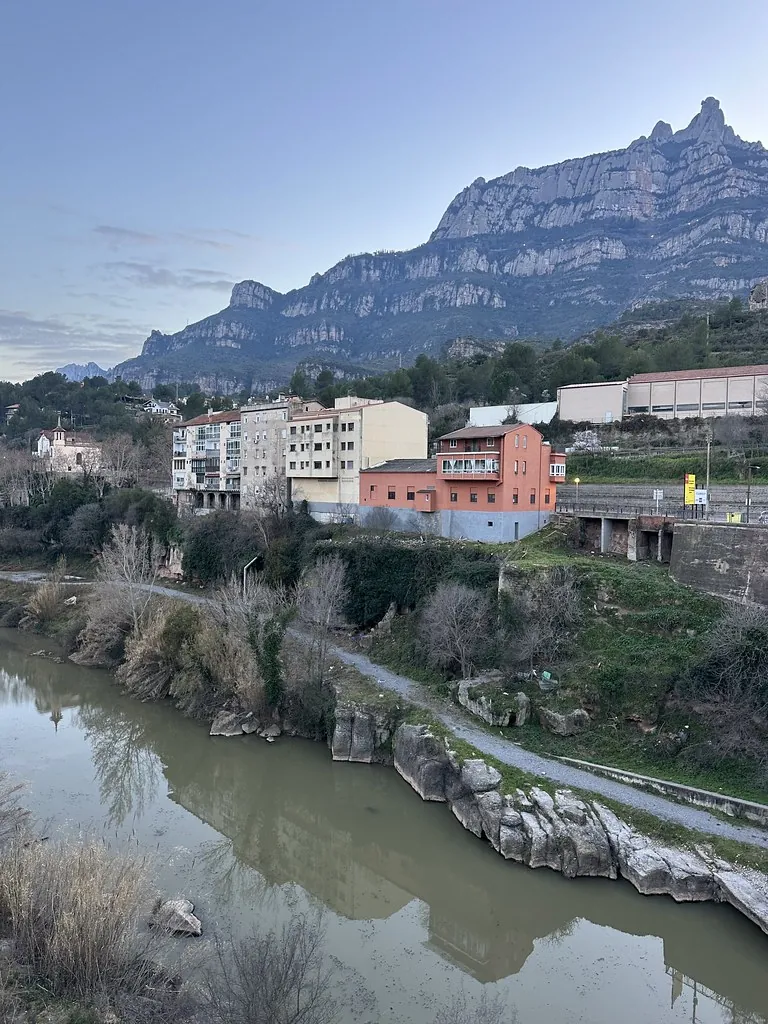
Below the line the Llobregat river slides past in lazy loops. A five-minute stroll from the plaça brings you to Pont Nou, an 18-span stone bridge built for mule trains in 1928. From here the mountain looks almost artificial—ginger biscuits stacked too high—while swifts stitch the air above the water. A signposted riverside walk heads 3 km downstream to the ruined textile colony of Can Munné, where brick chimneys rise from weeds and kingfishers flash turquoise under the arches. Flat, buggy-friendly, and mercifully shade-dappled in summer: bring insect repellent or the tiger mosquitoes will eat you alive.

Up the pilgrims’ stair

The footpath to the monastery starts behind the football pitch. Medieval pilgrims did it barefoot; modern walkers need trainers and two litres of water. Distance: 5.2 km. Height gain: 580 m. Time: 2 h 15 min for the fit, 3 h if you stop to photograph every monk-shaped boulder (there are dozens). The first half follows an old mule track paved with black slates that click like typewriter keys. Oak woods give way to rosemary and thyme; the smell changes from damp earth to resin. Half-way up, the hermitage of Santa Magdalena appears—a stone porch and a bell the size of a flowerpot—then the path cuts through a tunnel carved in 1923 and bursts onto the monastery terrace with theatrical timing just as the boys’ choir begins its daily Salve.

Descent by the same route saves the train fare but punishes the knees; an easier loop continues along the crest to Sant Jeroni (another 45 min) and drops back to Monistrol via the shady Canal dels Monges. In July you must start before 08:00; after ten the stone radiates heat like a pizza oven and the only shade is your own shadow.

Sunday lunch, not souvenir tea-towels

Back in the village, restaurants fill with Catalan families rather than coach crowds. Can Gombau grills lamb over vine cuttings; the €18 “montserratí” menu adds cannelloni stuffed with wild mushrooms and a thimble of local Pla de Bages red. They will pour you a free glass of muscat if you ask for “vi de missa”, the sweet wine once used at the monastery altar. Cal Pare pulls the same trick with crema catalana, flambéed at the table so the sugar snaps like thin ice. Both places close on Monday; plan accordingly.

If you are self-catering, the Co-op on Carrer Major stocks mountain honey, dried figs and a soft goat’s cheese wrapped in chestnut leaves that survives the flight home better than the brittle almond brittle sold up top. Bread appears at 18:00; arrive five minutes late and the queue stretches out of the door.

Where to sleep (and why you should)

Monistrol’s accommodation is limited but sensible. Hostal Monistrol occupies a 1790 farmhouse opposite the church; rooms have beams, terracotta floors and double glazing that muffles the 07:00 church bell. Doubles from €70 including parking, a bargain when Barcelona hotels want twice that and the monastery hostel charges €49 for a bunk in a 40-bed dorm. Two modern apartments above the bakery rent by the night (from €90) and come with the four-day rack-rail pass thrown in—book direct, they do not appear on the big platforms. In April and October you can walk out of the door straight into the almond-blossom or chestnut harvest; August is hotter and noisier, but even then the streets empty after 22:00 when the last train back to Barcelona leaves.

When the mountain hides

Montserrat creates its own weather. A clear dawn can collapse into a sea of cloud by 11:00, swallowing the monastery while Monistrol sits in sunshine. In winter the reverse happens: the village lies under cold fog, the summit sparkles in snow. Check the webcam before you set out; if the serrated ridge is white, carry micro-spikes—the last kilometre becomes a polished slide. Trains still run but the cable car closes in winds over 50 km/h; the rack railway keeps going unless the tracks ice up, roughly one morning every other year.

Spring brings the risk of “calima”, Saharan dust that dyes the sky ochre and coats cars. It looks dramatic, terrible for photographs; wait 24 hours and the north wind scrubs everything clean. Summer afternoons can hit 36 °C in the village, 28 °C on the summit—carry more water than you think sensible. Autumn is the sweet spot: warm days, cool nights, and the smell of wet earth drifting down from the first rains.

Last orders

By 20:30 the plaça is in shadow, the mountain glowing pink above the streetlights. The final Cremallera hisses down the hill with a handful of day-trippers who queued too long for the holy black virgin and missed supper. In the bar opposite, locals debate football while the barman pulls a last Estrella and phones for a taxi to take the stranded to the 22:04 train. Stay the night and you will wake to the same view the monks saw a thousand years ago—minus the buses, plus the smell of fresh bread drifting across the square.

Key Facts

Region
Cataluña
District
Bages
Coast
No
Mountain
Yes
Season
year-round

Official Data

Institutional records and open data (when available).

  • Monestir de Montserrat
    bic Monumento ~2.1 km
  • Sant Jeroni
    bic Zona d'interès ~2.8 km
  • Barraca del turó de Comellats
    bic Edifici ~2.7 km
  • Barraca del turó de Comellats
    bic Edifici ~2.8 km
  • Capella de la Santa Cova
    bic Edifici ~2.6 km
  • Capella de la Soledat o de la Verge Dolorosa
    bic Edifici ~2.2 km
Ver más (62)
  • Camí de la Santa Cova o del Rosari Monumental
    bic Obra civil
  • Camí del Viacrucis
    bic Obra civil
  • Avenc de la Sajolida
    bic Zona d'interès
  • Balma murada de la Murdela
    bic Edifici
  • Balma al torrent de les Àligues
    bic Zona d'interès
  • Albarda Castellana
    bic Zona d'interès
  • Palau Prioral
    bic Edifici
  • Ermita de l'Àngel
    bic Edifici
  • Sant Antolí
    bic Jaciment arqueològic
  • El Roser
    bic Edifici

Planning Your Visit?

Discover more villages in the Bages.

View full region →

More villages in Bages

Traveler Reviews