Full Article
about Navàs
Modern municipality that grew around industry and a transport hub.
Ocultar artículo Leer artículo completo
A Town That Refuses to Pose
The Friday morning market sets up before seven. By eight, the square smells of strong coffee and just-unloaded onions. Stallholders shout prices in Catalan; elderly women compare aubergines with the seriousness of commodity traders. This is Navàs, 6,000 souls at 366 m on the seam between the Pyrenean foothills and the central Catalan plain, and it has not rehearsed anything for visitors. Come expecting half-timbered photo ops and you will leave disappointed. Come prepared to watch ordinary life unfold and the place starts to make sense.
Navàs is a working town: light industry on the western edge, tractors parked beside pintxo bars, schoolchildren rehearsing brass-band tunes in the cultural centre at lunch-time. Tourism floats somewhere low on the priority list, which is precisely why some British travellers seek it out. The nearest souvenir T-shirt is 18 km away in Manresa; the nearest traffic jam, farther still.
Stone, Brick and the Sound of Tractors
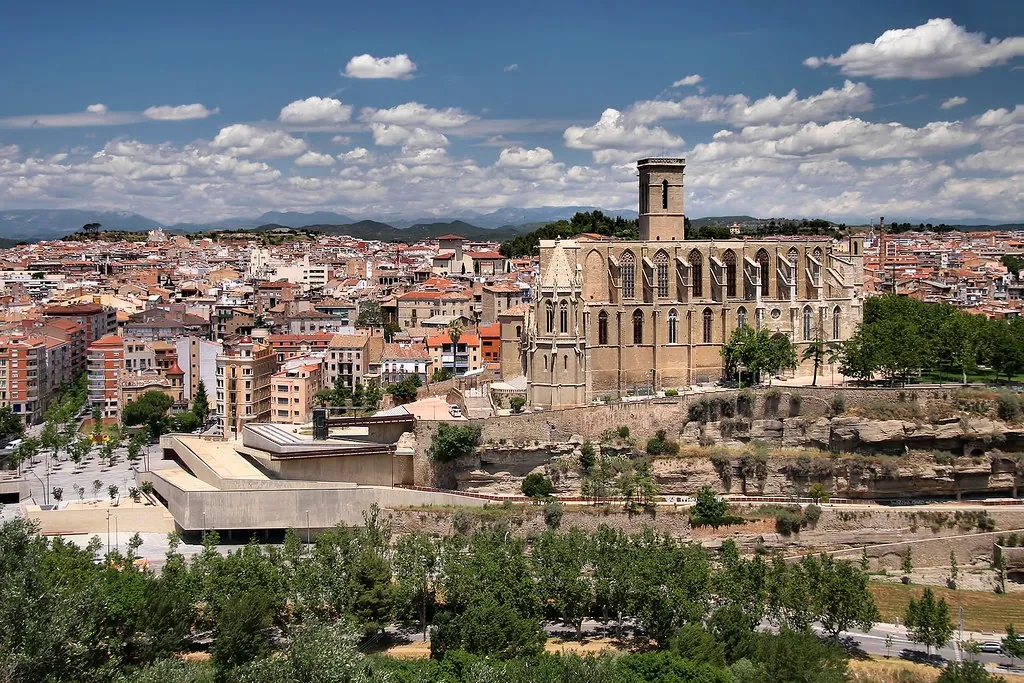
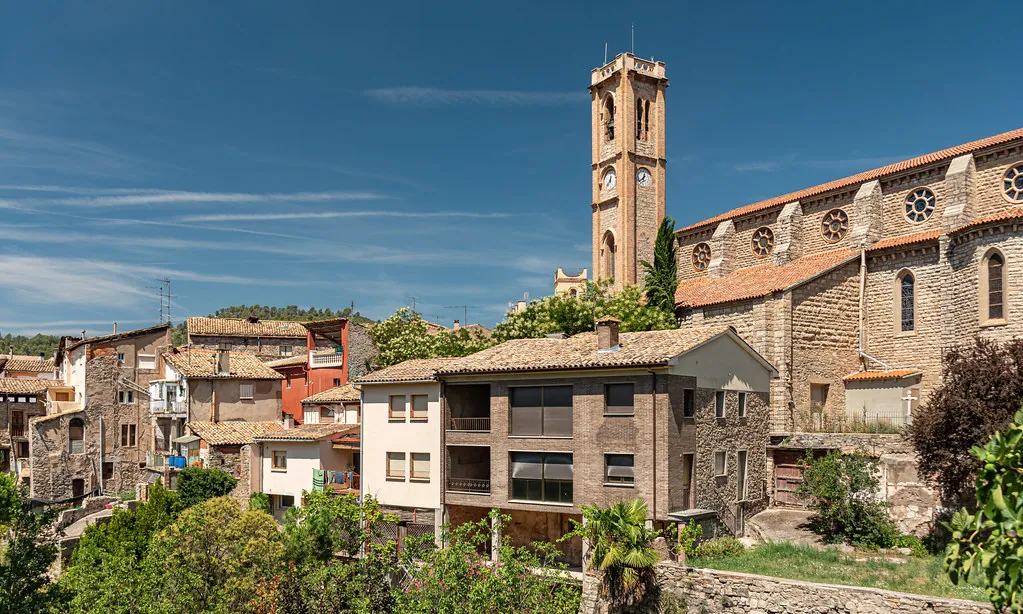
The old centre fits into four streets. Houses are stone below, brick above, their balconies painted the municipal colours of ochre and dusty green. The parish church of Santa María keeps watch from the highest point; step inside and you will find a single-aisle nave, nineteenth-century stained glass that glows tobacco-yellow at sunset, and a side chapel dedicated to the town’s patron, Sant Isidre the farm labourer. It is open 8 a.m.–1 p.m. and 5–8 p.m.; outside those hours the heavy doors stay shut, so plan accordingly.
Carry on downhill and you reach Carrer Major, the commercial spine. Ironmongers, two bakeries, a chemist whose window still advertises “Vicks Vaporub” in 1980s typeface. The bakery at number 23 bakes coca de recapte – a Catalan flatbread topped with roasted peppers and aubergine – at 10 a.m. sharp. Arrive five minutes late and the queue is out the door; the loaves leave on foot, wrapped in brown paper, not Instagram.
English is scarce. One barman, polishing glasses, replied to a hesitant “Do you speak English?” with a smile and a perfectly timed “Not today.” Basic Spanish or Catalan phrases oil the wheels; pointing and good humour do the rest.
Paths, Mills and the River That Isn’t Blue
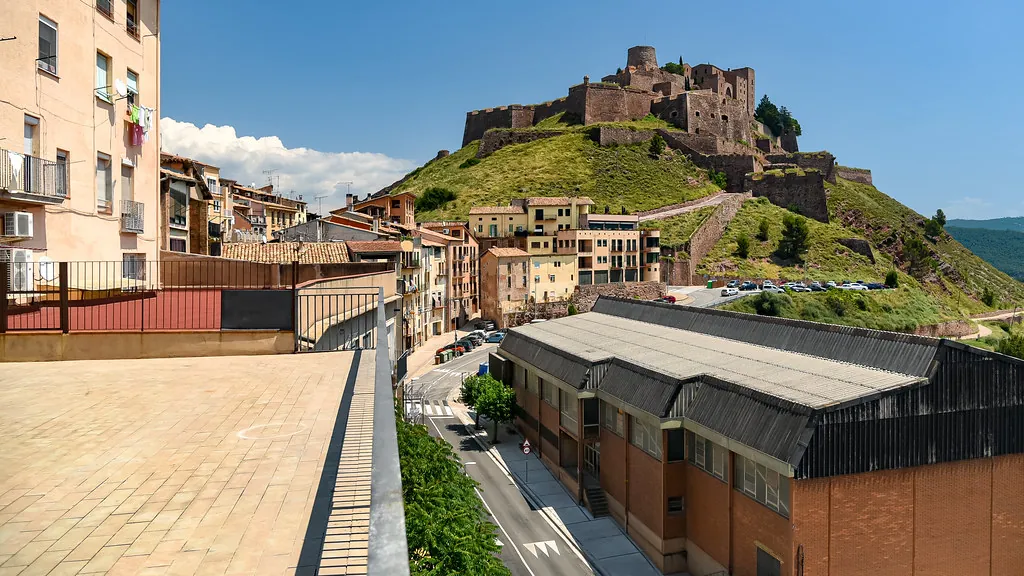
Navàs sits on a low ridge. North-east, the land folds into pine and oak; south-west, wheat and sunflower fields run to the horizon. A lattice of farm tracks links scattered masías – stone farmhouses still lived in by the families who built them. The tourist office (open Tuesday–Saturday, 10 a.m.–2 p.m.) hands out a free leaflet marking five circular walks. None is longer than 12 km; all are way-marked with yellow stripes painted on stone or telegraph pole.
The easiest loop, 6 km, drops to the Llobregat river, passes a ruined nineteenth-century textile mill, then climbs back through almond terraces. The mill’s brick chimney still stands, swallows nesting in the flues. The river itself is wide, shallow and the colour of strong tea; forget paddling unless you fancy mud between your toes. In July the temperature hits 35 °C by eleven; start early, carry water, and expect to share the path with the occasional tractor on herbicide duty.
Cyclists find the same lanes ideal for gentle pootling. Road bikes cope fine; mountain bikes are overkill. Gradient rarely exceeds 5 %, but the surface can be crunchy – wider tyres save punctures. A 25 km circuit east to the hamlet of Castelladral and back passes two working dairies where you can buy fresh cheese through a side window: leave two euros in the honesty box.
What Arrives on the Plate
Food follows the agricultural calendar. From October to March the star is the mongeta del ganxet, a small white bean grown in the Bages and plated with botifarra sausage. The dish looks beige, tastes comforting: think cassoulet without the drama. Spring brings calçots, long spring onions charred over vine embers, served with romesco sauce; eat them with a bib unless you fancy orange cuffs. Summer is for river trout, simply grilled with almonds, and for crisp Vins de Bages reds – local cooperatives bottle Merlot-heavy blends that cost €6–8 a bottle in the supermarket and slip down easily at 13 %.
Restaurants are few and unshowy. Can Xiu, on the road to Súria, occupies a 1780 farmhouse; menu del dia is €14 mid-week, three courses plus wine. Expect grilled lamb, perhaps a thyme-scented escalivada, and crema catalana whose sugar crust is cracked at the table. Booking helps at weekends when families descend from Barcelona. In town, Bar Platea does credible tapas: try the bombas (potato croquettes with spicy sauce) and a cold Estrella straight from the tap. Cards accepted at Can Xiu; bring cash to Bar Platea.
Using Navàs as a Base
Public transport exists but demands patience. From Barcelona Sants take the R4 train to Manresa (70 min, €8.10), then hop on the L65 bus to Navàs (25 min, €2.20). Buses run hourly until 9 p.m.; after that, a taxi costs €25. Driving is simpler: leave the AP-7 at Manresa, follow the C-25 for 15 min, then the C-16 for five. Park on Carrer de la Riera or at the poliesportiu if the centre is full – both free.
Accommodation inside the municipality totals two guesthouses. Cal Peret, a converted nineteenth-century stone house, offers four rooms from €65 including spotless if plain décor and breakfast of cured meats, tomato-rubbed bread and strong coffee. Hostal La Masia del Solà, 3 km out among wheat fields, has a pool and eight rooms from €70; you will need a car unless you fancy a 40-minute dawn hike to the baker. Many visitors base themselves in Manresa instead and day-trip; rooms there start at €55, and last orders in restaurants stretch past 10 p.m.
When to Come, When to Stay Away
Spring, mid-March to mid-June, is prime: wild marigolds along the paths, temperature hovering 18–24 °C, daylight until eight. Autumn repeats the trick September–October, adding grape-harvest scent and mushroom season. July and August are hot, often 36 °C at midday; sensible locals vanish indoors 2–5 p.m. Shops lower shutters, bars turn fans to full tilt, and the landscape turns biscuit-brown. Winter is quiet, occasionally frosty, perfectly fine for walking if you pack a fleece, but note that both guesthouses close for two weeks over Christmas.
Rain falls hardest late April and October; paths become slick clay. If the sky looks moody, swap trainers for something with tread.
The Honest Verdict
Navàs will not dazzle. Its church is modest, its river murky, its souvenir count zero. What it offers instead is the chance to see Catalonia without stage make-up: bread carried home under a neighbour’s arm, Saturday-night brass bands in the square, beans that taste of the soil they grew in. If that sounds like slow travel rather than sightseeing, come on a Friday, order a coffee in the market square, and let the town get on with its day.