Full Article
about Rajadell
Picturesque village with a Gothic castle and cobbled streets
Hide article Read full article
Morning Light Over the Bages
Early in the day, before the sun has fully lifted the mist from the Bages plain, Rajadell comes into view among cereal fields and rows of olive trees. If it has rained overnight, the air carries the smell of damp earth. Birds are already calling, and somewhere in the distance a tractor has begun its steady work.
This small municipality in the comarca of Bages, around 12 kilometres from Manresa and about 350 metres above sea level, moves to a rhythm shaped by the land. Agriculture is not a backdrop here. It defines the pace of daily life, the look of the landscape and much of what appears on the table.
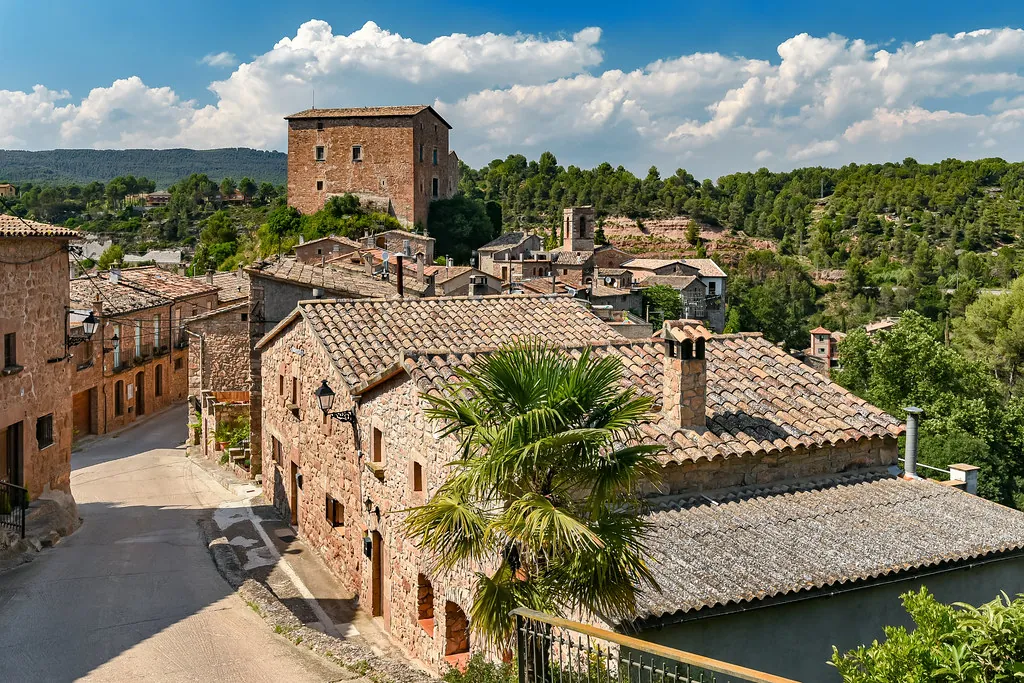
Rajadell’s outline has changed little in recent decades. The village centre is compact, with houses gathered along narrow streets, some of them paved with stone worn smooth over time. Walls are thick, windows tend to be small, and in many courtyards old tools still lean against a wall or rest beneath a simple shelter. The impression is not of a place reinventing itself, but of one that has adjusted gradually, keeping what works.
Sant Pere and the Village Heart
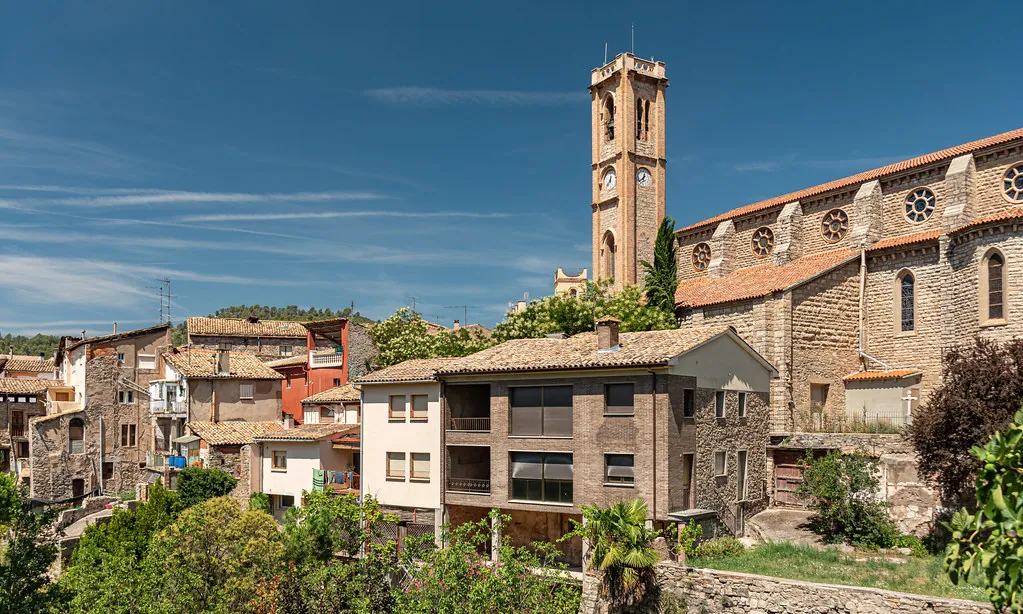
At the centre of Rajadell stands the parish church of Sant Pere. The base of the building is generally dated to the Romanesque period, the 12th century according to the most frequently cited documentation, although later alterations have left their mark. It is a restrained structure in pale stone, with a bell tower that rises just above the surrounding rooftops without dominating them.
Inside, elements from different centuries coexist. A retable from the early modern period is traditionally mentioned, and traces of mural paintings have been uncovered beneath layers of limewash. It is not an imposing or monumental interior. Instead, it feels like a village church that has adapted over time to changing needs and possibilities, each generation adding or adjusting something.
Around the church, a small network of streets can be covered in a matter of minutes. By mid to late afternoon, when the sun begins to drop in the west, light slides between the façades at a low angle, casting long shadows across the paving. The effect is simple but striking, revealing the textures of stone and plaster that might go unnoticed at other times of day.
Farmhouses and an Agricultural Landscape
Much of Rajadell’s municipal area is taken up by scattered masías, traditional Catalan farmhouses. Some are still inhabited, while others remain tied to agricultural holdings. From the road or along rural tracks, enclosed courtyards come into view, along with tiled roofs and old threshing floors that retain their circular shape.
Dry stone walls mark out fields and small vegetable plots. In autumn, almond trees and holm oaks appear among the crops. In summer, once the cereal has been cut, the land turns a straw colour that contrasts with the darker green of the olive groves. The landscape forms a mosaic typical of inland Catalonia: cultivated plots, patches of woodland and isolated buildings, each with its own history.
On clear days, from some of the higher points in the area, the outline of Montserrat can be glimpsed to the south. The distinctive mountain range, known for its serrated profile and its monastery, sits on the horizon as a distant reference point.
Quiet Roads for Walking and Cycling
The surroundings of Rajadell lend themselves to walking or heading out by bicycle along secondary roads. These are narrow routes with little traffic for most of the day, linking farmhouses and open fields. The atmosphere is calm, with space to hear footsteps on gravel or the hum of tyres on tarmac.
Dirt tracks allow for straightforward routes without major changes in elevation. Even so, in summer it is best to set out early. There are long stretches with little shade, and the midday sun falls hard on the open fields. Carrying water may seem obvious, but here its absence is quickly felt.
For road cyclists, there are gentle routes towards nearby villages in the Bages, with short climbs and moderate gradients. Agricultural machinery is a common sight, so riding with patience and awareness is part of the experience. The focus is less on speed and more on moving through a working landscape.
Food, Gatherings and Sant Pere
Cooking in Rajadell and the surrounding area remains closely linked to local produce. Embutidos, the cured sausages typical of much of Spain, sit alongside pulses and seasonal vegetables. During popular celebrations, large pots and slow-cooked stews often take centre stage. These are dishes that suit long evenings in the village square, when the heat of the day fades and the air begins to cool.
The festival associated with Sant Pere, held at the end of June, concentrates much of the year’s activity. Traditional events are organised, along with communal meals that bring residents together. In summer there are also smaller gatherings, often tied to the agricultural calendar or to neighbourhood associations. These occasions reinforce the sense that Rajadell’s social life is closely connected to the cycles of the countryside.
A Pause on a Journey Through the Bages
Rajadell’s proximity to Manresa makes it easy to combine with other places in the comarca. Within a short drive, villages such as Castellfollit del Boix can be reached, as well as other rural areas of the Bages where the same patchwork of fields, holm oaks and scattered masías continues.
Those who want to see the village at its most relaxed would do well to avoid the central hours of the hottest days. Early morning or late afternoon bring a return of quiet to the streets. At those times, Rajadell feels closest to how it is experienced by the people who live here throughout the year: unhurried, practical and closely tied to the land that surrounds it.