Full Article
about Sant Feliu Sasserra
Historic Lluçanès village known for its witches’ fair
Ocultar artículo Leer artículo completo
The Village That Burned Its Women
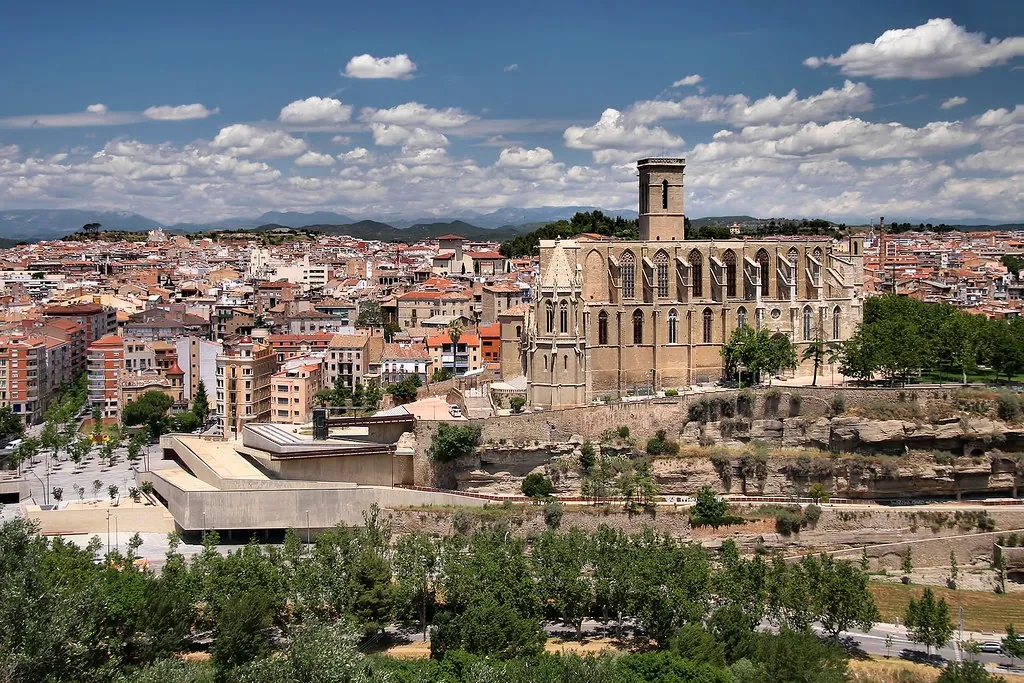
Seventeen people were hanged here for witchcraft in 1618. Their names are read aloud every Halloween night from the balcony of the ajuntament, a roll-call that still makes the crowd fall silent. Sant Feliu Sasserra doesn’t hide its past; it turns it into a party. On 1 November the population swells from six hundred to five thousand, coachloads arriving from Vic and Manresa to watch children in black capes parade a papier-mâché she-devil through streets barely three metres wide. Stay for the fireworks and you’ll smell gunpowder mixed with chestnuts and damp stone long after midnight.
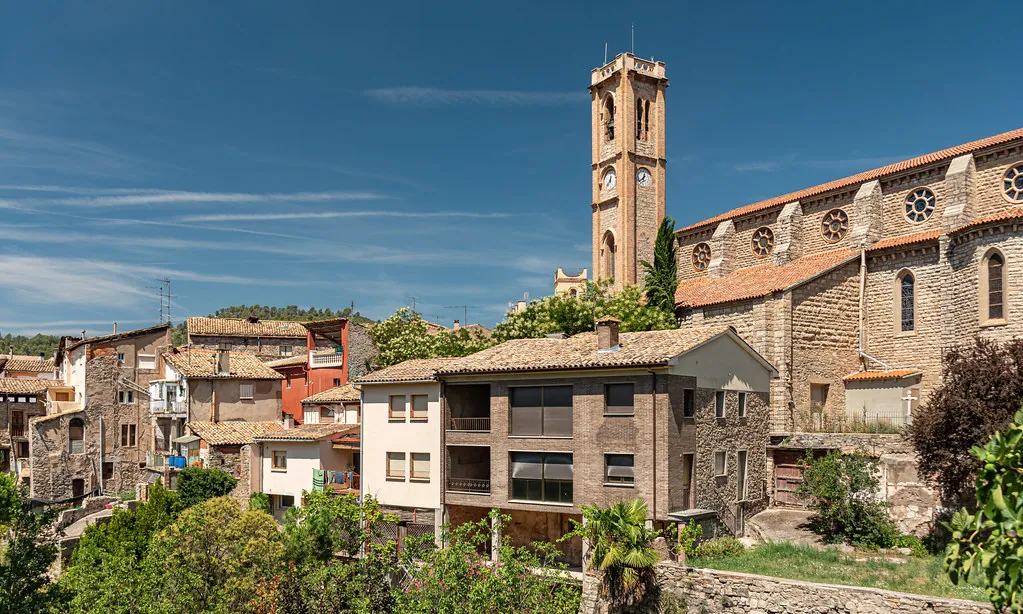
The rest of the year the village slips back into a hush broken only by tractors and the odd Vespa. At 617 metres above sea-level the air is cooler than on the coast; mornings arrive with a film of dew that takes until elevenses to burn off. Stone houses the colour of burnt cream shoulder together along a ridge that acts as a watershed: rain that falls on the north side heads for the Llobregat, on the south side it trickles toward the Cardener. You can see both valleys from the church tower—one sweep of the eye takes in cereal fields, almond terraces and a horizon of pine-dark hills that look closer than they are.
Stone, Slate and the Smell of Bread
The parish church of Sant Feliu started life in the twelfth century, though you’d need an architect to spot what’s original and what’s nineteenth-century make-do. Inside, the font is still the one used to baptise the accused women four hundred years ago; guides love the detail, visitors usually pause. Opposite the church the bakery opens at seven, no sign in English, just the word Forn painted in flaking green. The baker’s coca—a cross between focaccia and Chelsea bun—sells out by ten; locals buy it by the quarter-kilo wrapped in waxed paper still warm enough to sting fingers.
Behind the church a lane narrows into a footpath that drops past threshing floors and dry-stone walls. Five minutes and the village ends abruptly: suddenly you’re among holm oaks and the scratching of chaffinches. This is the Bages in miniature, a landscape stitched together by dry-laid walls, each one numbered with a bronze plate so the farmer who built it in 1873 can still be traced in the land registry. Walk for an hour and you’ll pass two abandoned farmhouses, their roofs caved in but haylofts intact, perfect rectangles of sky where tiles once sat.
Maps, Mushrooms and the Missing Bus
Serious hiking isn’t the point here—the highest point in the municipality barely tops eight hundred metres—but the web of caminos lets you string together loops of five, seven or twelve kilometres without ever touching tarmac. Autumn is prime time: the undergrowth erupts with rovellons (saffron milk caps) and ceps (porcini) that locals guard as jealously as Yorkshiremen guard grouse moors. Stand still with a wicker basket and someone will materialise to ask where you found yours; give away too much and you’ll be told the really good spots are “toward Girona”—a running joke that means nowhere near.
Public transport exists but behaves like a shy animal. The bus from Manresa reaches the plaça at 09:10 and 14:00; miss it and the next departure is four hours away. Car hire from Barcelona airport takes an hour and ten on the C-25, last twenty minutes on the C-154, a road that narrows to single-track each time it meets a lorry hauling hay. Fill up at the Repsol on the dual-carriageway—the village garage keeps Spanish hours, shuttered from two until four and all day Sunday.
Food Without the Fanfare
There are two bars. Can Guixe has terrace tables under a giant plane tree and serves pa amb tomàquet with goat cheese from animals you can hear bleating behind the premises. Vegetarians cope; vegans negotiate. Cal Xic, half a kilometre out toward the cemetery, fires up an outdoor grill for winter calçots; they hand out plastic bibs and refuse to serve wine by the glass—order a bottle or drink water. Both places prefer cash; try to pay for a €2.20 coffee with a card and you’ll be sent next door to the cashpoint that charges €1.75 per withdrawal.
If you’re self-catering, Vic’s Saturday market is twenty minutes away. Stall 34, run by a couple from Huddersfield, sells back-bacon-style panceta and Cumberland sausages made with Catalan pork—expat comfort food for when the local butifarra feels too mild. Back in the village the mini-market stocks UHT milk, tinned sardines and little else; fresh fish arrives Tuesday and Friday, pre-ordered from a van that smells of the coast ninety kilometres away.
When to Come, When to Stay Away
Spring brings almond blossom and temperatures that hover around 18 °C—T-shirt weather at midday, fleece by six. In May the fields turn Technicolor green before the sun bleaches everything to straw. October is the sweet spot: clear skies, 22 °C in the afternoon, nights cool enough to justify the village’s single wood-burning hotel suite. August is hot, often 34 °C, and the place empties as locals head to the coast; the bakery shuts for three weeks, the bars reduce to one reluctant waiter. January brings mist that pools so thick the church bell rings every quarter-hour as a navigation aid; days struggle above 5 °C and the stone houses leak warmth like sieves. Pretty, but bring slippers and a stubborn attitude.
Accommodation is limited to four options. The council-run albergue charges €18 for a dorm bed and lets you use the kitchen if you wipe the hobs. Hostal Cal Feliu has five rooms above the bakery; floors slope, Wi-Fi flickers, but the breakfast coca arrives warm. The two rural cottages require a three-night minimum and cost around €90 a night; fireplaces are extra. Book early for Halloween—some Brits reserve a year ahead, deposit paid by bank transfer to a Caixa account the owner refuses to switch to IBAN format.
Leaving Without the Gift Shop
There isn’t one. Souvenirs amount to a €3 fridge magnet shaped like a witch hat sold from a cardboard box in the library foyer, open Tuesday and Thursday 17:00–19:00. What you take away instead is the quiet: the moment at dusk when swifts stop screaming and the only sound is a dog barking three valleys over. It’s not dramatic, it doesn’t photograph well, yet weeks later, stuck on the M25, you might remember the smell of bread, the altitude-cool air and a village that once hanged its women but now throws them a party.