Full Article
about Sant Salvador de Guardiola
Residential municipality in a rural setting near Manresa
Ocultar artículo Leer artículo completo
The bakery in Sant Salvador de Guardiola opens at half-past six, not because tourists might be passing, but because the first tractors roll out at seven. By eight the pavement tables outside Bar Jep are already sticky with espresso spills and yesterday’s pa amb tomàquet crumbs, and the village day has begun without anyone bothering to check TripAdvisor.
At 373 m above sea-level, the place sits on a rolling plateau of cereal fields and scattered stone farmhouses called masías. There is no dramatic gorge, no cliffs, no sea view – just a wide sky and the saw-tooth ridge of Montserrat twenty-five minutes south-west. British drivers coming from Barcelona airport (85 km, mostly motorway) usually shoot straight past the exit, lured by the monastery car parks. That is the first reason the bread here still costs under a euro.
A Parish Church That Grew Like a Tree
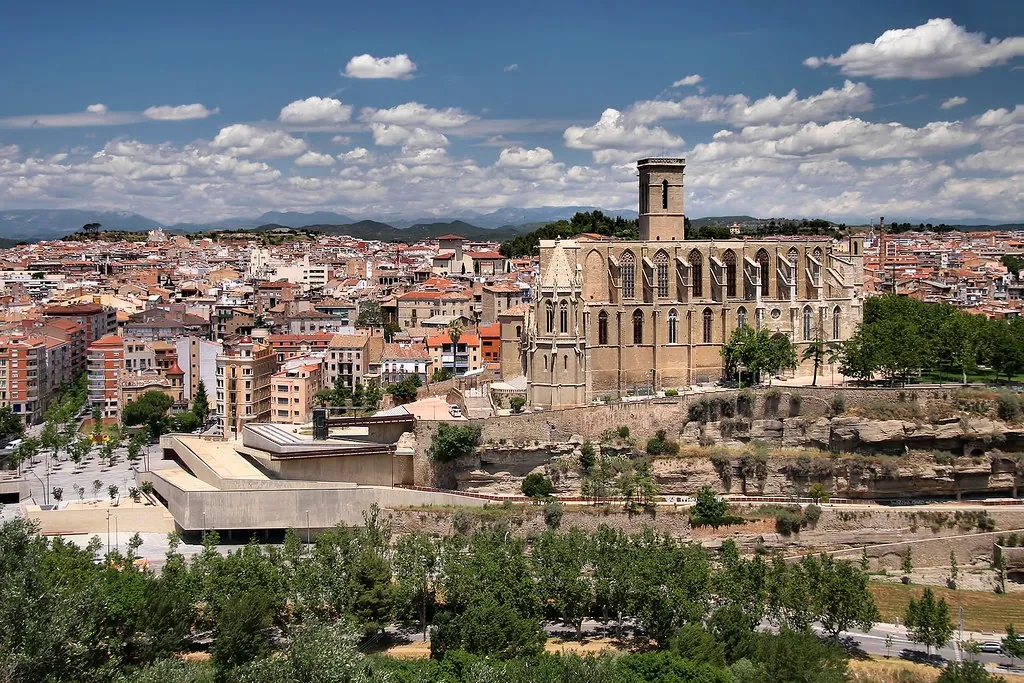
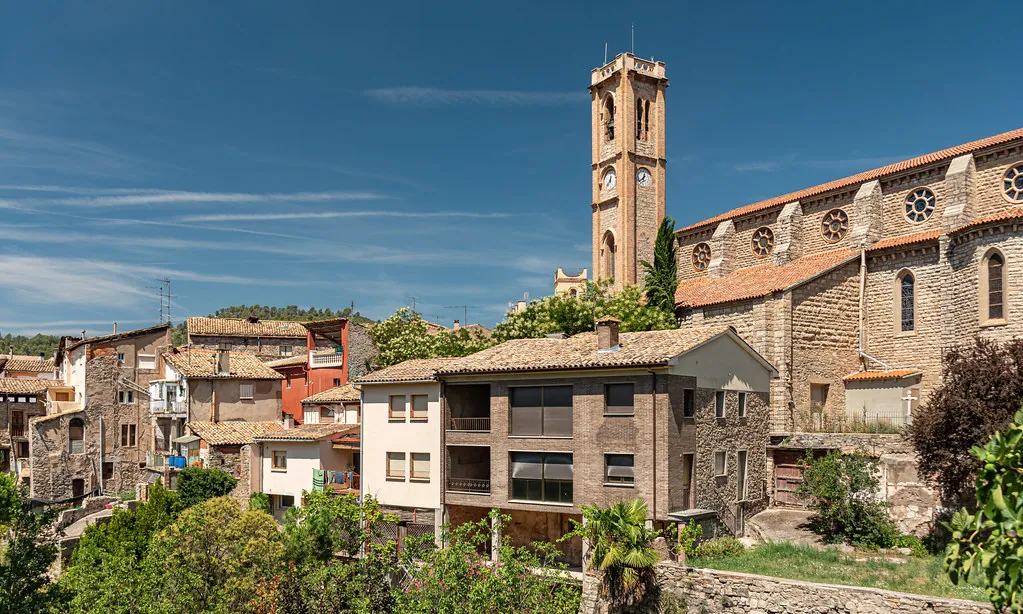
The parish church of Sant Salvador looks nothing like a postcard. It is a work in progress that began in the 1100s and never quite stopped: Romanesque bones, Gothic ribs, a Baroque porch tacked on after a fire, electric lighting fitted in the 1960s. Inside, the smell is of candle wax and the floor polish used by the same family for three generations. Sunday Mass still fills every pew; visitors are welcome but no one will hand you a laminated fact-sheet. Drop a coin in the box by the south door and the sacristan may flick on the lights so you can see the 1578 reredos of St Peter getting his keys.
Walk two streets east and you hit the plaça major, a rectangle of irregular flagstones where old men play petanca with the dedication of test cricketers. The bar terrace faces the town hall, a 1930s brick box painted the colour of dried blood. On Saturday mornings a van from Manresa unloads folding tables for the produce market: white beans, fat botifarra sausages, honey labelled by postcode. If you need cash, the nearest ATM is inside the pharmacy; it charges €1.75 and sometimes runs out of notes on bank-holiday weekends.
Tracks for Boots, Tyres and Horses
Flat country lanes radiate from the village like bicycle spokes. One heads north to the hamlet of Salelles, past wheat that turns ochre by late May and masías whose stone archways are exactly one Roman cart-width wide. Another eastward track reaches the disused Guardiola railway station, built in 1880 to ship grain to Barcelona; the platform herbs now feed goats owned by a retired maths teacher from Leeds who swears the air here cured his asthma. OS-style mapping is non-existent, but the local council has uploaded GPS files for three signed circuits: 6 km, 12 km and 22 km. All start at the sports pavilion where a tap marked “potable” lets you refill bottles.
Cyclists appreciate the lack of traffic and the 2–3 % gradients that look flat but strain thighs after thirty kilometres. Road bikes can loop south to the Montserrat foothills; gravel bikes are happier on the farm tracks that link Sant Salvador with neighbouring Navarcles and Callús. Bring spare tubes – thorns from the boira hedges are vicious, and the village shop stocks only children’s plasters.
Wine Without the Theatre
The Pla de Bages denomination is small, barely two thousand hectares, and the wineries still answer the phone themselves. Co-operativa de Salelles (ten minutes by car) runs English-language tastings on Thursday mornings if you email first. Their young white Picapoll is crisp enough to replace a Monday-night Sauvignon, while the negre jove tastes like Beaujolais that has been to the gym. Bottles start at €7; they accept cards but prefer cash so the treasurer can buy envelopes for the accounts. If you want views and stainless steel, head to Abadal in nearby Santa Maria d’Horta, where the shop looks like a minor space centre and the €12 tour includes three pours and a cracker.
Eating: Timing is Everything
Restaurants observe civil engineering hours. Can Xarau opens 13:00–15:30 and 20:30–22:00; arrive at 21:45 and the kitchen will already be hosing down the paella pan. The weekday menú del dia costs €14 and runs to three courses, bread, wine and dessert. Expect escalivada (smoky aubergine strips) served cool, then rabbit stewed with prunes, finally crema catalana blow-torched while you watch. Vegetarians can survive on pa amb tomàquet and grilled botifarra blanca, a mild sausage that poses no threat to Cumberland standards. Sunday lunch requires reservation; one waiter serves forty covers and he remembers who tipped last time.
For self-catering stock up in Manresa before you arrive. The village grocer closes for siesta 14:00–17:00 and all day Sunday. The bakery makes coques (Catalan pizza-bread) on Friday only; order before Thursday night or the local mothers will have snapped them up for school lunches.
When to Come, When to Stay Away
April–May and late September–October give dewy mornings, 22 °C afternoons and night-time cool that justifies a jumper. In July the thermometer can reach 38 °C; the fields smell of baked straw and the only shade is inside the church. August belongs to the Festa Major: inflatable castles in the plaça, brass bands that rehearse at midnight, and one night of correfoc (devils with fireworks) that sets off every car alarm in the postcode. Accommodation doubles in price and halves in availability; book early or stay in Manresa and commute.
Winter is honest: often 12 °C and sunny at noon, then zero after dark. The village road crew spreads straw on icy bends and the bakery adds panellets (almond buns) for All Saints. This is the season forproper hiking in Montserrat – car parks are empty and the hermitage of San Benet issues loaner cloaks against the wind.
Beds, Not Brands
There are no hotels, only three rural houses and a pair of Airbnb flats above the bakery. Cal Majoral is the pick: 18th-century stone, wood-burning stove, thick walls that mute the church bells. Low-season doubles start at €70 including breakfast eggs from the owner’s hens. Wi-Fi is 10 Mbps on a good day and the host will apologise as if he laid the cables himself. Mobile signal dies entirely in the stairwell; WhatsApp from the terrace like everyone else.
Last Orders
Sant Salvador de Guardiola will not change your life. You will leave without fridge magnets, without having queued for anything, and probably with straw in your shoe. What you get instead is a place where the bakery knows the tractors by sound, where the wine co-op books tastings by the same diary it uses for fertilizer delivery, and where the evening stroll ends precisely at the edge of town because the wheat starts there. If that sounds too quiet, stay in Barcelona. The tractors head out at seven regardless.