Full Article
about Sant Vicenç de Castellet
Well-connected town surrounded by the Montserrat and Sant Llorenç parks.
Hide article Read full article
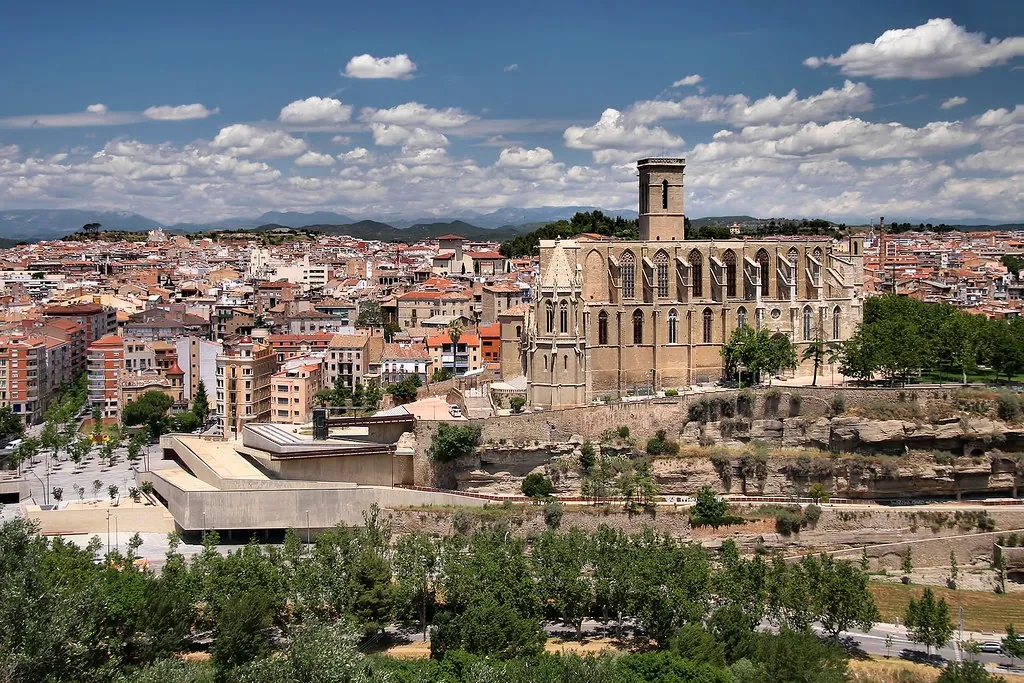
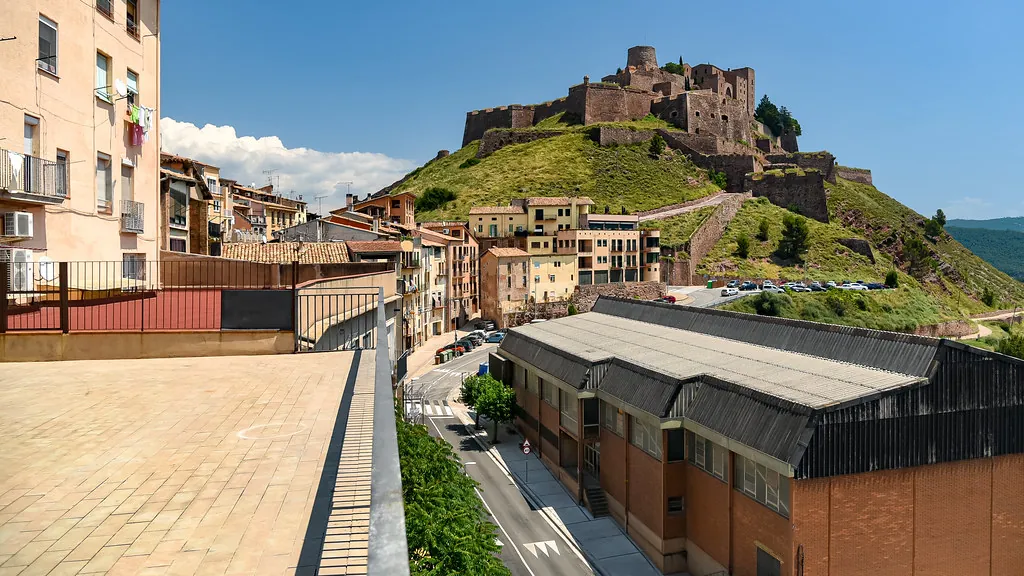
Sant Vicenç de Castellet makes most sense when seen from above. The hill crowned by its castle overlooks the valley of the Llobregat and explains why the town stands exactly where it does. This stretch of the comarca of Bages has long been a passage between the Barcelona plain and inland Catalonia. The river opens a natural corridor and, for centuries, whoever controlled this point controlled the movement of people and goods.
That strategic logic still shapes the landscape. Roads and railway lines follow routes that are far older than they look, tracing the same path carved out by the river.
The Castle and the Origins of the Settlement
The fortification that gives the municipality its name appears in early medieval documents, at a time when this area lay on the frontier between Christian territories and al-Andalus. These towers were not stately residences designed for comfort. Their purpose was surveillance of the valley and protection for the small communities beginning to settle nearby.
Of the original complex, the tower is the main surviving element. The structure visible today reflects later alterations, probably from the late medieval period. A round-arched doorway and sections of stonework point to an architecture built to withstand attack rather than to impress visitors.
From the summit, the reasoning behind the site becomes clear. The Llobregat functions almost like a natural moat. The route now followed by the road towards Manresa largely coincides with much older lines of communication. From this height, the valley reads like a map, with the river marking out the corridor that determined life here for generations.
A footpath climbs to the castle from near the centre of the town, winding uphill through pine trees. The ascent is straightforward and reinforces the sense of moving from present-day Sant Vicenç into its earliest chapter.
Santa Maria and the Defensive Core
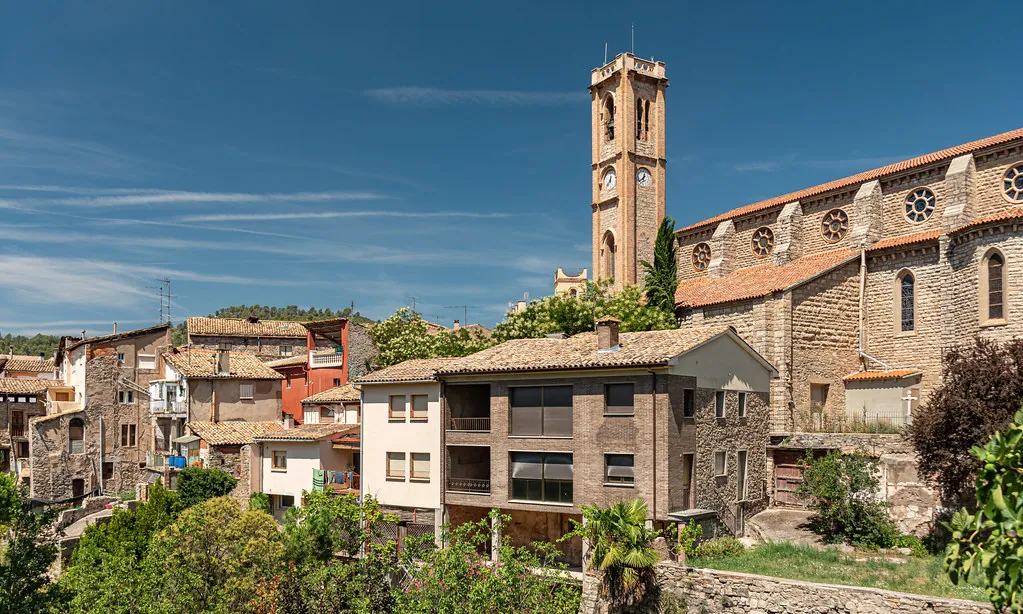
A few metres from the castle stands the church of Santa Maria. Their proximity is no accident. In many towns across inland Catalonia, the parish church was placed beside the fortified point, so the community could take refuge in times of danger.
The present building combines different periods. Its base follows austere Gothic forms, while some chapels and decorative features were added later. Santa Maria is not monumental in scale, yet its position above the valley carries historical weight. From the atrium, the same natural corridor that shaped the town’s fortunes stretches out below.
Together, castle and church form the original nucleus of Sant Vicenç de Castellet. Around them, the settlement gradually expanded, first as a protected cluster of houses and later as a town connected to wider economic networks.
The Llobregat Valley and the Arrival of the Railway
For many centuries, local life revolved around agriculture, especially vineyards and olive groves. The valley provided cultivable land and water, resources that would later draw industry as well.
In the 19th century, the arrival of the railway altered the rhythm of the entire Llobregat corridor. Factory buildings rose near the river to take advantage of hydraulic energy and improved connections with Barcelona and Manresa. Some of these industrial structures remain recognisable in the urban landscape, their stone walls combined with later brick extensions.
They now form part of the industrial memory of the comarca. Local archives preserve documents relating to working life during that period. These records reveal the harshness of long working days and the strong presence of female labour in the textile sector, a defining feature of industrialisation in many parts of Catalonia.
The railway and road links help explain the town’s more recent growth within Bages. Sant Vicenç de Castellet sits firmly within this communications corridor, a factor that has shaped both its past and its present.
The Terrers Blaus: A Blue-Grey Landscape
Around the castle rise low hills of greyish blue that catch the eye even from the road. These are known as the Terrers Blaus. Their appearance has nothing to do with human activity but with the composition of the soil itself.
They are made up of highly compacted marls which, as they erode, take on their characteristic bluish tone. The effect is unusual within Bages, a region more commonly associated with ochre hues. The contrast gives this part of Sant Vicenç de Castellet a distinctive look, especially when the light emphasises the shift in colour.
A signposted path runs through part of these formations, allowing walkers to see how the terrain changes texture and shade within just a few metres. Along the edges, small vineyard plots survive. The Pla de Bages designation of origin maintains cultivation here, including the traditional white grape variety picapoll, long associated with the area.
The Terrers Blaus add a geological dimension to a place often understood primarily through its history. They also connect the present landscape with older patterns of land use, where vines still find a place among the shifting tones of marl.
Festivals and Local Life
The town’s celebrations follow a calendar familiar across many municipalities in Bages. The festa major, usually held in late summer, fills the square by the town hall for several days. Traditional elements such as cobla music and sardanas, the circle dances typical of Catalonia, remain part of the programme, alongside more recent activities.
Throughout the year, other events appear, some linked to wine and others to the town’s medieval heritage. Dates can vary, so checking the municipal calendar is advisable for anyone hoping to coincide with a particular festival.
These occasions bring together long-standing customs and contemporary life, reflecting the layered identity of Sant Vicenç de Castellet.
Before You Go
The historic centre can be explored easily in a short time. Its scale makes it straightforward to move between the core landmarks, from the base of the castle hill to the church of Santa Maria.
Those interested in landscape can extend their walk along the paths that circle the Terrers Blaus or head down towards the river. Sant Vicenç de Castellet is well connected by road and rail within the Llobregat corridor, a practical detail that also helps explain its development in recent decades.
Seen from the castle hill, the town’s story is written in the valley below: a frontier outpost, an agricultural community, an industrial stop along a growing transport route. The Llobregat continues to mark the line that ties these layers together.